 Bug FAQ
Rosy Maple Moth
Dryocampa rubicunda · Order: Lepidoptera · Family: Saturniidae
Also called: Green-striped mapleworm, Greenstriped Mapleworm
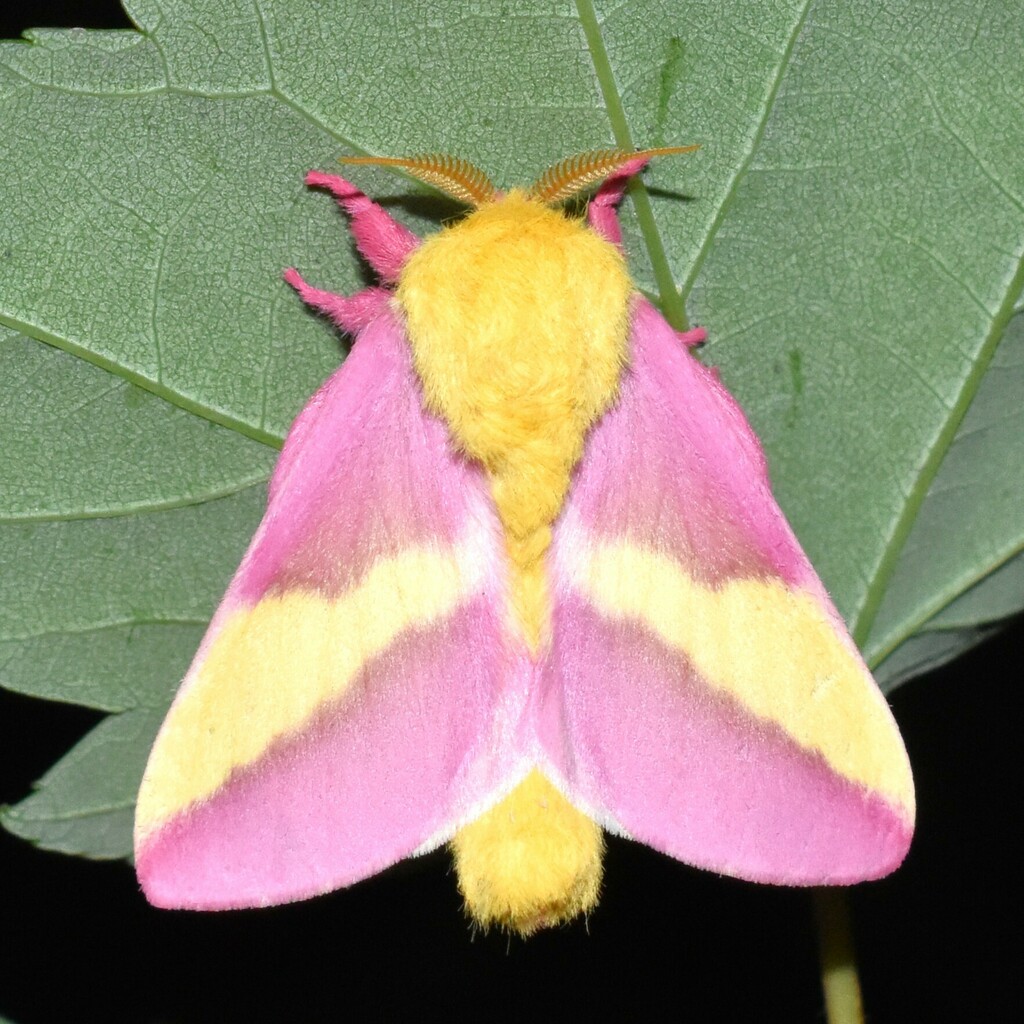
The rosy maple moth is the smallest silk moth, with males spanning about 3.2 to 4.4 cm and females 3.8 to 5 cm. Adults are pink- and yellow-colored, have reddish legs and antennae, yellow hindwings, and forewings with a triangular yellow band. They live in eastern and northern U.S. and southern Canada, favoring maple trees in deciduous forests and nearby suburban areas.
Source: Wikipedia
How to recognize it
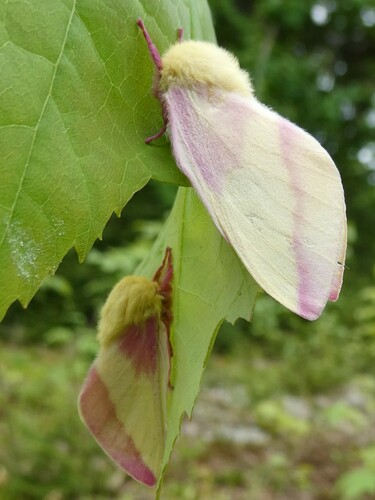
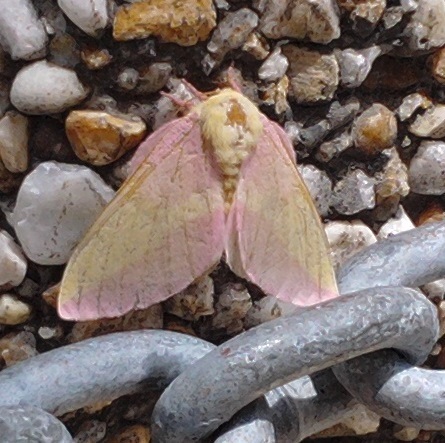
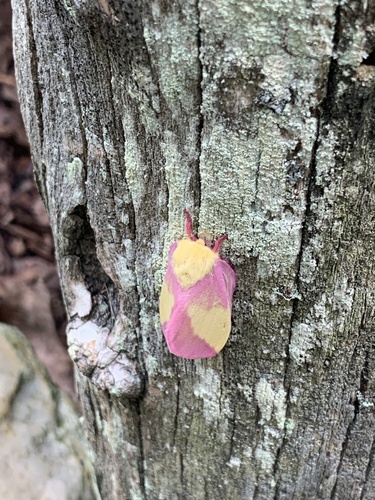
They can be recognized by pink and yellow colors that vary among individuals.
Source: Wikipedia
Size
It is the smallest species among silk moths.
Source: Wikipedia
Where it lives
Commonly seen on maple trees, which give the species its name.
Source: Wikipedia
What it eats
Adult moths do not feed at all.
Source: Wikipedia
Life cycle
An adult lives roughly two to nine months. From egg to adult the species passes through five larval instars.
Source: Wikipedia
When you see it
Adults are active during the warm months of the year. Eggs are laid in the warm months, with a peak in July.
Source: Wikipedia
Where it comes from
Occurs across the eastern and northern United States.
Source: Wikipedia
Where it is found in the US
Recorded in 37 of 51 states and DC. Most records: North Carolina, Massachusetts, Vermont, Maryland, Virginia, New Hampshire, Pennsylvania, Maine.
Darker = more records. Counts are museum and citizen-science records, not population size.
Source: GBIF
Status: native in North America; native in Canada; native in United States. Source: iNaturalist
Months it is reported in the US
Source: GBIF
More photos

Same family (Saturniidae)


Sources
- Wikipedia: https://en.wikipedia.org/wiki/Dryocampa_rubicunda
Look it up elsewhere: GBIF · iNaturalist · BugGuide · ITIS · Wikipedia
Text written 2026-10-22 from the sources above and checked sentence by sentence against them. Data fetched 2026-10-22.