 Bug FAQ
Southern Banded Groundling
Brachythemis leucosticta · Order: Odonata · Family: Libellulidae
Also called: Banded Groundling
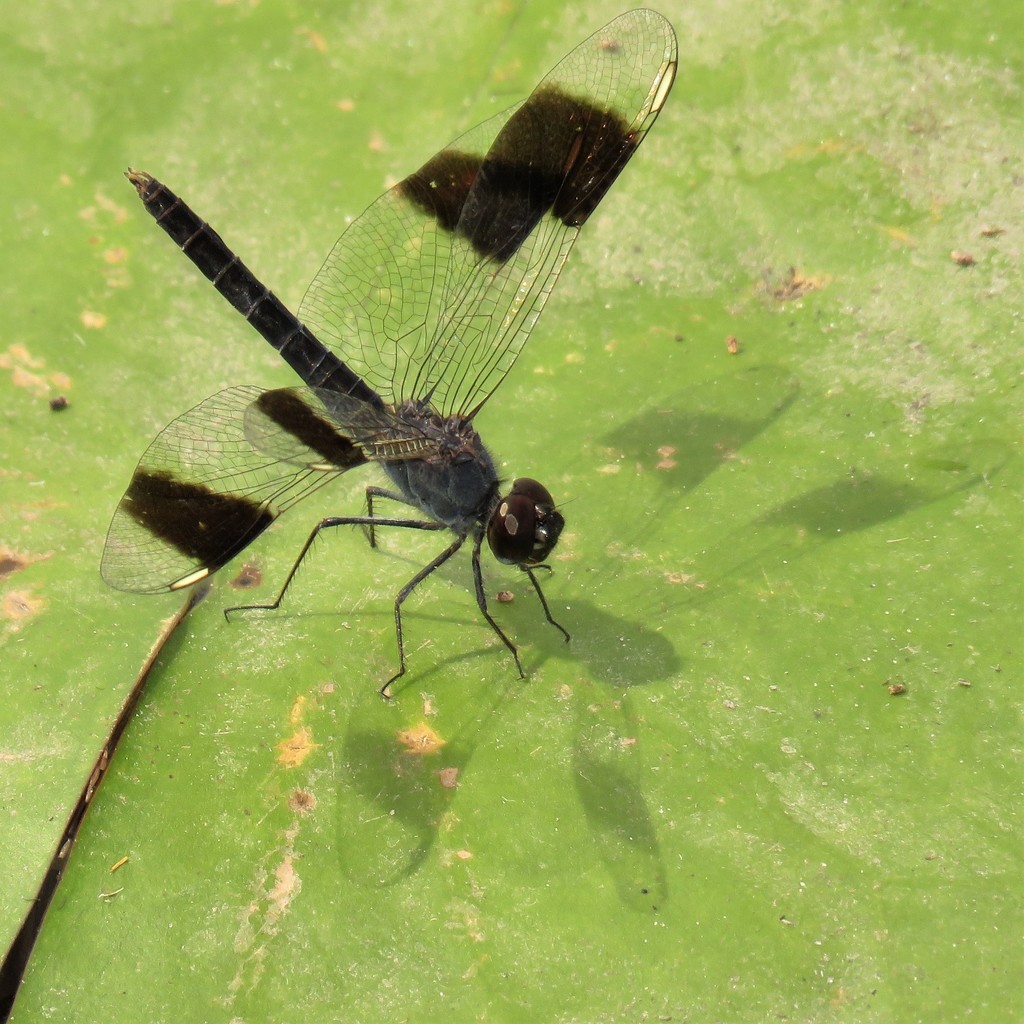
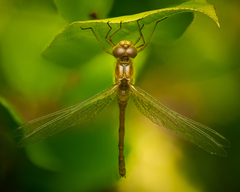
The Southern Banded Groundling is a small dragonfly about 33 mm long with a wingspan up to 57 mm. It lives around small pools in open or savannah areas, and females or young males may be seen away from water. Adults are active from September to May in South Africa, but can be seen year-round in tropical regions.
Source: Wikipedia
How to recognize it
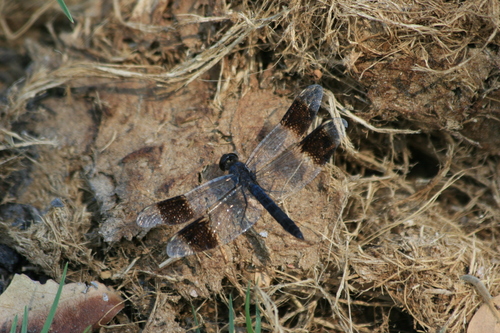
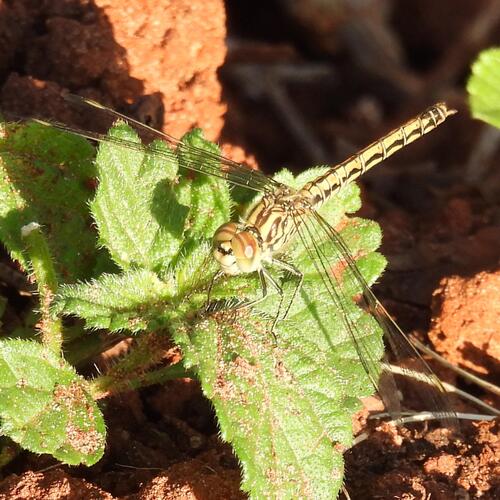
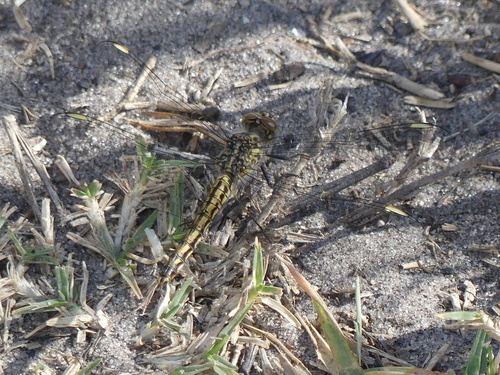
Males have a completely black body, black face and eyes, yellow-black pterostigmata, and a dark band near each wing tip. Females show a yellow-and-black pattern on the thorax and abdomen that fades with age, and have brown-banded eyes.
Source: Wikipedia
Where it lives
Found around small pools in open or savannah habitats, with or without aquatic vegetation.
Source: Wikipedia
What it eats
Often follows larger animals, including humans, catching insects that are flushed out as they move through grass. They gather in mixed-sex groups.
Source: Wikipedia
When you see it
Adult activity follows the same pattern: September-May in South Africa, year-round in the tropics.
Source: Wikipedia
More photos

Questions people ask
What do Southern Banded Groundlings eat?
They catch small insects that are disturbed by larger animals walking through the grass.
Source: Wikipedia
When are they active?
In South Africa they are most active from September to May, while in tropical regions they can be seen throughout the year.
Source: Wikipedia
Same family (Libellulidae)

Sources
- Wikipedia: https://en.wikipedia.org/wiki/Brachythemis_leucosticta
Look it up elsewhere: GBIF · iNaturalist · BugGuide · Wikipedia
Text written 2026-10-24 from the sources above and checked sentence by sentence against them. Data fetched 2026-10-22.