 Bug FAQ
Southern Darter
Sympetrum meridionale · Order: Odonata · Family: Libellulidae
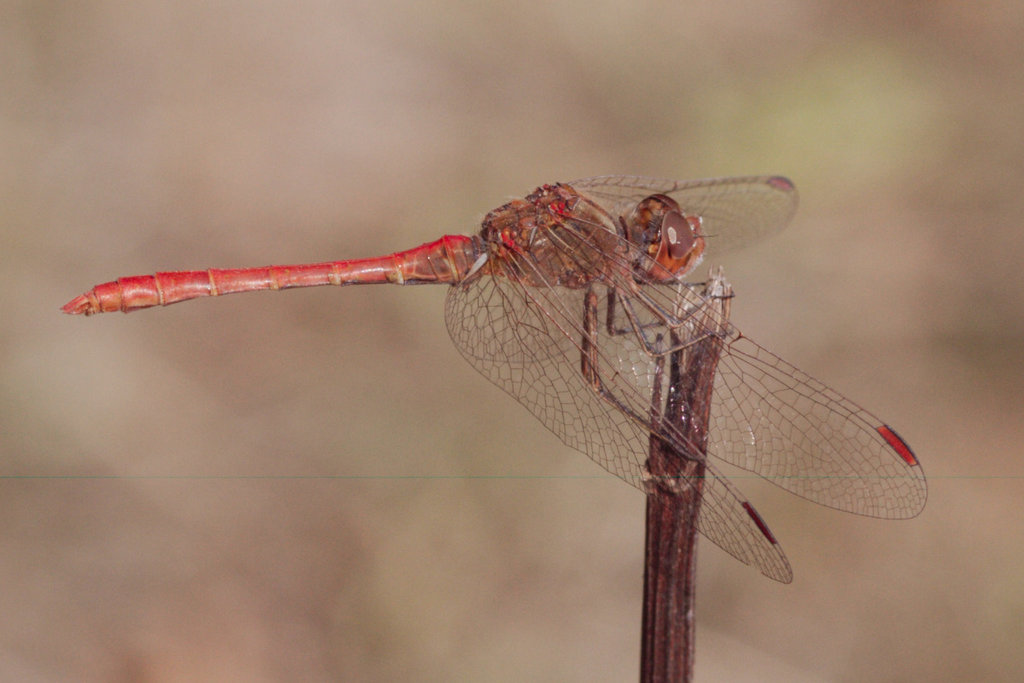
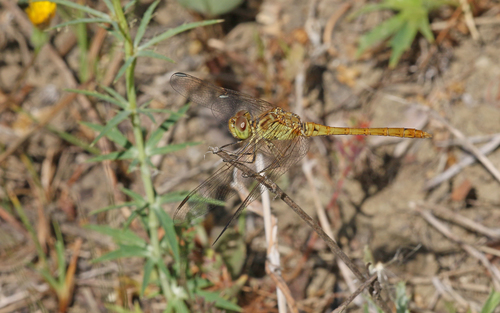
Adult Southern Darter dragonflies are 35 to 40 mm long with a wingspan of 52 to 60 mm. Males have an orange-reddish abdomen without black spots and clear wings with a yellow or pale-brown pterostigma. They appear from May to mid-October near shallow, well-vegetated still water, and their life cycle lasts two to three years.
Source: Wikipedia
How to recognize it
Male abdomen is orange-reddish and lacks black spots; wings are clear with a yellow or pale-brown pterostigma.
Source: Wikipedia
Size
Adults grow to 35 to 40 mm in length. Wingspan ranges from 52 to 60 mm.
Source: Wikipedia
Life cycle
Their life cycle lasts two to three years.
Source: Wikipedia
When you see it
Adults can be seen from May through mid-October.
Source: Wikipedia
Where it comes from
The species occurs throughout most of southern Europe.
Source: Wikipedia
More photos
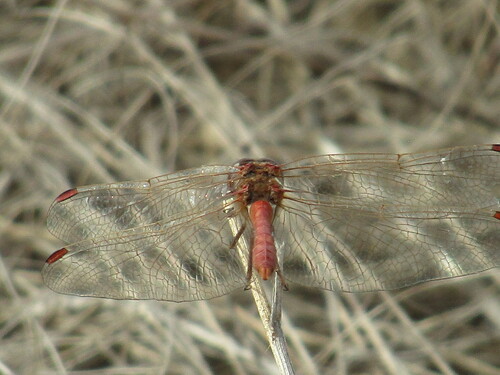
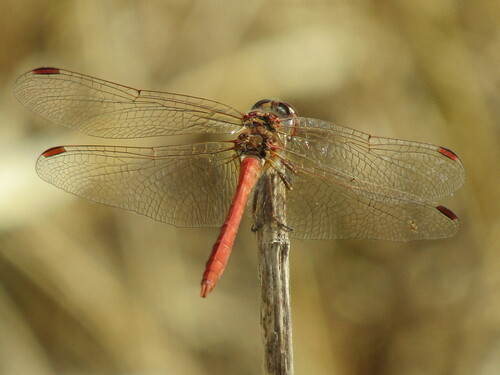
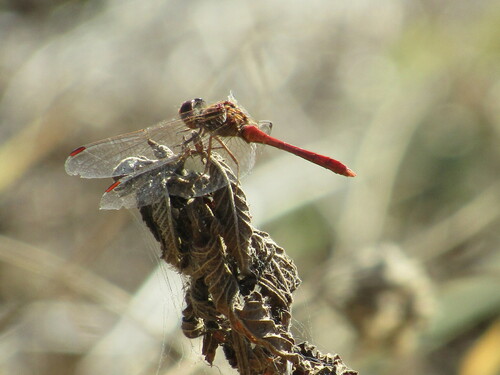
Questions people ask
When are Southern Darter dragonflies active?
They are active from May to mid-October.
Source: Wikipedia
What size are adult Southern Darters?
Adults are 35 to 40 mm long with a wingspan of 52 to 60 mm.
Source: Wikipedia
How can I identify a male Southern Darter?
Males have an orange-reddish abdomen without black spots and clear wings with a yellow or pale-brown pterostigma.
Source: Wikipedia
Same family (Libellulidae)

Sources
- Wikipedia: https://en.wikipedia.org/wiki/Sympetrum_meridionale
Look it up elsewhere: GBIF · iNaturalist · BugGuide · Wikipedia
Text written 2026-10-24 from the sources above and checked sentence by sentence against them. Data fetched 2026-10-22.