 Bug FAQ
Spotted Lanternfly
Lycorma delicatula · Order: Hemiptera · Family: Fulgoridae
Also called: spot clothing wax cicada, Chinese Blistering Cicada
Source: Wikipedia
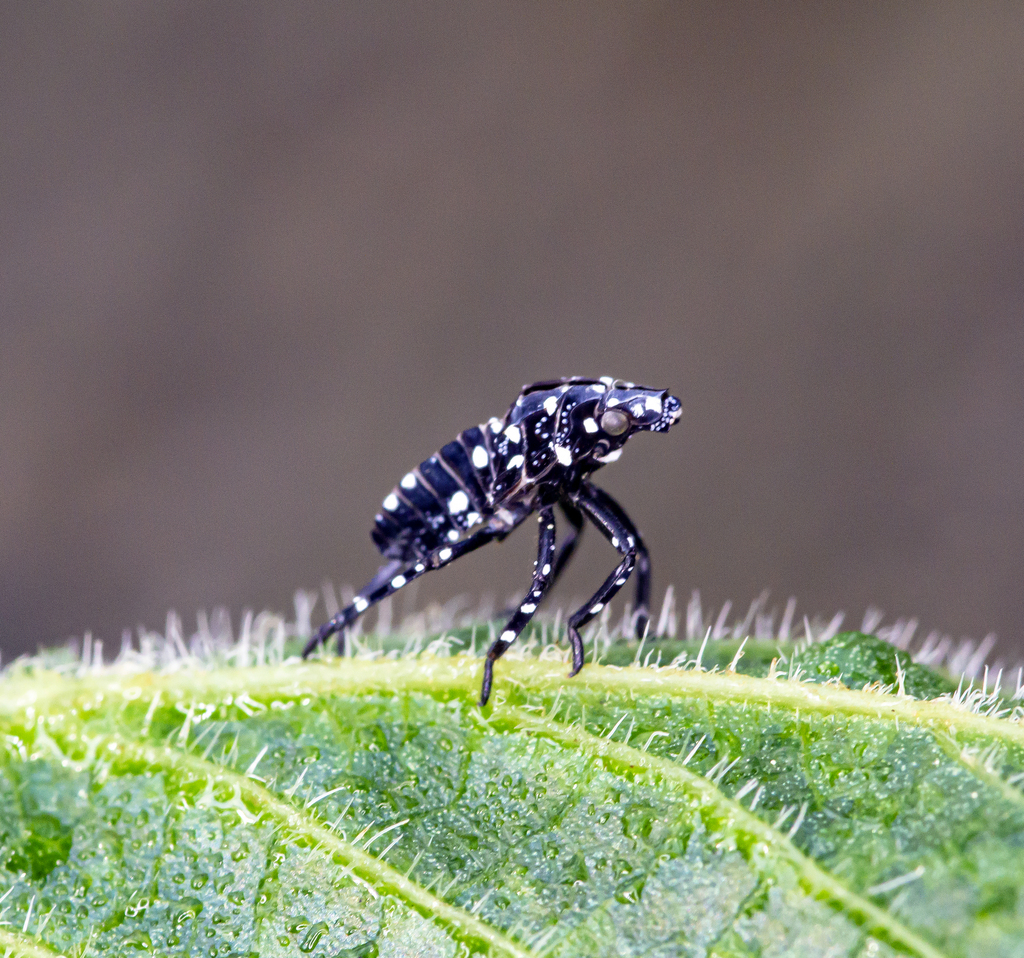
Adult lanternflies are about an inch long with striking black, grey and scarlet wings. They feed on plant sap, harming many ornamental and agricultural species, and have become a serious invasive pest in North America.
Source: Wikipedia, USDA APHIS
How to recognize it
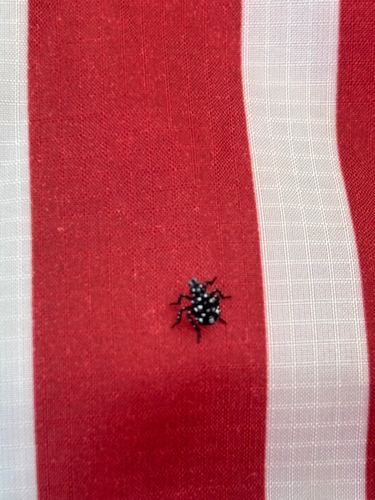
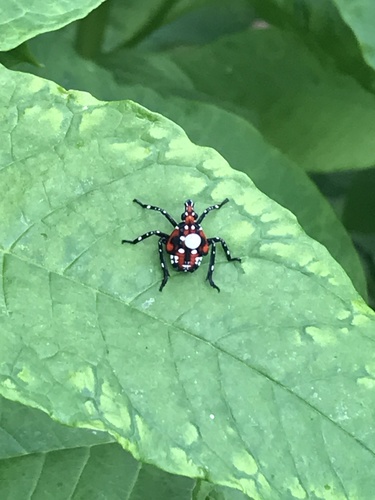
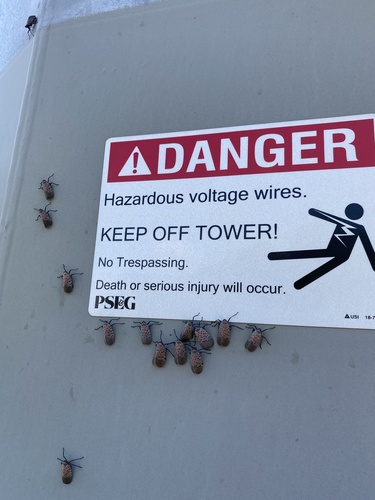
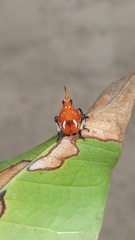
Adults have a black head, grey forewings and bright red hind wings. Nymphs start as spotted black-white insects and develop red pigment and wings as they grow. Forewings are brown with black spots and a speckled rear band; hind wings are scarlet with black front spots and white-black rear bars; the abdomen is yellow with black bars.
Source: Wikipedia, USDA APHIS
Size
Adults are roughly one inch long and half an inch wide.
Source: USDA APHIS
Is it a pest in the house?
It is a hitchhiking pest that lays eggs on hard surfaces such as vehicles, firewood, outdoor furniture, bikes and toys.
Source: USDA APHIS
Does it bite or sting?
Spotted lanternflies do not bite or sting people.
Source: Wikipedia
How to get rid of it
Large control efforts are underway in many U.S. states to reduce their populations.
Source: Wikipedia
Where it lives
Originally from China and Vietnam, it has spread to South Korea, Japan, 21 U.S. states and Ontario, Canada.
Source: Wikipedia
What it eats
It pierces the phloem of woody and non-woody plants and sucks the sap. Common hosts include the invasive tree of heaven.
Source: Wikipedia
When you see it
It does not bite or sting humans. First recorded in the United States in September 2014 and now spreading across the Northeast, South and West.
Source: Wikipedia
Where it comes from
The species is native to parts of China and Vietnam.
Source: Wikipedia
Lookalikes
If you’re unsure, check the spotted lanternfly look-alikes guide or photo gallery.
Source: USDA APHIS
Where it is found in the US
Recorded in 32 of 51 states and DC. Most records: New York, Pennsylvania, Virginia, Maryland, New Jersey, Ohio, Connecticut, District of Columbia.
Darker = more records. Counts are museum and citizen-science records, not population size.
Source: GBIF
Status: introduced in North America; introduced in United States. Source: iNaturalist
Months it is reported in the US
Source: GBIF
More photos
Questions people ask
What plants do they damage?
They feed on the sap of many woody and non-woody plants, harming trees, shade trees, ornamental plants and crops.
Source: Wikipedia
How can I prevent them from spreading to my home?
Remove egg masses from hard surfaces and report sightings to your local Cooperative Extension Agent.
Source: USDA APHIS
Same family (Fulgoridae)

Sources
- Wikipedia: https://en.wikipedia.org/wiki/Spotted_lanternfly
- USDA APHIS: https://www.aphis.usda.gov/plant-pests-diseases/slf
Look it up elsewhere: GBIF · iNaturalist · BugGuide · Wikipedia
Text written 2026-10-22 from the sources above and checked sentence by sentence against them. Data fetched 2026-10-22.