 Bug FAQ
Spring Azure
Celastrina ladon · Order: Lepidoptera · Family: Lycaenidae
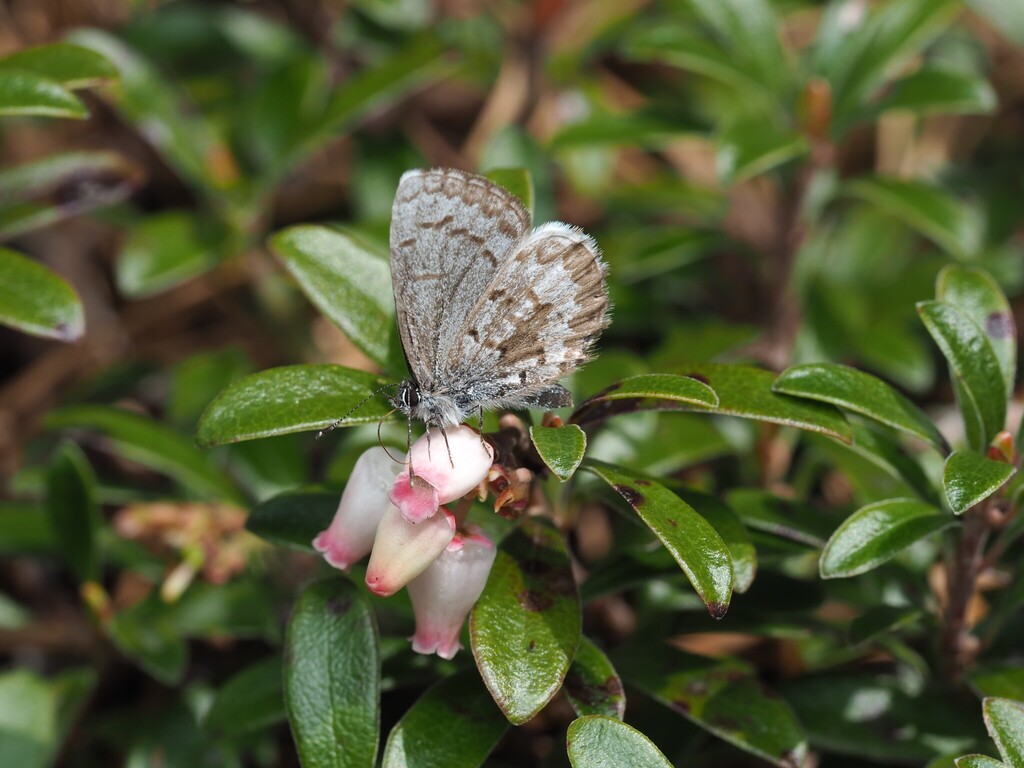
The butterfly measures about 22 to 35 mm across its wings. Females have metallic blue wings edged in black, and the underside of the wings is white with speckles. It lives across North America from Alaska and Canada down through most of the United States, extending south in the mountains to Colombia and also on Molokai, Hawaii.
Source: Wikipedia
How to recognize it
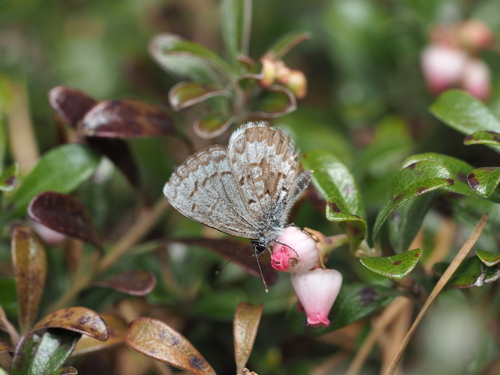
Females show metallic blue wings with a black border. The wing undersides are white and speckled.
Source: Wikipedia
Size
Wingspan ranges from 22 to 35 mm (0.87 to 1.38 in).
Source: Wikipedia
Where it lives
Found throughout North America, from Alaska and Canada to most of the United States, southward in mountains to Colombia, and on Molokai island, Hawaii.
Source: Wikipedia
Where it comes from
Native to North America, including Alaska, Canada, and most of the United States.
Source: Wikipedia
Lookalikes
Similar species include Cherry gall azure, Holly azure, Lucia azure, and Summer azure.
Source: Wikipedia
Where it is found in the US
Recorded in 50 of 51 states and DC. Most records: California, Illinois, Arizona, Washington, Oregon, Michigan, Massachusetts, Colorado.
Darker = more records. Counts are museum and citizen-science records, not population size.
Source: GBIF
Status: native in North America; native in United States; native in Canada. Source: iNaturalist
Months it is reported in the US
Source: GBIF
More photos
Same family (Lycaenidae)





Sources
- Wikipedia: https://en.wikipedia.org/wiki/Celastrina_ladon
Look it up elsewhere: GBIF · iNaturalist · BugGuide · ITIS · Wikipedia
Text written 2026-10-23 from the sources above and checked sentence by sentence against them. Data fetched 2026-10-23.