 Bug FAQ
Striped Ladybird
Micraspis frenata · Order: Coleoptera · Family: Coccinellidae
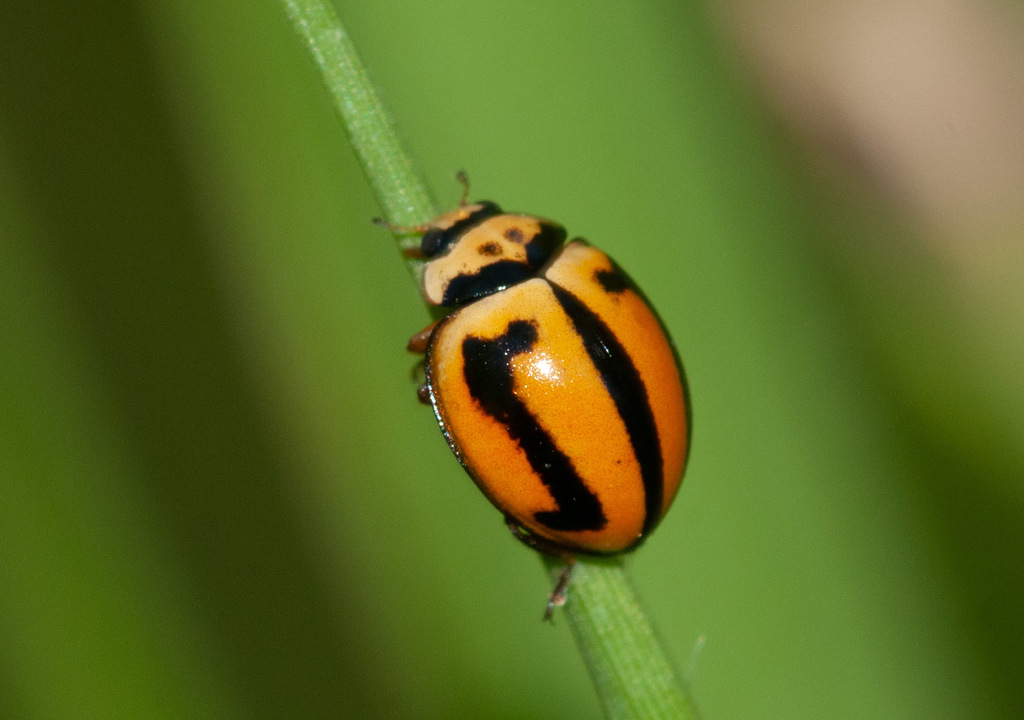
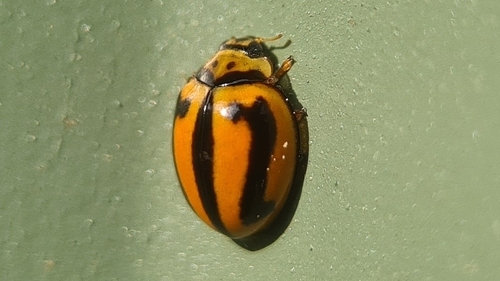
It has a yellow head, a partly yellow pronotum, a black scutellum, and yellow elytra with black borders, a suture and a dorsal stripe. It is native to Tasmania, mainland eastern Australia, and also occurs in New Caledonia.
Source: Wikipedia
How to recognize it
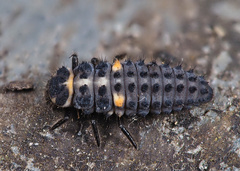
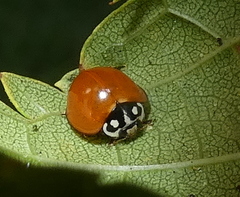
The head is yellow; the front of the pronotum is yellow but the base is black with a transparent side edge. The scutellum is black and the wing covers are yellow with black outer edges, a black seam line and a black stripe down the middle.
Source: Wikipedia
Size
Adults measure about 3.7 to 4.7 mm in length (approximately 0.15 to 0.19 in).
Source: Wikipedia
Where it comes from
It is endemic to Tasmania and the eastern states of mainland Australia. The species is also found in New Caledonia.
Source: Wikipedia
Where it is found in the US
Recorded in 1 of 51 states and DC. Most records: Pennsylvania.
Darker = more records. Counts are museum and citizen-science records, not population size.
Source: GBIF
More photos
Questions people ask
How can I identify a striped ladybird?
Look for a tiny beetle about 4 mm long with a yellow head, a partly yellow pronotum that turns black at the base, a black scutellum, and yellow wing covers edged and striped in black.
Source: Wikipedia
Same family (Coccinellidae)

Sources
- Wikipedia: https://en.wikipedia.org/wiki/Micraspis_frenata
Look it up elsewhere: GBIF · iNaturalist · BugGuide · Wikipedia
Text written 2026-10-24 from the sources above and checked sentence by sentence against them. Data fetched 2026-10-22.