 Bug FAQ
Variegated Lady Beetle
Hippodamia variegata · Order: Coleoptera · Family: Coccinellidae
Also called: Ladybird beetle, Adonis' Ladybird
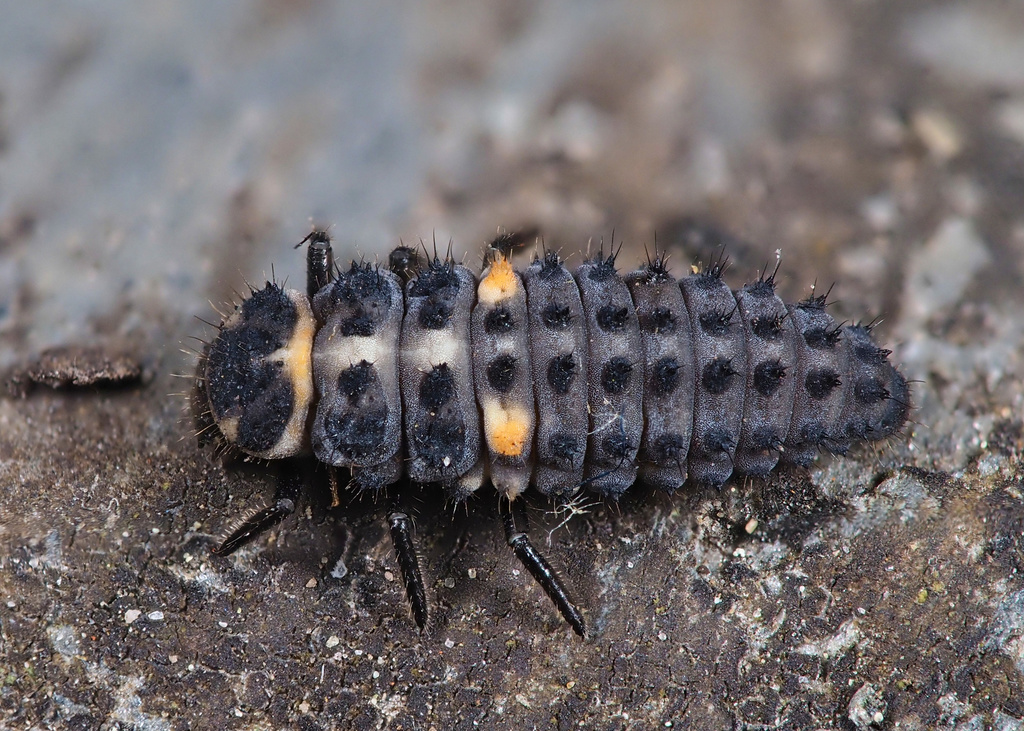
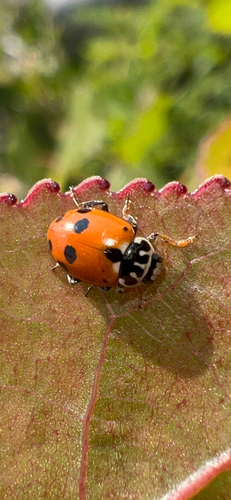
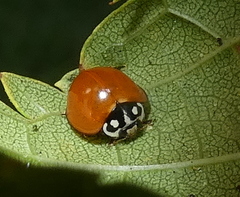
The variegated lady beetle is a small beetle about 3 to 5.5 mm long (0.12 to 0.22 in). Its body is slightly convex and elongated, with red or orange wing covers that may have up to thirteen black spots. It lives mainly in fields, meadows, gardens and shrubs, preferring dry, rough vegetation.
Source: Wikipedia
How to recognize it
The beetle has a slightly convex, elongated shape and red or orange elytra that can show from zero to thirteen black points.
Source: Wikipedia
Size
Adults grow to about 3 to 5.5 mm (0.12 to 0.22 in) in length.
Source: Wikipedia
Where it lives
It is most often found in fields, meadows, gardens and shrubs, especially where vegetation is dry and rough.
Source: Wikipedia
Lookalikes
It is also called the Adonis ladybird, variegated ladybug in the US, or spotted amber ladybeetle in Australia.
Source: Wikipedia
Where it is found in the US
Recorded in 30 of 51 states and DC. Most records: New York, Vermont, Illinois, Michigan, Ohio, Massachusetts, Pennsylvania, Wisconsin.
Darker = more records. Counts are museum and citizen-science records, not population size.
Source: GBIF
Status: introduced in North America; introduced in United States; introduced in Canada. Source: iNaturalist
Months it is reported in the US
Source: GBIF
More photos
Same family (Coccinellidae)

Sources
- Wikipedia: https://en.wikipedia.org/wiki/Hippodamia_variegata
Look it up elsewhere: GBIF · iNaturalist · BugGuide · ITIS · Wikipedia
Text written 2026-10-22 from the sources above and checked sentence by sentence against them. Data fetched 2026-10-22.