 Bug FAQ
Summer Azure
Celastrina neglecta · Order: Lepidoptera · Family: Lycaenidae

The summer azure is a small butterfly with a wingspan of about 23 to 29 mm. It flies from mid-June to early October and can have two or three generations in the southern part of its range.
Source: Wikipedia
How to recognize it
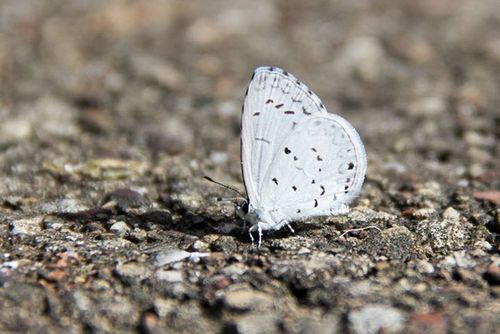
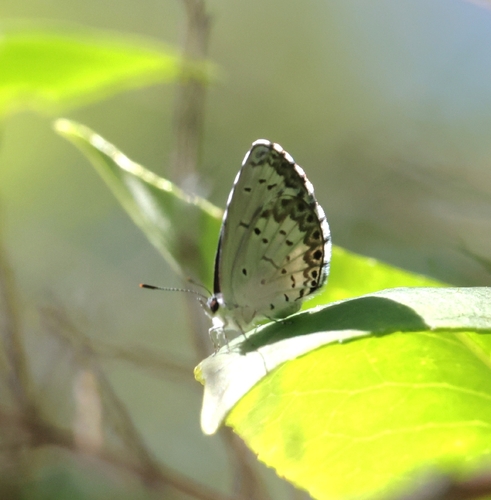
The upper side of the wings is a pale blue covered with many white scales, especially on the hindwing. Female butterflies show a wide black-grey band on the outer third and along the leading edge of the forewing.
Source: Wikipedia
What it eats
Caterpillars feed on plants such as New Jersey tea, dogwoods, and meadowsweet.
Source: Wikipedia
Life cycle
Adults are on the wing from mid-June until early October, producing two or three generations in the southern part of their range.
Source: Wikipedia
When you see it
Flight period extends from mid-June through early October, with multiple generations in warmer areas.
Source: Wikipedia
Where it is found in the US
Recorded in 45 of 51 states and DC. Most records: Maryland, Ohio, Illinois, Virginia, Pennsylvania, North Carolina, New York, Georgia.
Darker = more records. Counts are museum and citizen-science records, not population size.
Source: GBIF
Status: native in North America; native in Canada; native in United States. Source: iNaturalist
Months it is reported in the US
Source: GBIF
More photos

Same family (Lycaenidae)


Sources
- Wikipedia: https://en.wikipedia.org/wiki/Celastrina_neglecta
Look it up elsewhere: GBIF · iNaturalist · BugGuide · ITIS · Wikipedia
Text written 2026-10-22 from the sources above and checked sentence by sentence against them. Data fetched 2026-10-22.