 Bug FAQ
Swift Woodlouse
Porcellio laevis · Order: Isopoda · Family: Porcellionidae
Also called: dooryard sowbug, smooth slater
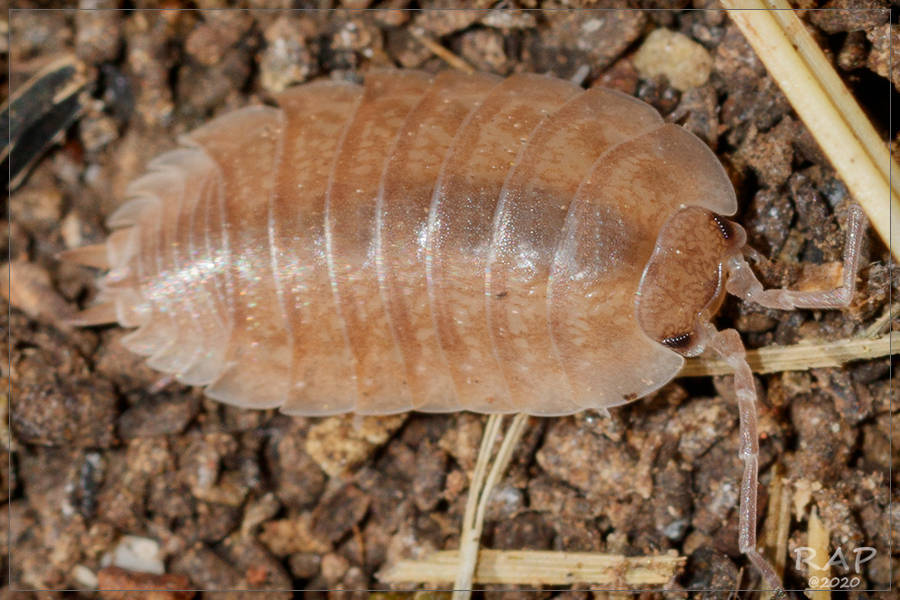
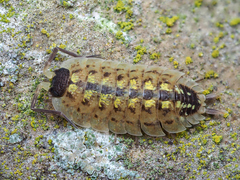
Swift Woodlice can grow up to about 20 mm long and have a smooth back, which helps tell them apart from many relatives. They live in damp places under rocks or logs, are kept as easy-care pets, and eat a wide range of organic material such as leaves, moss, lichens and rotting wood.
Source: Wikipedia
How to recognize it
Males can be recognized by their long, spear-shaped uropods.
Source: Wikipedia
Size
Adults reach up to 20 mm (0.79 in) in length and have a smooth dorsal surface.
Source: Wikipedia
Where it lives
They are commonly kept as pets because they are easy to care for and come in many colour forms.
Source: Wikipedia
What it eats
It is an opportunistic feeder that eats leaves, moss, lichens and even rotting wood.
Source: Wikipedia
Life cycle
The species develops directly from yolky eggs. Eggs and juveniles stay inside a brood pouch called a marsupium until they reach the first juvenile stage.
Source: Wikipedia
Lookalikes
Its smooth back distinguishes it from many other Porcellio species.
Source: Wikipedia
Where it is found in the US
Recorded in 30 of 51 states and DC. Most records: California, Texas, Arizona, New Mexico, Hawaii, Florida, Oklahoma, Utah.
Darker = more records. Counts are museum and citizen-science records, not population size.
Source: GBIF
Status: introduced in North America; introduced in United States. Source: iNaturalist
Months it is reported in the US
Source: GBIF
More photos

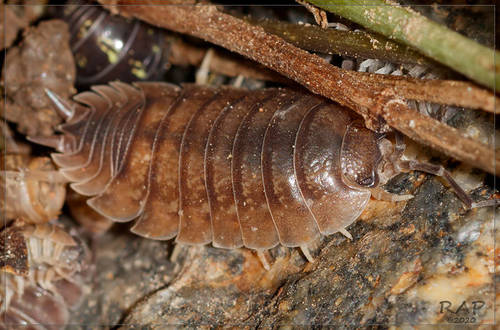
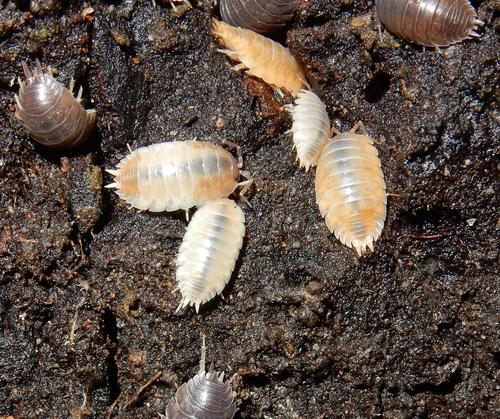
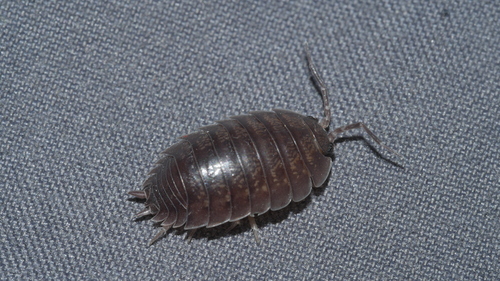
Same family (Porcellionidae)

Sources
- Wikipedia: https://en.wikipedia.org/wiki/Porcellio_laevis
Look it up elsewhere: GBIF · iNaturalist · BugGuide · ITIS · Wikipedia
Text written 2026-10-22 from the sources above and checked sentence by sentence against them. Data fetched 2026-10-22.