 Bug FAQ
Tailed Cellar Spider
Crossopriza lyoni · Order: Araneae · Family: Pholcidae
Also called: Box Spider, Cellar spider, Hump-backed Daddy-long-legs Spider, Tailed Daddy Longlegs Spider
Source: Wikipedia
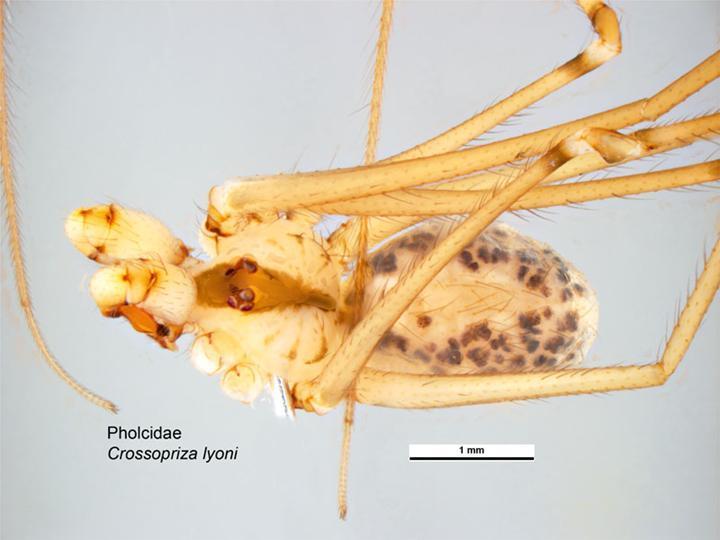
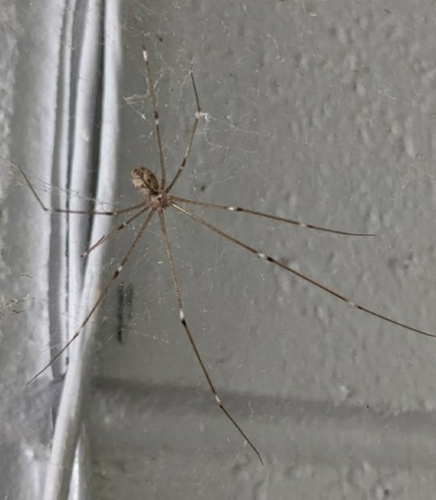
The tailed cellar spider has very long, fragile legs and a small body, with females 3-7 mm and males 2.5-6 mm long. It lives in and around human structures worldwide, eats mosquitoes and other insects, and is harmless to humans though its webs may be unsightly.
Source: Wikipedia
How to recognize it
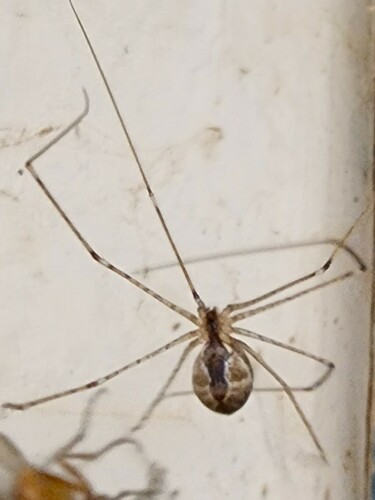
Its abdomen looks boxy from the side and the top of its body is round.
Source: Wikipedia
Size
Legs can reach up to 6 cm, while the body length ranges from about 2.5 mm to 7 mm. Females are typically 3-7 mm long and males slightly smaller, about 2.5-6 mm.
Source: Wikipedia
Is it a pest in the house?
It does not damage people but its extensive webs can be considered a household pest.
Source: Wikipedia
Does it bite or sting?
Its bite is harmless and its venom does not affect humans.
Source: Wikipedia
How to get rid of it
Webs can be removed with a broom or vacuum, and reducing indoor insects by using yellow or sodium-vapor lights helps keep them away.
Source: Wikipedia
Where it lives
It prefers to live in or near human buildings and other structures.
Source: Wikipedia
What it eats
It preys on mosquitoes and other arthropods, eating up to 20 Aedes mosquitoes a day.
Source: Wikipedia
Life cycle
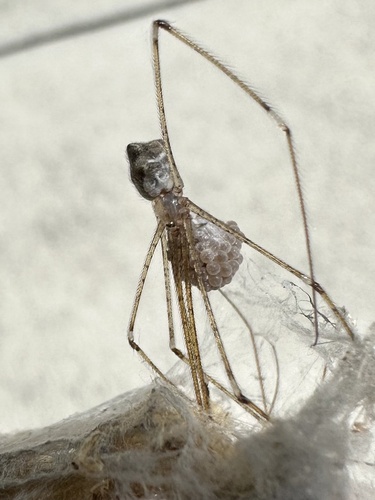
A male can mate with several females, inserting his pedipalps to transfer sperm packets.
Source: Wikipedia
When you see it
The spider is harmless to humans. Urban legends claim it is highly venomous but its fangs cannot pierce skin.
Source: Wikipedia
Where it comes from
Its original range is unknown, but it has been spread worldwide and is now pantropical.
Source: Wikipedia
Lookalikes
It can be told apart from related species by its boxy abdomen, two cheliceral apophyses in males, and its global distribution.
Source: Wikipedia
Where it is found in the US
Recorded in 35 of 51 states and DC. Most records: Florida, Texas, Louisiana, Arizona, Georgia, Alabama, North Carolina, Indiana.
Darker = more records. Counts are museum and citizen-science records, not population size.
Source: GBIF
Status: introduced in North America; introduced in United States; introduced in Canada. Source: iNaturalist
Months it is reported in the US
Source: GBIF
More photos

Questions people ask
Do tailed cellar spiders bite humans?
No, their bite is harmless and their venom does not affect people.
Source: Wikipedia
Why do they appear in houses?
They like the shelter of human structures and are attracted to the insects that gather near lights.
Source: Wikipedia
How can I get rid of them?
Remove their webs with a broom or vacuum and limit indoor insects by switching exterior lights to yellow or sodium-vapor types.
Source: Wikipedia
Same family (Pholcidae)


Sources
- Wikipedia: https://en.wikipedia.org/wiki/Crossopriza_lyoni
Look it up elsewhere: GBIF · iNaturalist · BugGuide · ITIS · Wikipedia
Text written 2026-10-22 from the sources above and checked sentence by sentence against them. Data fetched 2026-10-22.