 Bug FAQ
Tigrosa annexa
Tigrosa annexa · Order: Araneae · Family: Lycosidae
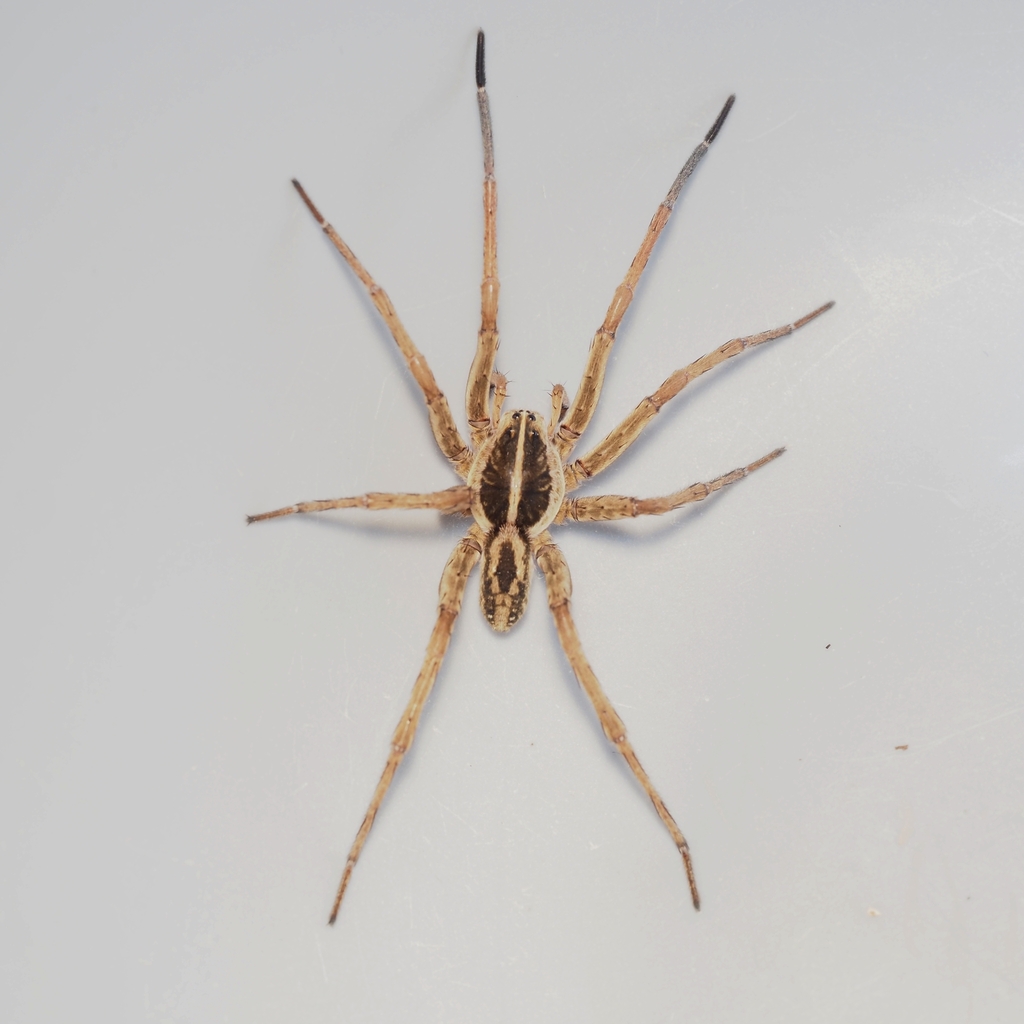
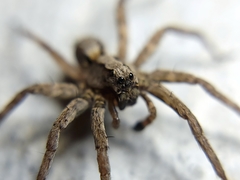
Tigrosa annexa is a wolf spider native to eastern North America, found from Texas to Florida and north to Ohio. Males are about 26 mm long, while females are smaller at around 18 mm. It lives in tropical hardwood hammocks with dry or limestone soils and prefers grassy areas for camouflage.
Source: Wikipedia
Size
Males average 26.17 mm in total length, ranging from 21.3 to 32.1 mm. Females average 17.96 mm, ranging from 16.5 to 20.0 mm.
Source: Wikipedia
Where it lives
The species prefers grass over sand for better camouflage.
Source: Wikipedia
What it eats
Feeds on small invertebrates such as beetles and mole crickets.
Source: Wikipedia
Life cycle
Females carry egg sacs from their spinnerets instead of building a web. Spiderlings emerge 4 to 6 weeks later when the female tears open the sac.
Source: Wikipedia
Where it is found in the US
Recorded in 22 of 51 states and DC. Most records: Texas, Florida, North Carolina, Virginia, Georgia, Alabama, Tennessee, Maryland.
Darker = more records. Counts are museum and citizen-science records, not population size.
Source: GBIF
Status: native in North America; native in United States. Source: iNaturalist
Months it is reported in the US
Source: GBIF
More photos


Same family (Lycosidae)


Sources
- Wikipedia: https://en.wikipedia.org/wiki/Tigrosa_annexa
Look it up elsewhere: GBIF · iNaturalist · BugGuide · ITIS · Wikipedia
Text written 2026-10-22 from the sources above and checked sentence by sentence against them. Data fetched 2026-10-22.