 Bug FAQ
Two-spotted Skipper
Euphyes bimacula · Order: Lepidoptera · Family: Hesperiidae
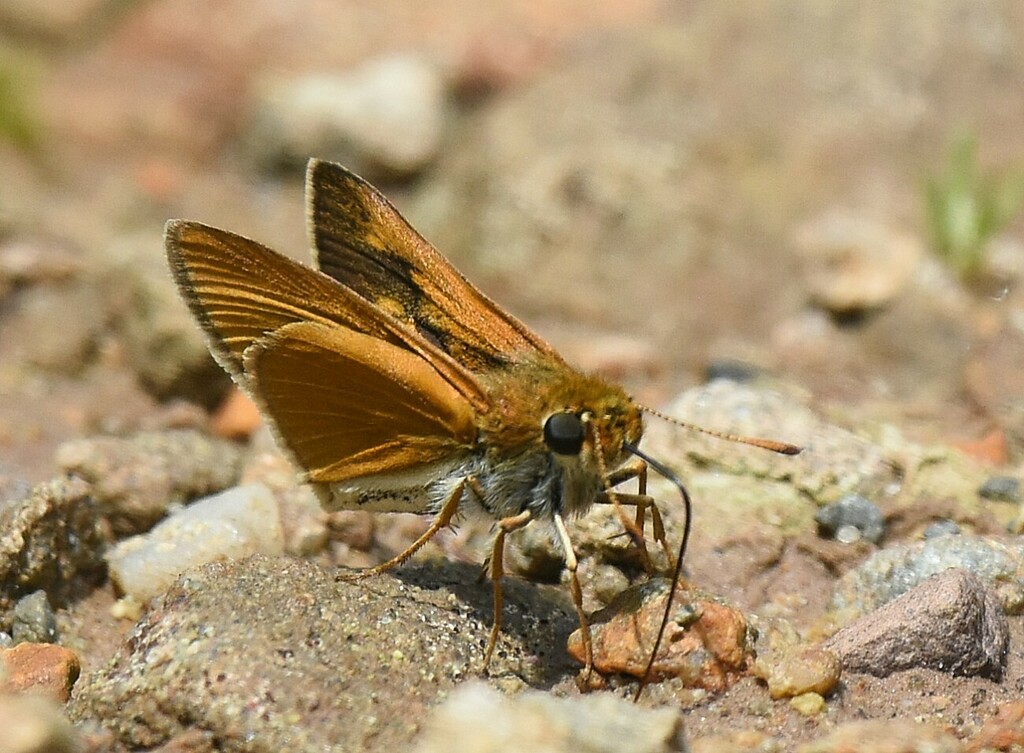
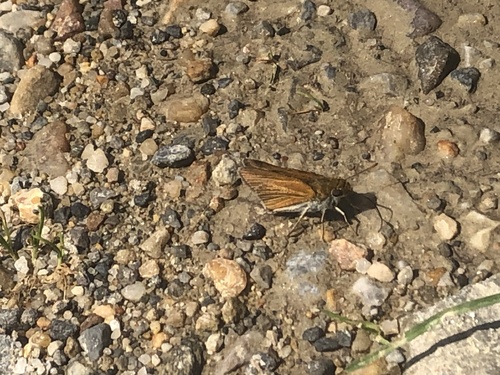
The Two-spotted Skipper has a wingspan of about 25 to 30 mm. Its upper wings are dark brown while the underside is a pale tawny orange. It lives across much of North America, from the western Great Plains to eastern Canada and down the Atlantic coast to the Gulf.
Source: Wikipedia
How to recognize it
The butterfly’s upperside is dark brown and the underside is a pale tawny orange.
Source: Wikipedia
Size
Wingspan ranges from 25 to 30 mm.
Source: Wikipedia
What it eats
Caterpillars feed on the sedge Carex trichocarpa.
Source: Wikipedia
Where it comes from
It is native to North America, found from northeast Colorado and western Nebraska eastward to southern Quebec, and south to Georgia and the Gulf Coast.
Source: Wikipedia
Where it is found in the US
Recorded in 29 of 51 states and DC. Most records: Michigan, Illinois, Vermont, Maine, North Carolina, New Jersey, New York, Colorado.
Darker = more records. Counts are museum and citizen-science records, not population size.
Source: GBIF
Status: native in North America; native in Canada; native in United States. Source: iNaturalist
Months it is reported in the US
Source: GBIF
More photos
Questions people ask
Where is the Two-spotted Skipper found?
It occurs across much of North America, from the western Great Plains to eastern Canada and down the Atlantic coast to the Gulf.
Source: Wikipedia
Same family (Hesperiidae)




Sources
- Wikipedia: https://en.wikipedia.org/wiki/Euphyes_bimacula
Look it up elsewhere: GBIF · iNaturalist · BugGuide · ITIS · Wikipedia
Text written 2026-10-24 from the sources above and checked sentence by sentence against them. Data fetched 2026-10-24.