 Bug FAQ
Western Pygmy-Blue
Brephidium exilis · Order: Lepidoptera · Family: Lycaenidae
Also called: Pygmy Blue, Western pygmy blue butterfly

The Western Pygmy-Blue is a very small butterfly with a wingspan of about 12 to 20 mm.
Source: Wikipedia
Size
The wingspan ranges from 12 to 20 mm.
Source: Wikipedia
Where it lives
It is found in alkaline environments such as deserts, salt marshes, and other barren areas.
Source: Wikipedia
What it eats
Caterpillars feed on all parts of host plants, especially pigweed, saltbush, and other goosefoot family species. Adult butterflies drink nectar only.
Source: Wikipedia
When you see it
Adults appear from July to September in the northern part of the range, and can be seen year-round in South Texas.
Source: Wikipedia
Where it comes from
Its natural range includes the southwestern United States from California to west Texas, and extends from Mexico through Central America to Venezuela.
Source: Wikipedia
Where it is found in the US
Recorded in 21 of 51 states and DC. Most records: California, Texas, Arizona, New Mexico, Nevada, Utah, Colorado, Idaho.
Darker = more records. Counts are museum and citizen-science records, not population size.
Source: GBIF
Months it is reported in the US
Source: GBIF
More photos

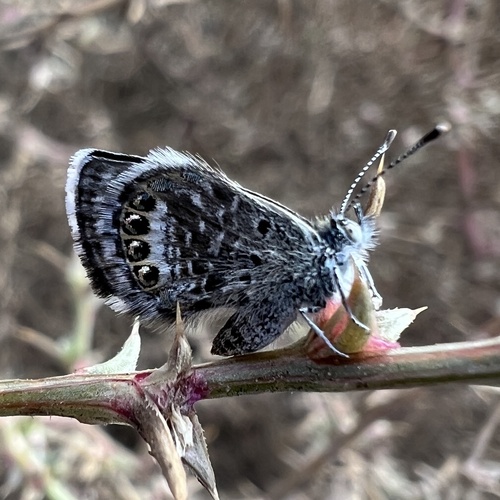
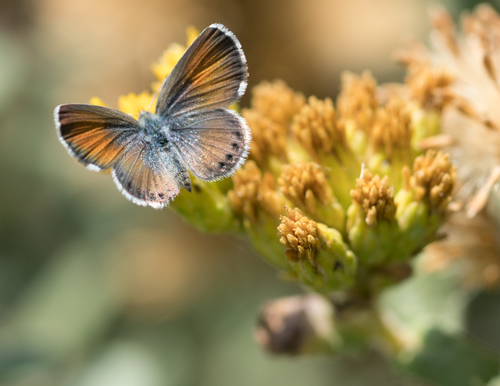
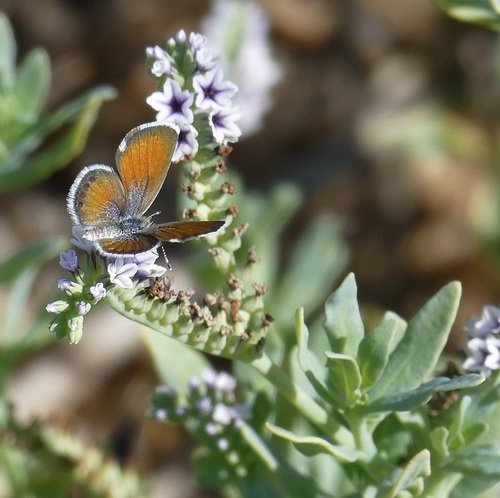
Same family (Lycaenidae)

Sources
- Wikipedia: https://en.wikipedia.org/wiki/Western_pygmy_blue
Look it up elsewhere: GBIF · iNaturalist · BugGuide · ITIS · Wikipedia
Text written 2026-10-22 from the sources above and checked sentence by sentence against them. Data fetched 2026-10-22.