 Bug FAQ
White-lined Sphinx
Hyles lineata · Order: Lepidoptera · Family: Sphingidae
Also called: White-lined Hawk-moth, White-lined Sphinx Moth
Source: Wikipedia

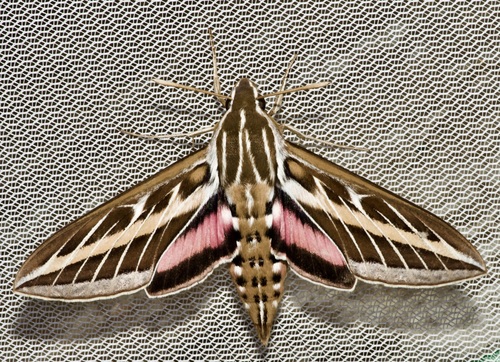
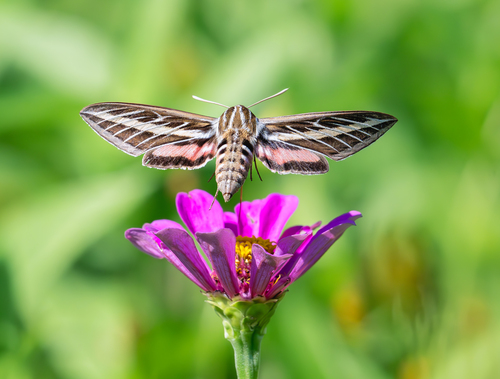
Adult white-lined sphinx moths have a 2 to 3 inch wingspan and fly like hummingbirds. Their forewings are dark brown with a tan stripe and white-lined veins, while the hindwings are black with a broad pink-red band. They occur from Central America up through southern Canada, living in deserts, gardens, suburbs and mountain areas.
Source: Wikipedia
Size
Adults have a wingspan of about 2 to 3 inches.
Source: Wikipedia
Is it a pest in the house?
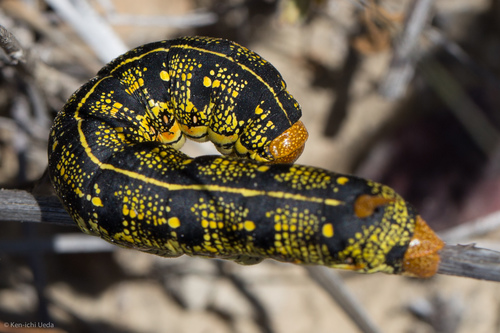
Caterpillars can form huge groups that damage garden crops such as grapes and tomatoes.
Source: Wikipedia
Does it bite or sting?
The caterpillar’s horn is not a stinger and they are not harmful to people.
Source: Wikipedia
How to get rid of it
Because the larvae are powerful eaters and gather in large numbers, they can become a garden pest.
Source: Wikipedia
Where it lives
They are found in many habitats, including deserts, gardens, suburbs and mountain regions of Colorado.
Source: Wikipedia
What it eats
Caterpillars eat a wide variety of host plants, while adults mainly sip nectar from flowers.
Source: Wikipedia
Life cycle
Larvae overwinter and can emerge from February to November, feeding on many plants. Typically there are two generations each year, with more in warmer areas.
Source: Wikipedia
When you see it
Adults appear in mid-May after the larvae survive the winter.
Source: Wikipedia
Where it comes from
Their range stretches from Central America through most of the United States up to southern Canada.
Source: Wikipedia
Lookalikes
The white-lined sphinx is a moth in the Sphingidae family, often called a hummingbird moth because of its size and flight.
Source: Wikipedia
Where it is found in the US
Recorded in 51 of 51 states and DC. Most records: California, Texas, Arizona, Colorado, New Mexico, Utah, Oklahoma, Nevada.
Darker = more records. Counts are museum and citizen-science records, not population size.
Source: GBIF
Status: native in North America; native in United States; native in Canada. Source: iNaturalist
Months it is reported in the US
Source: GBIF
More photos

Questions people ask
Do they bite or sting?
No, the caterpillars do not bite or sting and are not harmful to humans.
Source: Wikipedia
What plants do they damage?
Their larvae can damage crops like grapes, tomatoes and other garden vegetables.
Source: Wikipedia
Same family (Sphingidae)
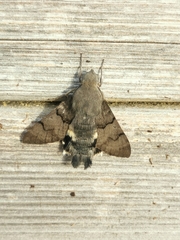 Eurasian Hummingbird HawkmothMacroglossum stellatarum
 Snowberry ClearwingHemaris diffinis
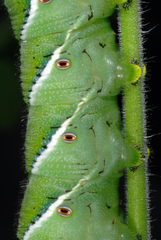 Carolina SphinxManduca sextaDamages trees, gardens or crops
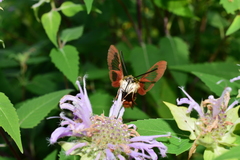 Hummingbird ClearwingHemaris thysbeDamages trees, gardens or crops
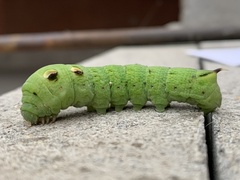 Elephant HawkmothDeilephila elpenor
 Convolvulus HawkmothAgrius convolvuliDamages trees, gardens or crops
Sources
- Wikipedia: https://en.wikipedia.org/wiki/Hyles_lineata
Look it up elsewhere: GBIF · iNaturalist · BugGuide · ITIS · Wikipedia
Text written 2026-10-22 from the sources above and checked sentence by sentence against them. Data fetched 2026-10-22.