 Bug FAQ
Alder Leaf Beetle
Agelastica alni · Order: Coleoptera · Family: Chrysomelidae
Source: Wikipedia
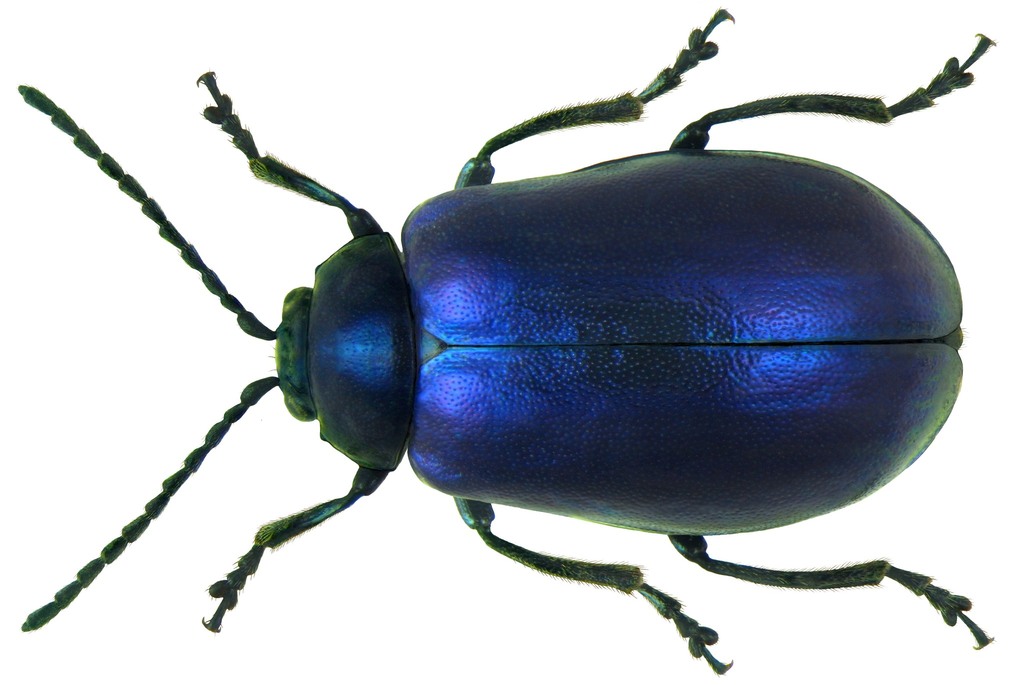
Adults are small, about 6 to 7 mm long, and are black or metallic blue; larvae are black. They live on grey or speckled alder, sometimes on black alder, hazel, birch, or hornbeam. One generation appears each year; adults overwinter as winged insects and emerge in spring.
Source: Wikipedia
How to recognize it
Adults are black or metallic blue and about 6 to 7 mm long; larvae are black.
Source: Wikipedia
Size
The beetle measures roughly 6 to 7 mm in length.
Source: Wikipedia
Where it lives
It is found on grey or speckled alder and, if needed, on black alder, hazel, birch, or hornbeam.
Source: Wikipedia
What it eats
Both adults and larvae feed on alder leaves, especially grey or speckled alder, and may use hazel, birch, or hornbeam when alder is scarce.
Source: Wikipedia
Life cycle
Adults overwinter as winged insects, emerge in spring, and produce one generation per year.
Source: Wikipedia
When you see it
Winged adults overwinter and become active in spring.
Source: Wikipedia
More photos


Same family (Chrysomelidae)
 Spotted Cucumber BeetleDiabrotica undecimpunctataDamages trees, gardens or crops
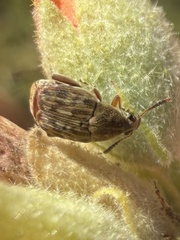 Bean WeevilAcanthoscelides obtectusDamages trees, gardens or crops
 Cowpea WeevilCallosobruchus maculatusDamages trees, gardens or crops
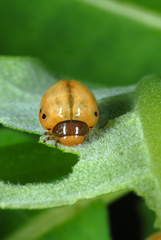 Swamp Milkweed Leaf BeetleLabidomera clivicollisDamages trees, gardens or crops
 Dogbane Leaf BeetleChrysochus auratus
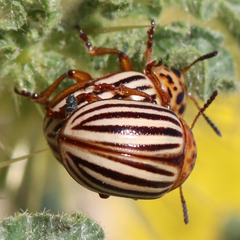 Colorado Potato BeetleLeptinotarsa decemlineata
Sources
- Wikipedia: https://en.wikipedia.org/wiki/Agelastica_alni
Look it up elsewhere: GBIF · iNaturalist · BugGuide · ITIS · Wikipedia
Text written 2026-10-22 from the sources above and checked sentence by sentence against them. Data fetched 2026-10-22.