 Bug FAQ
Bean Weevil
Acanthoscelides obtectus · Order: Coleoptera · Family: Chrysomelidae
Also called: Common Bean Weevil, dried bean weevil, pea weevil
Source: Wikipedia
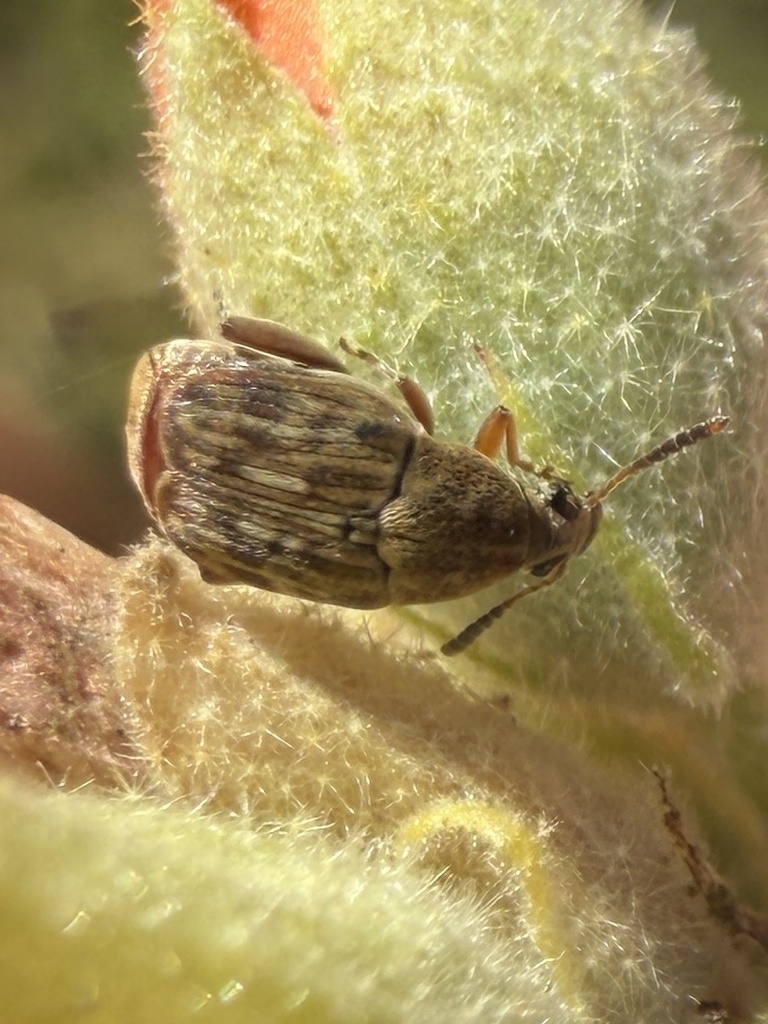
Bean weevils are tiny brown beetles that live on bean seeds in fields and storage. The larvae eat the seeds while adults feed on pollen, and a generation takes about three months. Warm temperatures speed up their life cycle, and they can produce several generations in stored seed.
Source: Wikipedia
How to recognize it
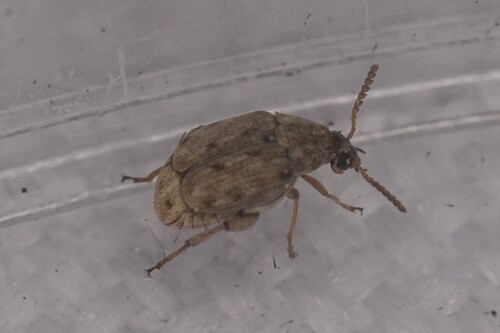
Their legs are yellow-red, antennae reddish-brown, and the head is bent forward without a long snout.
Source: Wikipedia
Size
Adults measure between 2 and 5 mm long.
Source: Wikipedia
Is it a pest in the house?
They damage stored legume seeds, potentially cutting crop yields by up to 60 %.
Source: Wikipedia
Where it lives
They prefer warm climates, thriving best at 27 to 29 °C as adults, 24 to 27 °C as larvae, and 22 to 26 °C as pupae. They are found on legume seeds in fields and in stored grain facilities.
Source: Wikipedia
What it eats
Adults eat pollen, while the larvae develop inside and consume bean, pea, vetch and other legume seeds.
Source: Wikipedia
Life cycle
One generation takes about 100 to 110 days from egg to adult. In warm storage conditions, multiple generations can occur back-to-back.
Source: Wikipedia
When you see it
Adults overwinter inside seeds or pods and emerge to mate in April.
Source: Wikipedia
Where it comes from
Originally from the mountains of northern South America, they have spread worldwide via grain shipments.
Source: Wikipedia
Lookalikes
Unlike true weevils, bean weevils lack the long snout; their head is bent forward.
Source: Wikipedia
Where it is found in the US
Recorded in 16 of 51 states and DC. Most records: Kentucky, Utah, Michigan, Florida, Texas, California, Louisiana, Idaho.
Darker = more records. Counts are museum and citizen-science records, not population size.
Source: GBIF
Status: introduced in Canada. Source: iNaturalist
Months it is reported in the US
Source: GBIF
More photos
Questions people ask
How can I prevent bean weevils in stored beans?
Keep beans cool and dry; warm storage encourages rapid breeding.
Source: Wikipedia
Can bean weevils damage my garden beans?
Yes, the larvae feed inside the seeds, reducing yield.
Source: Wikipedia
Same family (Chrysomelidae)
 Spotted Cucumber BeetleDiabrotica undecimpunctataDamages trees, gardens or crops
 Cowpea WeevilCallosobruchus maculatusDamages trees, gardens or crops
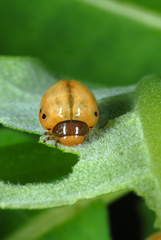 Swamp Milkweed Leaf BeetleLabidomera clivicollisDamages trees, gardens or crops
 Alder Leaf BeetleAgelastica alniDamages trees, gardens or crops
 Dogbane Leaf BeetleChrysochus auratus
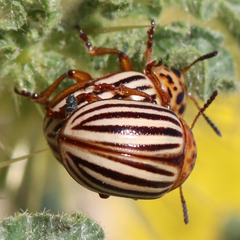 Colorado Potato BeetleLeptinotarsa decemlineata
Sources
- Wikipedia: https://en.wikipedia.org/wiki/Acanthoscelides_obtectus
Look it up elsewhere: GBIF · iNaturalist · BugGuide · ITIS · Wikipedia
Text written 2026-10-22 from the sources above and checked sentence by sentence against them. Data fetched 2026-10-22.