 Bug FAQ
American Lady
Vanessa virginiensis · Order: Lepidoptera · Family: Nymphalidae
Also called: America Painted Lady, American Painted Lady
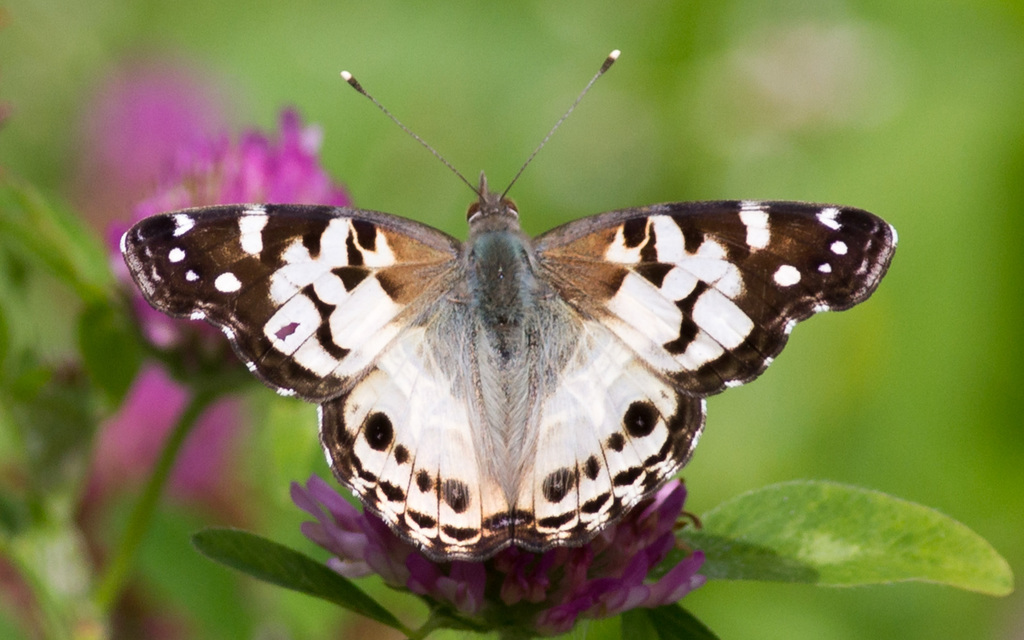
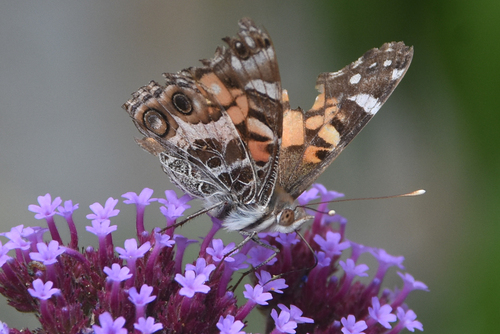
The American lady butterfly has wings about 5 cm across and is found across temperate North America, as well as on Madeira, the Canary Islands, and introduced in Hawaii. It can be told apart from similar species by two large eyespots on the underside of the hindwing and a white dot in the forewing’s sub-apical area. Caterpillars feed on various Asteraceae such as cudweeds, pussytoes, and everlastings.
Source: Wikipedia
How to recognize it
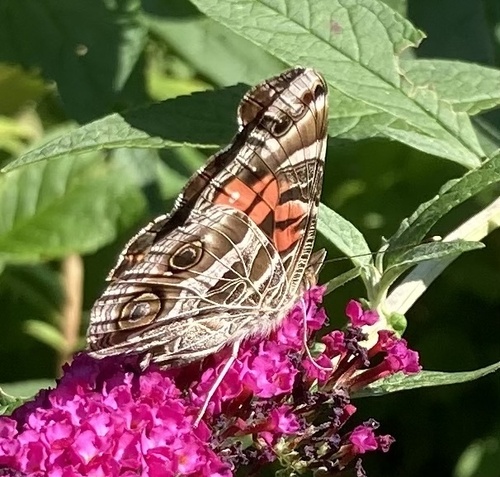
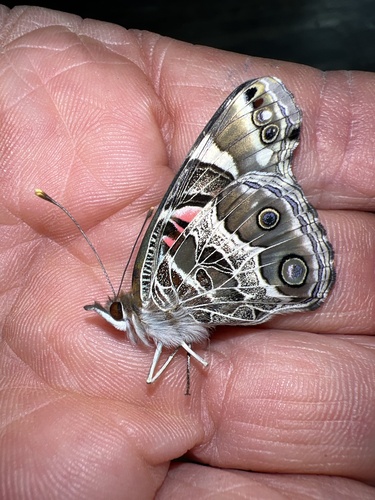
Two large eyespots on the ventral side and a white dot in the forewing sub-apical field distinguish it from other Vanessa species.
Source: Wikipedia
Size
The wings span roughly 5 cm (2 in).
Source: Wikipedia
Where it lives
It lives throughout North America and can be found in all life stages across temperate regions, Madeira, and the Canary Islands.
Source: Wikipedia
What it eats
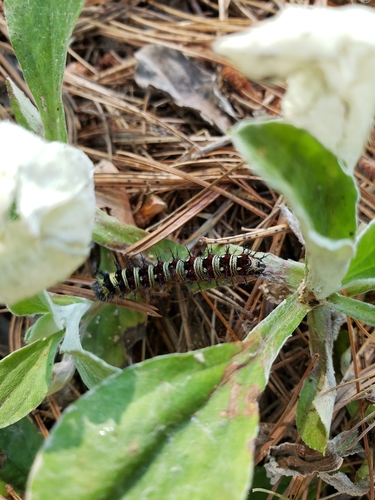
Larvae eat plants in the Asteraceae family, especially cudweeds, pussytoes, and everlastings.
Source: Wikipedia
Life cycle
All stages occur throughout temperate North America, Madeira, and the Canary Islands, and it is also present in Hawaii.
Source: Wikipedia
Lookalikes
Compared with V. cardui, which has four small eyespots, and V. annabella, which has none; the forewing tip spot is pale orange in this species.
Source: Wikipedia
Where it is found in the US
Recorded in 50 of 51 states and DC. Most records: Texas, California, Massachusetts, Illinois, Virginia, North Carolina, New York, Maryland.
Darker = more records. Counts are museum and citizen-science records, not population size.
Source: GBIF
Status: native in North America; native in Canada; native in United States. Source: iNaturalist
Months it is reported in the US
Source: GBIF
More photos
Same family (Nymphalidae)






Sources
- Wikipedia: https://en.wikipedia.org/wiki/American_lady
Look it up elsewhere: GBIF · iNaturalist · BugGuide · ITIS · Wikipedia
Text written 2026-10-22 from the sources above and checked sentence by sentence against them. Data fetched 2026-10-22.