 Bug FAQ
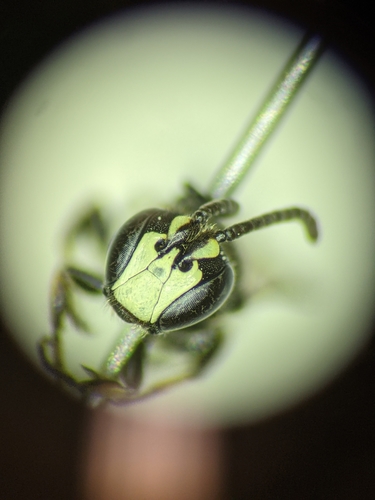
Annulate Masked Bee
Hylaeus annulatus · Order: Hymenoptera · Family: Colletidae
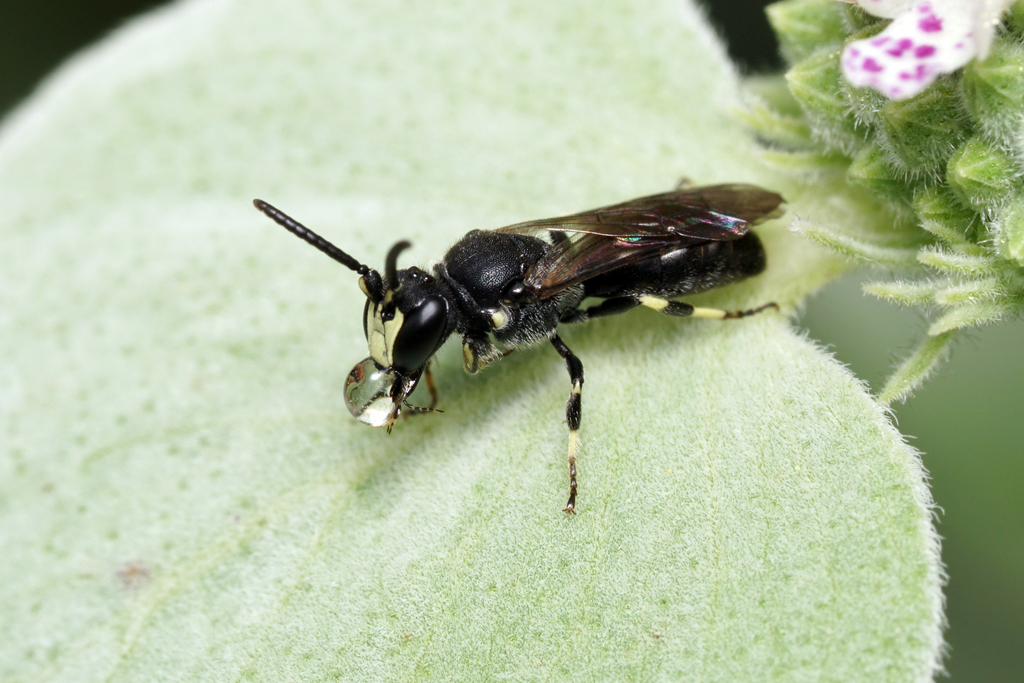
The annulate masked bee nests in small holes inside dead standing wood. It occurs in both North America and Europe. Adults visit many kinds of flowers to collect food.
Source: Wikipedia
Where it lives
It needs cavities in standing dead wood for nesting.
Source: Wikipedia
What it eats
It forages on a wide variety of flowers.
Source: Wikipedia
Where it comes from
It is found across North America and Europe.
Source: Wikipedia
Where it is found in the US
Recorded in 31 of 51 states and DC. Most records: Utah, Alaska, Colorado, Wyoming, Michigan, Arizona, Vermont, Minnesota.
Darker = more records. Counts are museum and citizen-science records, not population size.
Source: GBIF
Status: native in North America; native in Canada; native in United States. Source: iNaturalist
Months it is reported in the US
Source: GBIF
More photos
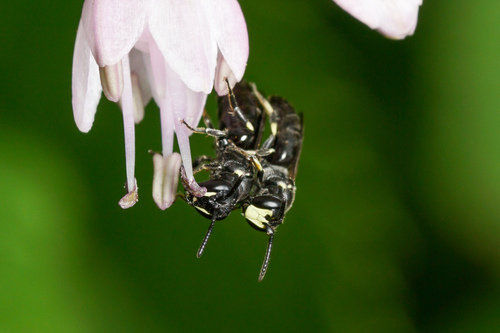
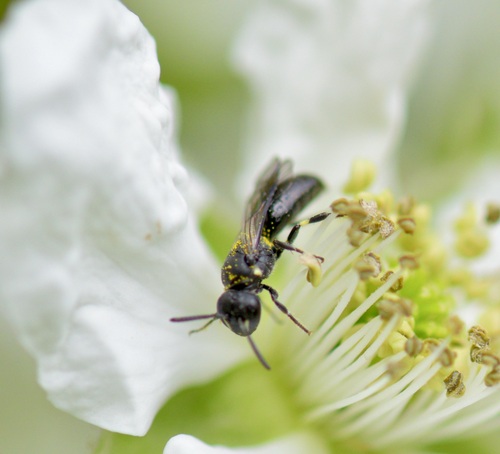
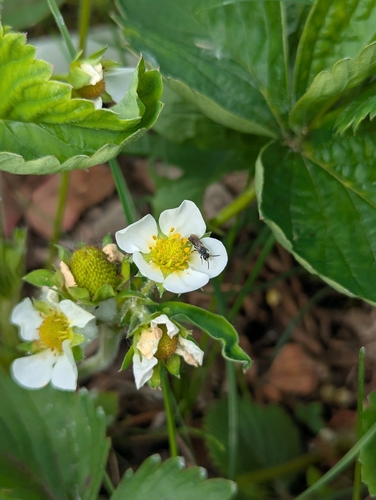
Questions people ask
Where does the annulate masked bee nest?
It nests in cavities of standing dead wood.
Source: Wikipedia
What regions is the annulate masked bee found in?
It lives in North America and Europe.
Source: Wikipedia
Same family (Colletidae)



Sources
- Wikipedia: https://en.wikipedia.org/wiki/Hylaeus_annulatus
Look it up elsewhere: GBIF · iNaturalist · BugGuide · ITIS · Wikipedia
Text written 2026-10-23 from the sources above and checked sentence by sentence against them. Data fetched 2026-10-23.