 Bug FAQ
Arizona Mantis
Stagmomantis limbata · Order: Mantodea · Family: Mantidae
Also called: Bordered Mantis
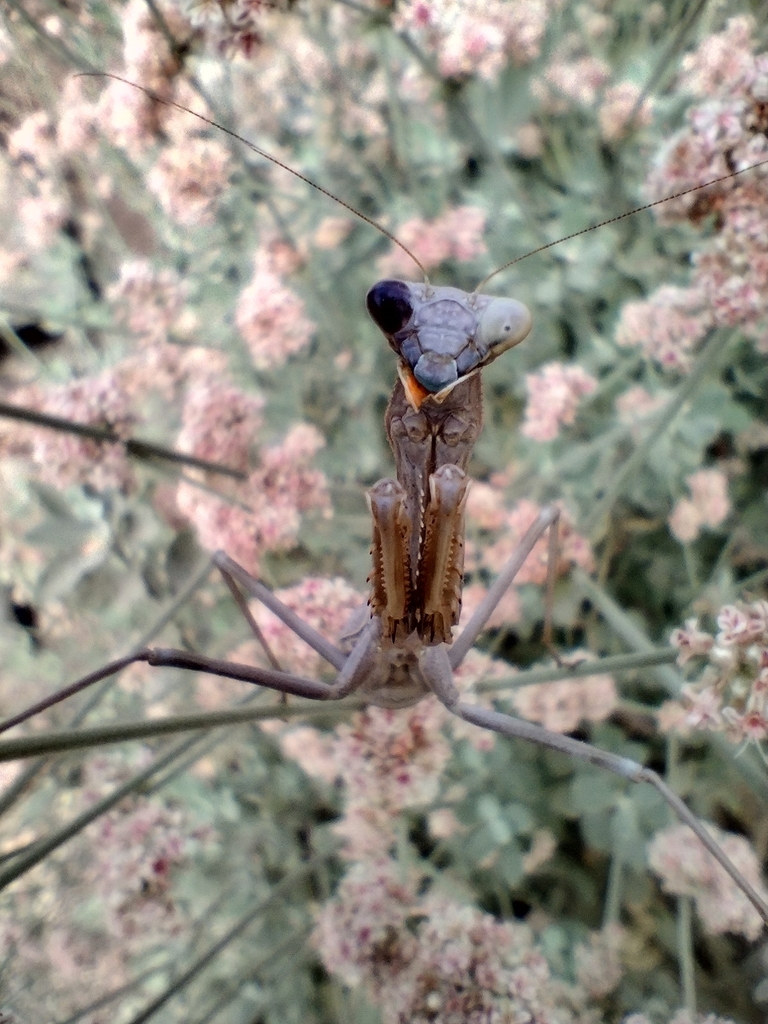
Females reach about 3 inches long while males are around 2 inches. They live in open semi-arid areas but are also common near streams, roadsides, and towns, and are attracted to lights.
Source: Wikipedia
How to recognize it
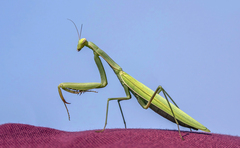
Females are usually plain green with a yellowish abdomen, sometimes gray or light brown, and have a dark spot on the middle of the tegmina. The tegmina have a white border, giving the species the name Bordered Mantis.
Source: Wikipedia
Size
Females grow to about 3 inches in body length, while males are about 2 inches. The insect is green or beige and can reach roughly 3 inches long.
Source: Wikipedia
Where it lives
They are found in variable open semi-arid habitats with tall forbs, shrubs, or trees, and are especially common in lusher riparian and wooded streamside areas. Both sexes are attracted to lights; males often fly to lights in numbers, while females cannot fly.
Source: Wikipedia
Where it comes from
The bordered mantis is native to North America and is the most common native mantis in the western United States.
Source: Wikipedia
Lookalikes
It is larger than other species in its genus, such as Stagmomantis carolina. Females are larger and more robust than males.
Source: Wikipedia
Where it is found in the US
Recorded in 14 of 51 states and DC. Most records: California, Arizona, New Mexico, Texas, Colorado, Utah, Kansas, Nevada.
Darker = more records. Counts are museum and citizen-science records, not population size.
Source: GBIF
Status: native in North America; native in United States. Source: iNaturalist
Months it is reported in the US
Source: GBIF
More photos
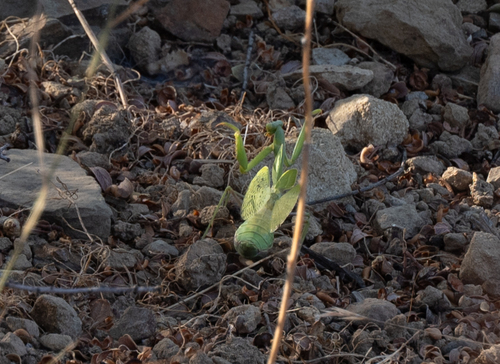
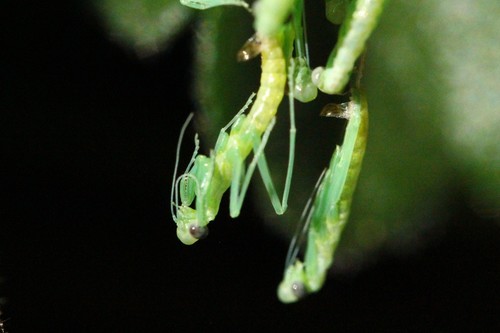
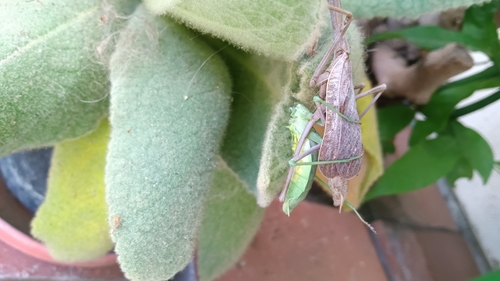
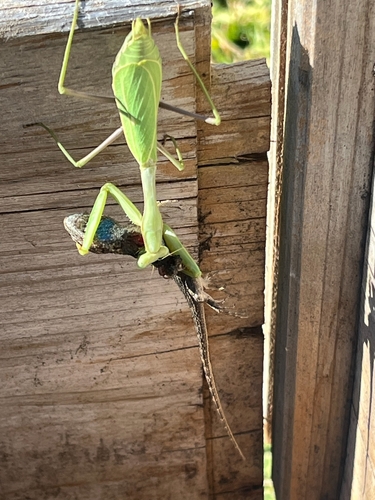
Same family (Mantidae)
Sources
- Wikipedia: https://en.wikipedia.org/wiki/Stagmomantis_limbata
Look it up elsewhere: GBIF · iNaturalist · BugGuide · ITIS · Wikipedia
Text written 2026-10-22 from the sources above and checked sentence by sentence against them. Data fetched 2026-10-22.