 Bug FAQ
Banded Alpine
Erebia fasciata · Order: Lepidoptera · Family: Nymphalidae
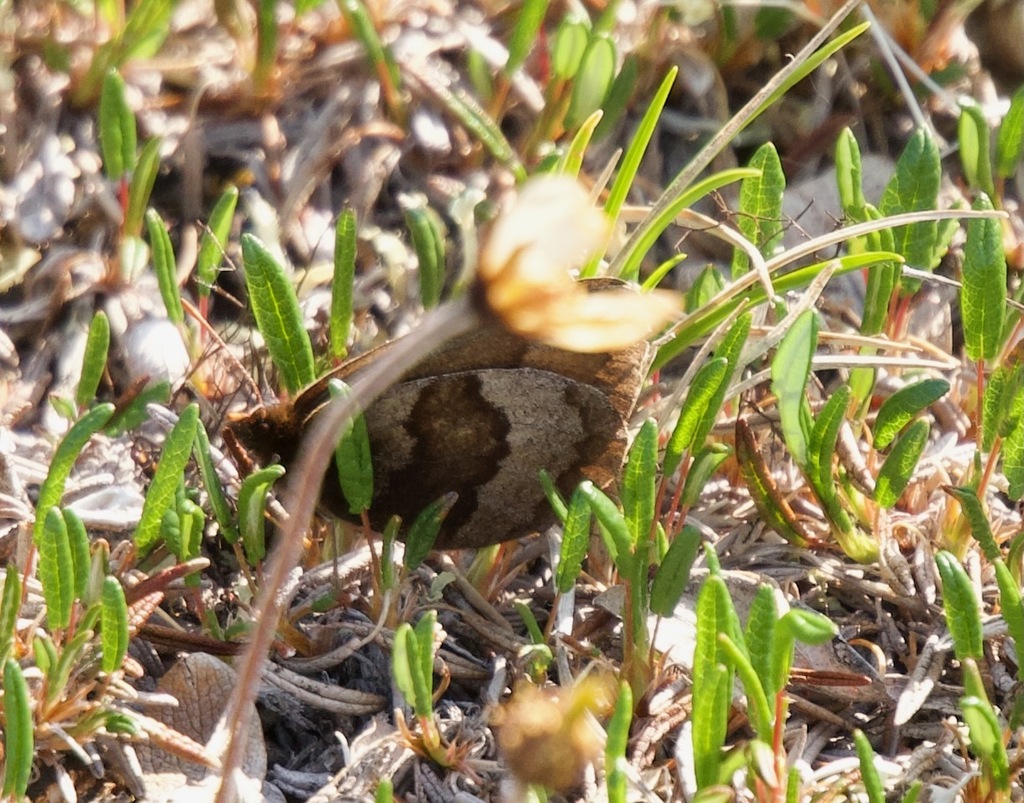
The banded alpine has a wingspan of about 38 to 53 mm and a dark black-brown ground colour with a russet-brown incomplete distal band lacking eye spots. It lives across northern North America from central Siberia through Alaska, Yukon, the Northwest Territories, Nunavut, Hudson Bay, and the islands of Banks and Victoria.
Source: Wikipedia
Size
Wingspan ranges from 38 to 53 mm.
Source: Wikipedia
Where it lives
Found from central Siberia through Alaska, Yukon, mainland Northwest Territories, Nunavut to Hudson Bay.
Source: Wikipedia
What it eats
Larvae feed on Carex (sedge) species.
Source: Wikipedia
When you see it
Flight period spans May through late July.
Source: Wikipedia
Where it comes from
Native to central Siberia and northern North America, including Alaska, Yukon, the Northwest Territories, Nunavut and Hudson Bay. Its range includes Banks Island and Victoria Island.
Source: Wikipedia
Where it is found in the US
Recorded in 1 of 51 states and DC. Most records: Alaska.
Darker = more records. Counts are museum and citizen-science records, not population size.
Source: GBIF
Status: native in North America; native in Canada. Source: iNaturalist
Months it is reported in the US
Source: GBIF
More photos
Questions people ask
How can I tell the banded alpine apart from similar butterflies?
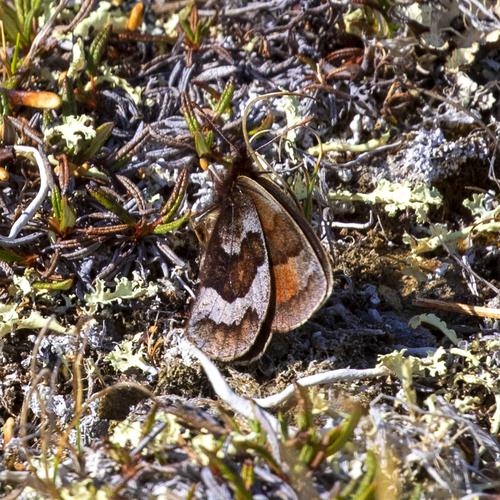
Look for a dark black-brown forewing with a russet-brown incomplete distal band lacking eye spots and a grey-brown submarginal band on the hindwing.
Source: Wikipedia
When are banded alps active?
Adults fly from May until late July, varying with location.
Source: Wikipedia
Same family (Nymphalidae)






Sources
- Wikipedia: https://en.wikipedia.org/wiki/Erebia_fasciata
Look it up elsewhere: GBIF · iNaturalist · BugGuide · ITIS · Wikipedia
Text written 2026-10-23 from the sources above and checked sentence by sentence against them. Data fetched 2026-10-23.