 Bug FAQ
Barrens Buck Moth
Hemileuca maia · Order: Lepidoptera · Family: Saturniidae
Also called: Buck Moth, Coastal Barrens Buck Moth
Source: Wikipedia
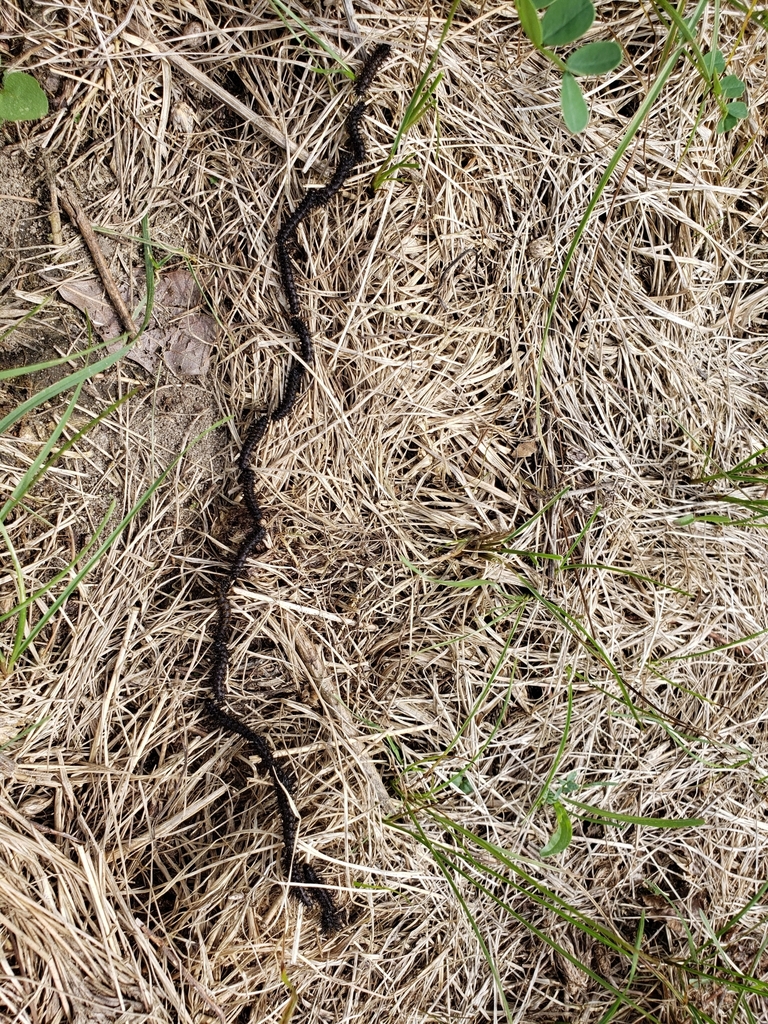
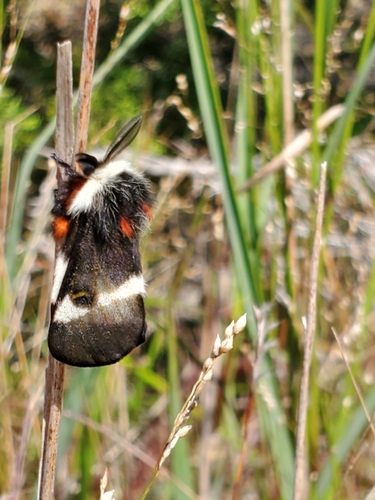
Adult buck moths have dark gray to black wings with a white band and a distinctive eyespot, and males are smaller with a rusty-red abdomen while females are all black. Caterpillars feed on oak leaves, pupate in soil or leaf litter in late July, and emerge as moths from October to February, often becoming a nuisance in Louisiana and Virginia where their spines can sting people.
Source: Wikipedia
How to recognize it
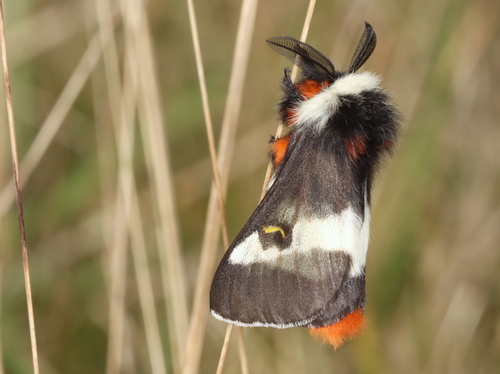
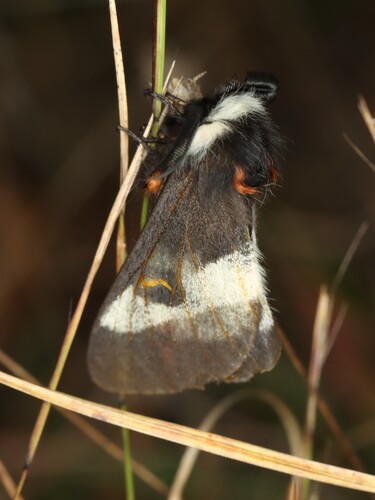
Moths are dark gray to black with a white band across each wing and a unique eyespot on the band. Males have a rusty-red abdomen; females have all three body segments black.
Source: Wikipedia
Is it a pest in the house?
In parts of Virginia, the larvae are notorious for stinging campers at summer camps.
Source: Wikipedia
Does it bite or sting?
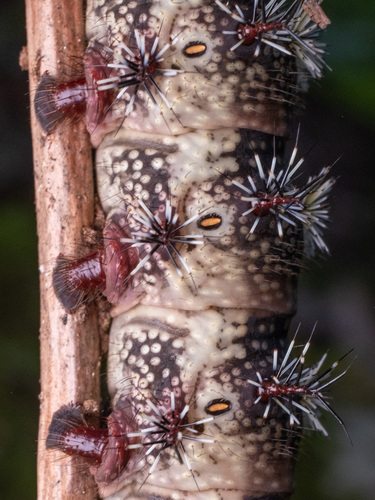
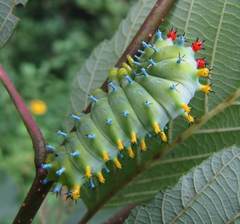
The larvae’s hollow spines contain a poison that can cause stinging, itching, burning sensations and nausea. Spines can break off and inject venom into skin when the caterpillars are handled or brushed against.
Source: Wikipedia
How to get rid of it
A nuclear polyhedrosis virus can infect and kill the caterpillars during early instars. Microbial control methods may safely reduce moth numbers during infestations.
Source: Wikipedia
What it eats
Larvae feed on several oak species, including scrub oak, live oak, blackjack oak, white oak and dwarf chinquapin oak.
Source: Wikipedia
Life cycle
Caterpillars appear in a single spring generation.
Source: Wikipedia
When you see it
Moths emerge from October through February after pupating in late July.
Source: Wikipedia
Where it is found in the US
Recorded in 32 of 51 states and DC. Most records: Massachusetts, Michigan, New Jersey, Wisconsin, New York, Ohio, Louisiana, Kentucky.
Darker = more records. Counts are museum and citizen-science records, not population size.
Source: GBIF
Status: native in North America; native in United States. Source: iNaturalist
Months it is reported in the US
Source: GBIF
More photos
Questions people ask
How can I get rid of buck moth caterpillars?
Biological options include using a nuclear polyhedrosis virus or other microbial controls that target early caterpillar stages.
Source: Wikipedia
Do buck moth larvae sting?
Yes, their hollow spines inject venom that causes stinging, itching, burning and sometimes nausea.
Source: Wikipedia
Where are buck moths found in the United States?
They range from Florida up to New England and westward to Texas and Kansas.
Source: Wikipedia
What do buck moth caterpillars eat?
They feed on the leaves of various oak species such as live oak, scrub oak, blackjack oak, white oak and dwarf chinquapin oak.
Source: Wikipedia
Same family (Saturniidae)


Sources
- Wikipedia: https://en.wikipedia.org/wiki/Buck_moth
Look it up elsewhere: GBIF · iNaturalist · BugGuide · ITIS · Wikipedia
Text written 2026-10-24 from the sources above and checked sentence by sentence against them. Data fetched 2026-10-24.