 Bug FAQ
Brown Dog Tick
Rhipicephalus sanguineus · Order: Ixodida · Family: Ixodidae
Also called: Kennel tick, Pan-tropical dog tick, Tropical dog tick
Source: Wikipedia
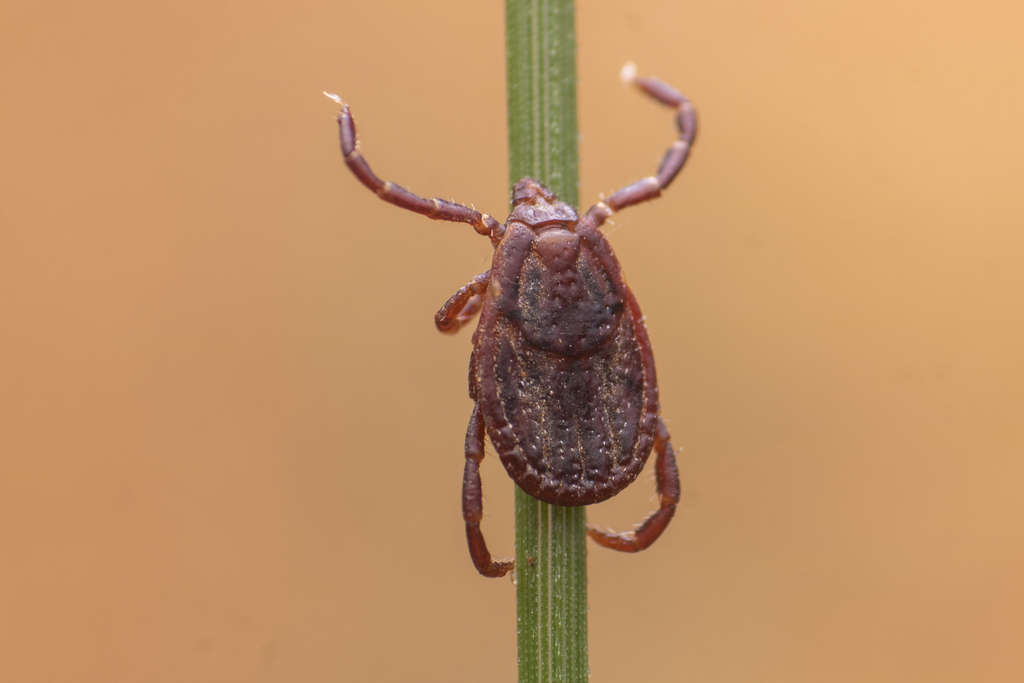
The brown dog tick is reddish-brown, flat-backed and about 2 to 3 mm long, and it can live its whole life cycle indoors, often building large infestations in homes and kennels. It feeds on many mammals, prefers dogs, and can transmit bacterial and protozoal pathogens, including Rocky Mountain spotted fever to humans.
Source: Wikipedia
How to recognize it
It is reddish-brown, elongated, has a flat mouth-part area and no back markings.
Source: Wikipedia
Size
Adults measure about 2.3 to 3.2 mm long and 1.1 to 1.7 mm wide.
Source: Wikipedia
Is it a pest in the house?
Regular grooming and checking of pets is key to keep infestations low, especially after dogs have been in contact with other dogs.
Source: Wikipedia
Does it bite or sting?
It is a major disease vector for dogs worldwide. In the southwestern U.S. it can transmit Rocky Mountain spotted fever to humans. Tick paralysis may result from a toxin in its saliva, and its saliva also contains anesthetic compounds that mask the bite.
How to get rid of it
Preventing indoor infestations is the best control method. Frequent pet grooming and inspection help manage the tick, especially after dogs mingle with other dogs. For more on tick paralysis see the MedlinePlus article.
Where it lives
Unlike most ticks, it can complete its entire life cycle inside buildings. Large numbers can develop in houses and kennels, becoming a pest problem.
Source: Wikipedia
What it eats
It feeds on many mammals but mainly on dogs in the United States. All life stages can pick up bacterial or protozoal disease agents while feeding.
Source: Wikipedia
Life cycle
Its development follows the egg-larva-nymph-adult pattern. It is a three-host tick, using a different host for each feeding stage.
Source: Wikipedia
Where it comes from
It is found worldwide except the United Kingdom, where it has only been seen in quarantine kennels.
Source: Wikipedia
Where it is found in the US
Recorded in 26 of 51 states and DC. Most records: Wisconsin, Illinois, Alaska, Texas, Ohio, California, Florida, Georgia.
Darker = more records. Counts are museum and citizen-science records, not population size.
Source: GBIF
Status: introduced in Canada; native in North America; native in United States. Source: iNaturalist
Months it is reported in the US
Source: GBIF
More photos

Questions people ask
Do brown dog ticks bite humans?
Yes, they can bite people and may transmit Rocky Mountain spotted fever in some regions.
Source: Wikipedia
How can I tell if I have a brown dog tick infestation at home?
Look for small reddish-brown ticks about 2 to 3 mm long on pets or in cracks around kennels and indoor areas.
Source: Wikipedia
What should I do to control brown dog ticks in my house?
Focus on preventing indoor infestations and regularly groom and inspect your dogs, especially after they have been with other dogs.
Source: Wikipedia
Can brown dog ticks survive outdoors?
The evidence notes they can complete their life cycle indoors; outdoor survival is not covered.
Source: Wikipedia
Same family (Ixodidae)
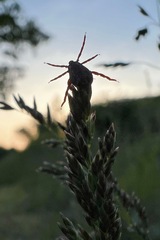 American Dog TickDermacentor variabilisCan spread germs or disease
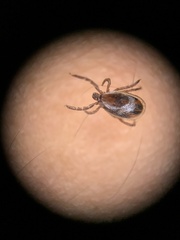 Eastern Black-legged TickIxodes scapularisCan spread germs or disease
 Lone Star TickAmblyomma americanumCan spread germs or disease
 Gulf Coast TickAmblyomma maculatumCan spread germs or disease
 Western Black-legged TickIxodes pacificusCan spread germs or disease
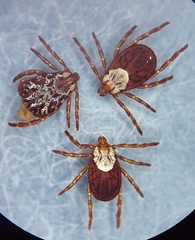 Rocky Mountain Wood TickDermacentor andersoniCan spread germs or disease
Sources
- Wikipedia: https://en.wikipedia.org/wiki/Rhipicephalus_sanguineus
- CDC: https://www.cdc.gov/ticks/about/index.html
Look it up elsewhere: GBIF · iNaturalist · BugGuide · ITIS · Wikipedia
Text written 2026-10-22 from the sources above and checked sentence by sentence against them. Data fetched 2026-10-22.