 Bug FAQ
Eastern Black-legged Tick
Ixodes scapularis · Order: Ixodida · Family: Ixodidae
Also called: Black Legged Tick, Blacklegged Tick, Deer tick, Northern Deer Tick
Source: Wikipedia
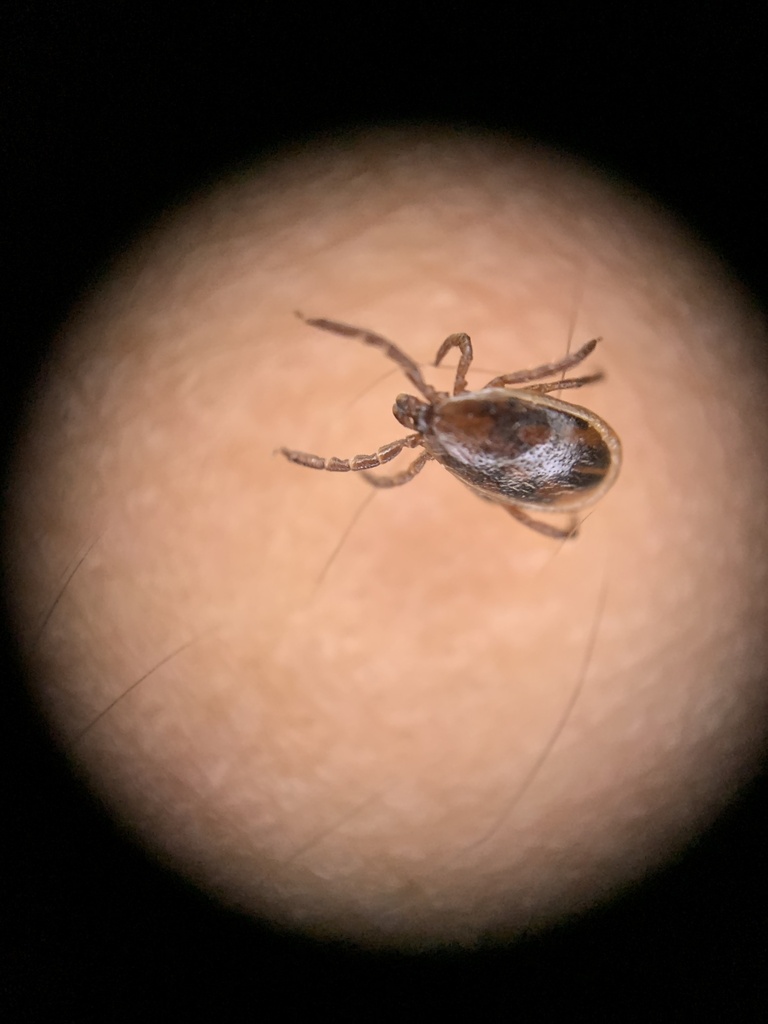
Adult females are about 3 to 4 mm long and can swell when feeding, while males stay 2 to 3 mm and do not swell because their scutum covers the whole body. They live in the eastern half of North America, hide in leaf litter after feeding, and are most active in spring and summer, which is when they bite humans. Adults prefer deer but will also feed on small rodents, while larvae and nymphs can bite mice, lizards, birds, and humans, with nymphs often responsible for disease transmission.
Source: Wikipedia
How to recognize it
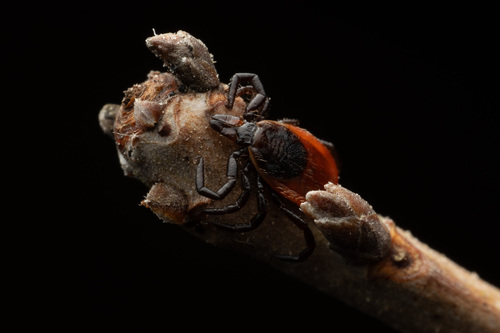
The tick’s back plate (scutum) is dark and plain, and unfed females show a contrasting orange-red body behind it. Black-legged ticks have no eyes, unlike many other tick genera.
Source: Wikipedia
Size
Unfed adult females measure about 3 to 4 mm, while males are 2 to 3 mm long. Females can expand greatly when engorged, but males cannot because their scutum covers the whole body.
Source: Wikipedia
Does it bite or sting?
Nymphs are small and hard to see, yet they are the stage most often responsible for transmitting Lyme disease to humans. Most human bites occur in the summer months when tick activity peaks.
Source: Wikipedia
Where it lives
It is a hard-bodied tick found throughout the eastern half of North America. After feeding, the engorged tick drops off and overwinters in leaf litter on the forest floor.
Source: Wikipedia
What it eats
Adult ticks mainly feed on deer but will also bite small rodents. Larvae and nymphs can parasitize mice, lizards, migratory birds, and other small animals.
Source: Wikipedia
Life cycle
The species completes its development in two years, passing through larva, nymph, and adult stages. Each stage must take a blood meal before it can molt to the next stage.
Source: Wikipedia
When you see it
Ticks become active in spring and are most likely to bite humans in summer.
Source: Wikipedia
Where it is found in the US
Recorded in 39 of 51 states and DC. Most records: Massachusetts, Wisconsin, Virginia, West Virginia, Maryland, New York, Pennsylvania, Michigan.
Darker = more records. Counts are museum and citizen-science records, not population size.
Source: GBIF
Status: native in North America; native in Canada; native in United States. Source: iNaturalist
Months it is reported in the US
Source: GBIF
More photos
Questions people ask
Do black-legged ticks bite humans?
Yes, especially the nymph stage, which often goes unnoticed and can bite people in summer.
Source: Wikipedia
Can they transmit disease?
Adult females are more likely to carry the Lyme disease bacterium, but nymphs more commonly infect humans.
Source: Wikipedia
Where are they found?
They live throughout the eastern half of North America, hiding in leaf litter after feeding.
Source: Wikipedia
What do they feed on?
Adults prefer deer but will also bite small rodents; younger stages feed on mice, lizards, birds, and other small animals.
Source: Wikipedia
Same family (Ixodidae)
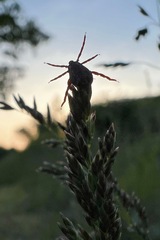 American Dog TickDermacentor variabilisCan spread germs or disease
 Lone Star TickAmblyomma americanumCan spread germs or disease
 Gulf Coast TickAmblyomma maculatumCan spread germs or disease
 Western Black-legged TickIxodes pacificusCan spread germs or disease
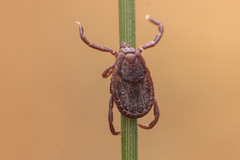 Brown Dog TickRhipicephalus sanguineusCan spread germs or disease
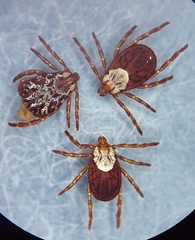 Rocky Mountain Wood TickDermacentor andersoniCan spread germs or disease
Sources
- Wikipedia: https://en.wikipedia.org/wiki/Ixodes_scapularis
Look it up elsewhere: GBIF · iNaturalist · BugGuide · ITIS · Wikipedia
Text written 2026-10-22 from the sources above and checked sentence by sentence against them. Data fetched 2026-10-22.