 Bug FAQ
Western Black-legged Tick
Ixodes pacificus · Order: Ixodida · Family: Ixodidae
Also called: California black-legged tick, Western blacklegged tick
Source: Wikipedia

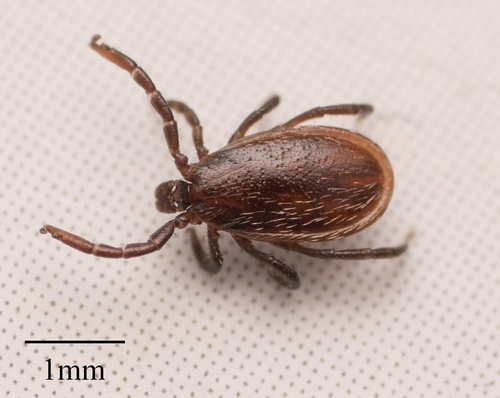
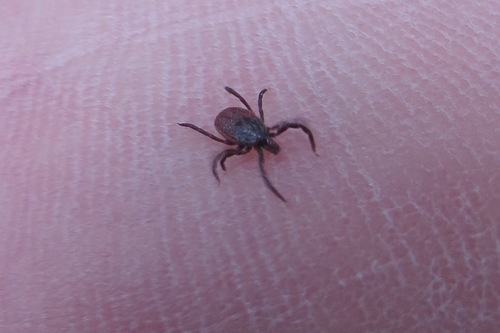
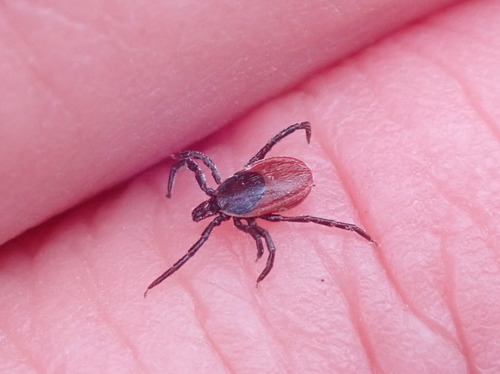
Adult females are about 3 mm long, brown-black on the back with an orange abdomen, and have forward-projecting mouthparts for feeding. They live in dense woodlands, brush, and tall grass on the western coast of North America. Adults feed on deer and other large mammals and can spread Lyme disease through their bite.
Source: Wikipedia
How to recognize it
Males are about 2.5 mm, oval, brown-black; females are about 3.2 mm, brown-black scutum on the front, orange abdomen, and have forward-projecting mouthparts.
Source: Wikipedia
Size
Adult males measure roughly 2.5 mm; unfed adult females about 3.2 mm.
Source: Wikipedia
Does it bite or sting?
It attaches to the outside of a host and feeds on blood. It can transmit Lyme disease caused by Borrelia burgdorferi.
Source: Wikipedia
Where it lives
They prefer dense woodlands, brush, and tall grass; nymphs especially like leaf litter and fir needles.
Source: Wikipedia
What it eats
Larvae and nymphs feed on lizards and small mammals; adult females take blood from medium to large mammals like deer.
Source: Wikipedia
Life cycle
The tick has four stages, egg, larva, nymph, adult, and needs about three years to complete its life cycle.
Source: Wikipedia
When you see it
Nymphs are active in spring and early summer; adults are most active from late fall through spring, especially in winter.
Source: Wikipedia
Where it comes from
Found on the western coast of the United States and western Canada.
Source: Wikipedia
Lookalikes
It is the main Lyme-disease vector in the West, while Ixodes scapularis serves that role in the East.
Source: Wikipedia
Where it is found in the US
Recorded in 9 of 51 states and DC. Most records: California, Oregon, Washington, Utah, Florida, Nevada, Alaska, Kansas.
Darker = more records. Counts are museum and citizen-science records, not population size.
Source: GBIF
Status: native in North America; native in Canada; native in United States. Source: iNaturalist
Months it is reported in the US
Source: GBIF
More photos

Questions people ask
Do western black-legged ticks bite humans?
Yes, they attach to the skin and feed on blood, especially in their nymph and adult stages.
Source: Wikipedia
Can they transmit diseases?
They are known carriers of the bacteria that cause Lyme disease.
Source: Wikipedia
When are they most likely to be found?
Nymphs are common in spring and early summer; adults are most active from late fall through winter.
Source: Wikipedia
Where do they live?
They inhabit dense woodlands, brush, and tall grass on the western coast of North America.
Source: Wikipedia
Same family (Ixodidae)
 American Dog TickDermacentor variabilisCan spread germs or disease
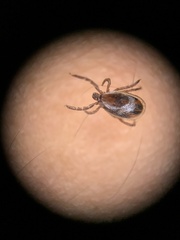 Eastern Black-legged TickIxodes scapularisCan spread germs or disease
 Lone Star TickAmblyomma americanumCan spread germs or disease
 Gulf Coast TickAmblyomma maculatumCan spread germs or disease
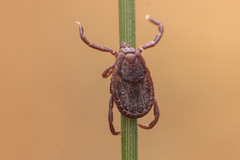 Brown Dog TickRhipicephalus sanguineusCan spread germs or disease
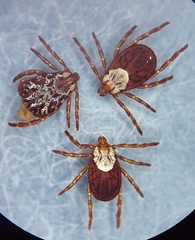 Rocky Mountain Wood TickDermacentor andersoniCan spread germs or disease
Sources
- Wikipedia: https://en.wikipedia.org/wiki/Ixodes_pacificus
Look it up elsewhere: GBIF · iNaturalist · BugGuide · ITIS · Wikipedia
Text written 2026-10-22 from the sources above and checked sentence by sentence against them. Data fetched 2026-10-22.