 Bug FAQ
Calleta Silkmoth
Eupackardia calleta · Order: Lepidoptera · Family: Saturniidae
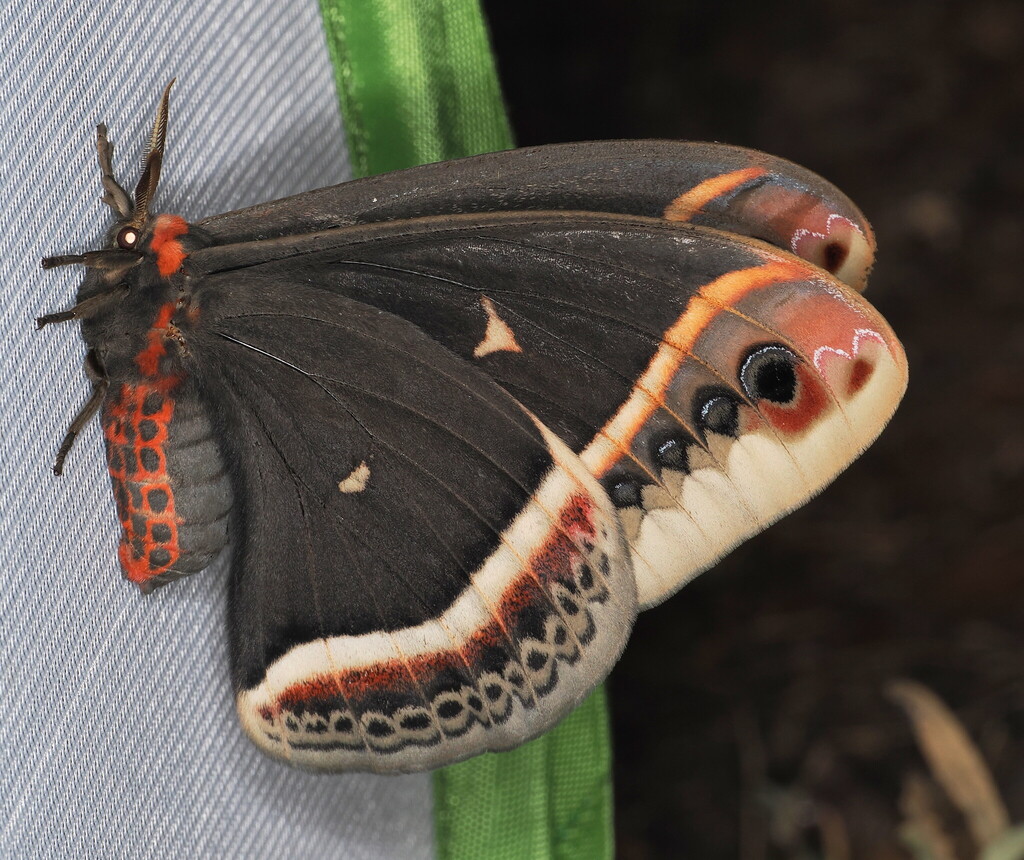
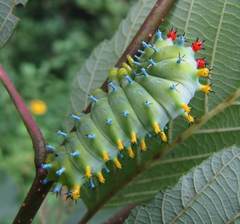
It lives in desert-type habitats of the southwestern United States and northern Mexico, and its caterpillars feed on ash, ceniza, Mexican jumping bean and ocotillo.
Source: Wikipedia
Size
Wingspan is usually 8 to 11 cm (about 3 to 4 in), though some can be over 5 inches.
Source: Wikipedia
Where it lives
They inhabit thorn scrub, foothills and canyon areas of desert mountain ranges and dry deserts.
Source: Wikipedia
What it eats
Adult moths do not feed.
Source: Wikipedia
When you see it
In southeastern Arizona mountains they are most common from July to August.
Source: Wikipedia
Where it comes from
They are found in Mexico, Guatemala and the U.S. states of Arizona, New Mexico and Texas.
Source: Wikipedia
Where it is found in the US
Recorded in 5 of 51 states and DC. Most records: Texas, Arizona, California, Georgia, New Mexico.
Darker = more records. Counts are museum and citizen-science records, not population size.
Source: GBIF
Months it is reported in the US
Source: GBIF
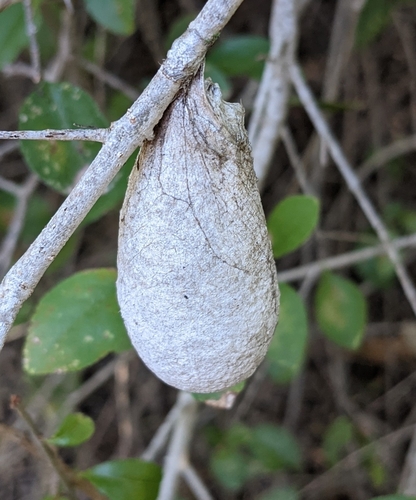
More photos
Questions people ask
What do calleta silkmoth caterpillars eat?
The caterpillars feed on ash, ceniza, Mexican jumping bean and ocotillo plants.
Source: Wikipedia
When can I see adult calleta silkmoths?
In southeastern Arizona they are seen July-August; elsewhere they appear October-January, and in South Texas September-November and March-April.
Source: Wikipedia
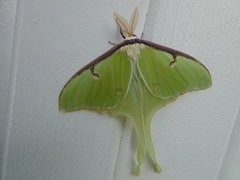
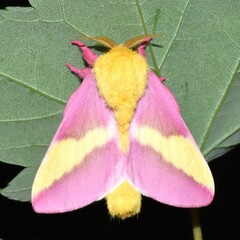
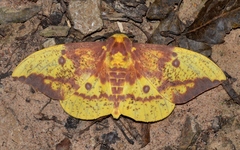
Same family (Saturniidae)


Sources
- Wikipedia: https://en.wikipedia.org/wiki/Eupackardia
Look it up elsewhere: GBIF · iNaturalist · BugGuide · ITIS · Wikipedia
Text written 2026-10-24 from the sources above and checked sentence by sentence against them. Data fetched 2026-10-24.