 Bug FAQ
Central American Paper Wasp
Apoica pallens · Order: Hymenoptera · Family: Vespidae
Also called: Central American Moon Wasp, Night Wasp

Queens and workers are similar in overall size, but queens are smaller at the front and larger at the back, reflecting differences in ovary development. These wasps forage at night, collect insects, flies, caterpillars, beetles, and also gather pollen and nectar from banana blossoms; they may eat some of their own brood when hungry.
Source: Wikipedia
How to recognize it
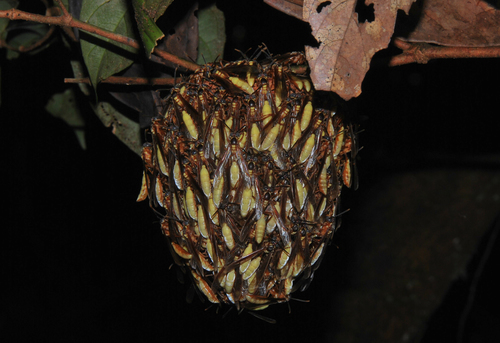
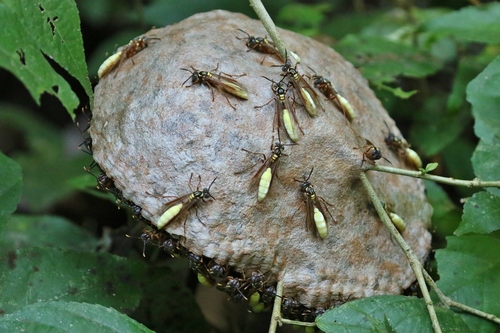
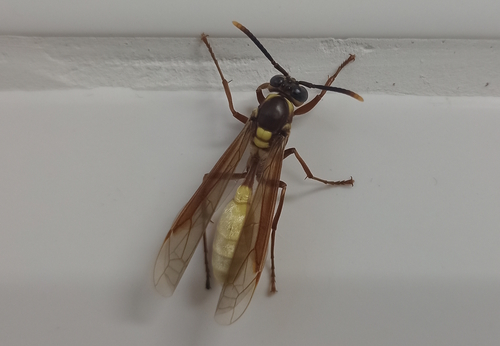
Apoica pallens is pale yellow in color.
Source: Wikipedia
Size
Queens and workers are about the same overall size, but queens are smaller at the front and larger at the back. The size differences are linked to ovary development.
Source: Wikipedia
Where it lives
They are found in tropical savanna, semi-deciduous dry forest, gallery forest, and marshland. The genus Apoica is abundant throughout the New World tropics.
Source: Wikipedia
What it eats
It captures various arthropods such as flies, caterpillars, and beetles. It also gathers pollen and nectar from banana blossoms. Adults may eat some of their own brood when they need extra nutrition.
Source: Wikipedia
Life cycle
The species is known for swarm-founding, where the whole colony abandons an old nest and moves to a new site. Colonies are usually polygynous, though queen numbers can drop to a single queen later in the cycle.
Source: Wikipedia
When you see it
Nest abandonment happens more often during the dry season. Foraging is done almost entirely at night.
Source: Wikipedia
Where it comes from
Apoica pallens is native to the lowland regions of Central America and northern South America.
Source: Wikipedia
Status: native in North America. Source: iNaturalist
More photos

Questions people ask
When do these wasps move to a new nest?
They abandon their old nest and swarm to a new site, especially during the dry season.
Source: Wikipedia
What do they eat?
They catch flies, caterpillars, beetles, and also collect pollen and nectar from banana flowers; they may eat some of their own brood if needed.
Source: Wikipedia
Same family (Vespidae)


Sources
- Wikipedia: https://en.wikipedia.org/wiki/Apoica_pallens
Look it up elsewhere: GBIF · iNaturalist · BugGuide · Wikipedia
Text written 2026-10-24 from the sources above and checked sentence by sentence against them. Data fetched 2026-10-22.