 Bug FAQ
Christmas Jewel Spider
Austracantha minax · Order: Araneae · Family: Araneidae
Also called: Australian Jewel Spider, Jewel Spider
Source: Wikipedia
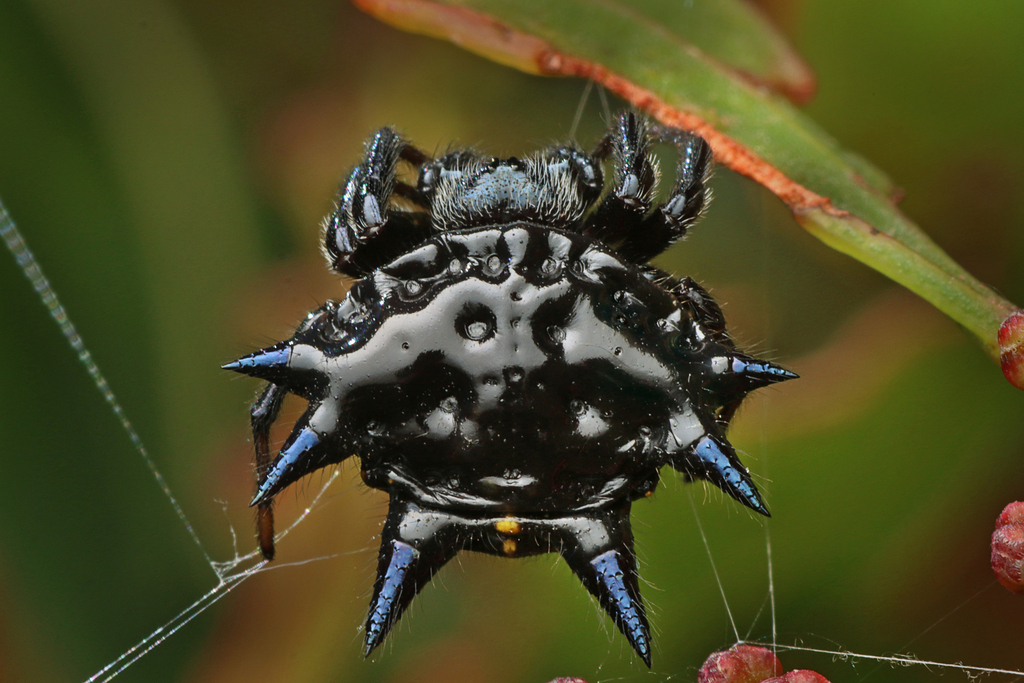
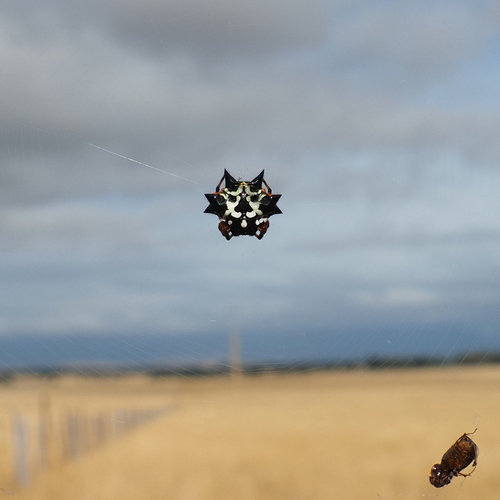
Christmas jewel spiders are small orb-weavers, females 7 to 12 mm and males about 5 mm, with a shiny black body marked by six abdominal spines and variable white, yellow or orange patterns. They are endemic to Australia, live in large overlapping orb webs especially in summer, and feed on small flying insects using venom to subdue prey. They are harmless to people, though their permanent webs can be a nuisance, and bites are rare and only mildly painful.
Source: Wikipedia
How to recognize it
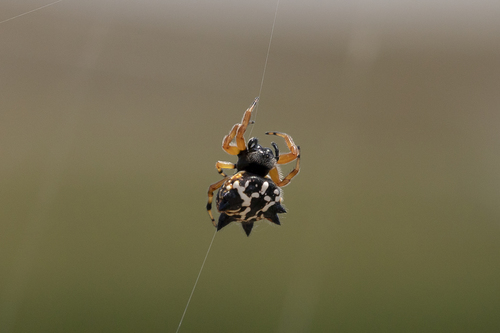
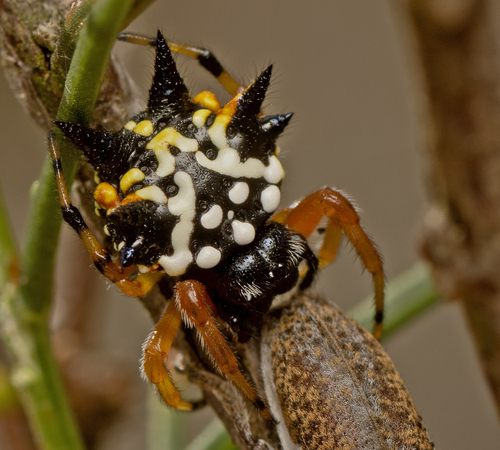
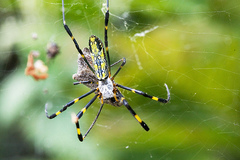
The abdomen has six distinct spines that make it easy to spot. Its body is glossy black with patches of white, yellow or orange.
Source: Wikipedia
Size
Females grow to 7 to 12 mm long, while males are about half that size at roughly 5 mm.
Source: Wikipedia
Is it a pest in the house?
They do not harm people, but their webs can be a nuisance for walkers. Their webs remain in place for a long time, unlike many orb-weavers that rebuild daily.
Source: Wikipedia
Does it bite or sting?
They have venom glands used for subduing prey, but they rarely bite when handled. If bitten, the pain is mild and may cause temporary redness, swelling or itching.
Source: Wikipedia
Where it lives
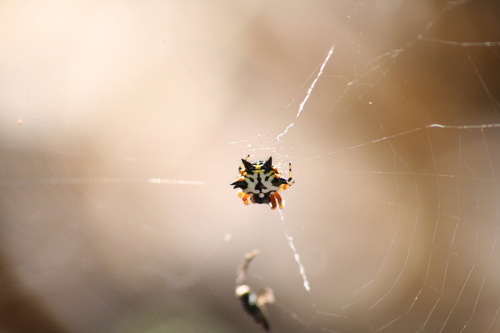
They often gather in groups, building overlapping orb webs. Numbers peak in the summer months.
Source: Wikipedia
What it eats
They catch small flying insects in their webs and use venom to immobilise them.
Source: Wikipedia
Life cycle
A female can mate with several males during one reproductive period. She will readily mate again shortly after a successful copulation.
Source: Wikipedia
When you see it
They are most abundant in summer. Individuals found in autumn (March-April) may appear darker in colour.
Source: Wikipedia
Where it comes from
They are native to Australia and occur across the mainland and surrounding islands such as Tasmania and Barrow Island.
Source: Wikipedia
Lookalikes
They can be found in large groups of overlapping orb webs, which may cause confusion with other gregarious orb-weavers. Colour variations are thought to be driven by environmental factors rather than genetics.
Source: Wikipedia
More photos
Questions people ask
Do they bite?
Bites are rare and only cause mild pain with temporary redness, swelling or itching.
Source: Wikipedia
Are they harmful to humans?
They are harmless to people, though their permanent webs can be a nuisance.
Source: Wikipedia
Where are they found?
They are endemic to Australia, occurring across the mainland and nearby islands.
Source: Wikipedia
Same family (Araneidae)


Sources
- Wikipedia: https://en.wikipedia.org/wiki/Austracantha
Look it up elsewhere: GBIF · iNaturalist · BugGuide · ITIS · Wikipedia
Text written 2026-10-24 from the sources above and checked sentence by sentence against them. Data fetched 2026-10-22.