 Bug FAQ
Furrow Orbweaver
Larinioides cornutus · Order: Araneae · Family: Araneidae
Source: Wikipedia
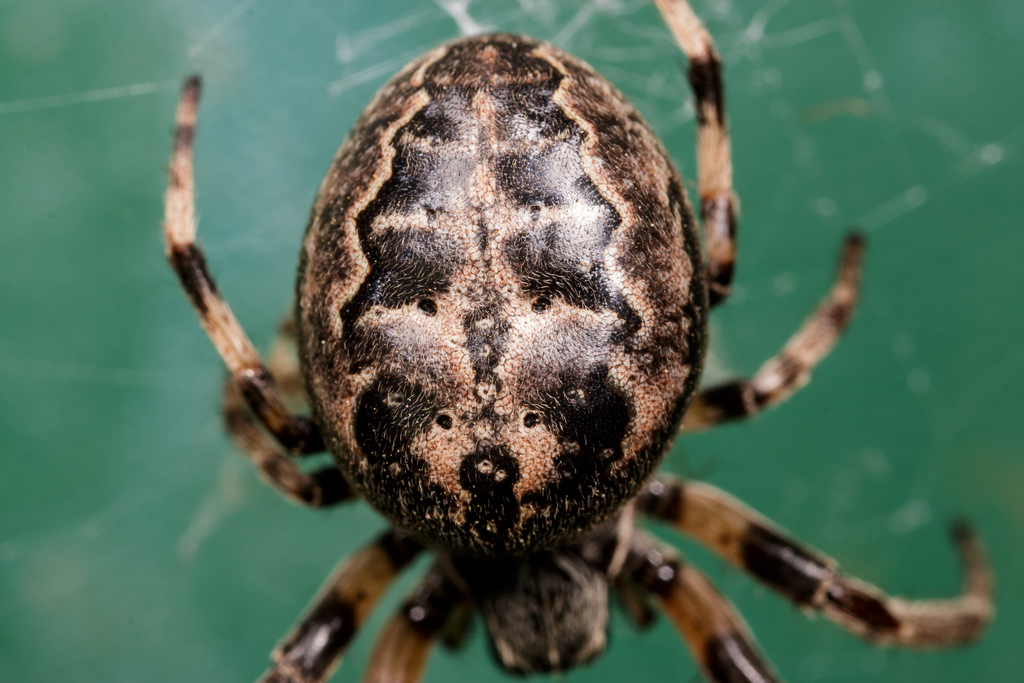
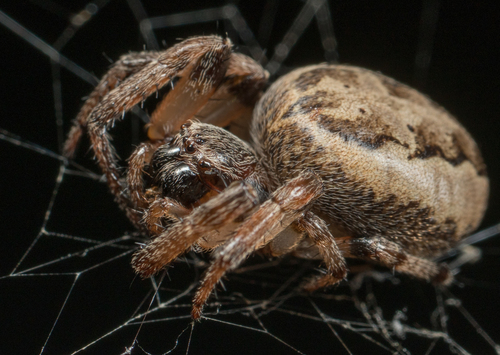
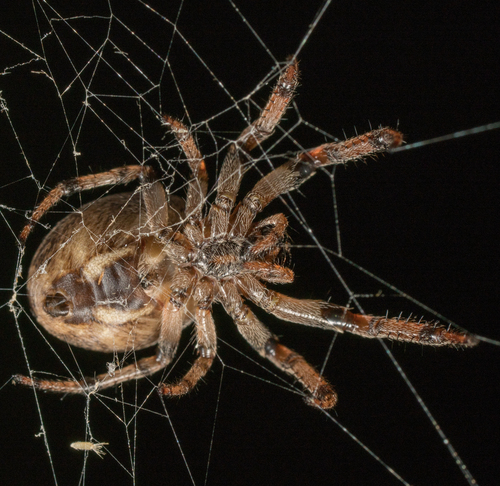
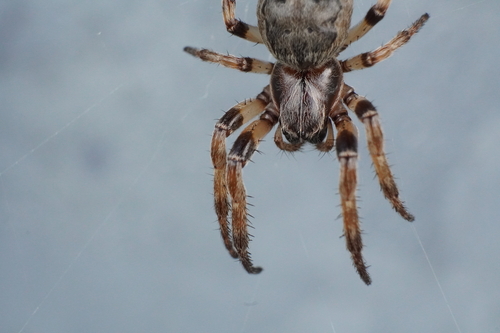
Females are 6 to 14 mm long and males 5 to 9 mm, with leg spans of 18 to 35 mm. They have a large, oval, bulbous abdomen marked by a lighter arrow pattern on the carapace and legs, in colors from black to grey to red. They live near moist areas and hide in silken retreats camouflaged with debris, emerging at night.
Source: Wikipedia
How to recognize it
The spider’s abdomen is large, oval, and bulbous, often showing a lighter arrow-shaped marking on the carapace and legs.
Source: Wikipedia
Size
Females reach 6 to 14 mm body length; males are 5 to 9 mm. Leg span ranges from 18 to 35 mm.
Source: Wikipedia
Does it bite or sting?
Bites are not especially dangerous but can cause mild pain, numbness, swelling, and occasionally nausea or dizziness.
Source: Wikipedia
Where it lives
They are most often found in moist habitats, especially near water. During the day they stay in a silken retreat masked with plant and animal material, leaving at night.
Source: Wikipedia
Life cycle
Females produce three to five yellow egg sacs in summer. Males stay with females during mating periods in autumn and again in spring.
Source: Wikipedia
When you see it
Mating occurs in autumn and spring.
Source: Wikipedia
Where it comes from
The furrow orbweaver has a Holarctic distribution.
Source: Wikipedia
Lookalikes
A similar species, L. folium, lives in drier habitats.
Source: Wikipedia
Where it is found in the US
Recorded in 49 of 51 states and DC. Most records: Ohio, Virginia, Texas, Pennsylvania, North Carolina, Maryland, New York, Tennessee.
Darker = more records. Counts are museum and citizen-science records, not population size.
Source: GBIF
Status: native in North America; native in Canada; native in United States. Source: iNaturalist
Months it is reported in the US
Source: GBIF
More photos

Questions people ask
Do they bite?
Yes, their bite is mild and may cause pain, numbness, swelling, and rarely nausea or dizziness.
Source: Wikipedia
Where do they live?
They prefer moist areas near water and hide in camouflaged silken retreats during the day.
Source: Wikipedia
Same family (Araneidae)


Sources
- Wikipedia: https://en.wikipedia.org/wiki/Larinioides_cornutus
Look it up elsewhere: GBIF · iNaturalist · BugGuide · ITIS · Wikipedia
Text written 2026-10-22 from the sources above and checked sentence by sentence against them. Data fetched 2026-10-22.