 Bug FAQ
Wasp Spider
Argiope bruennichi · Order: Araneae · Family: Araneidae
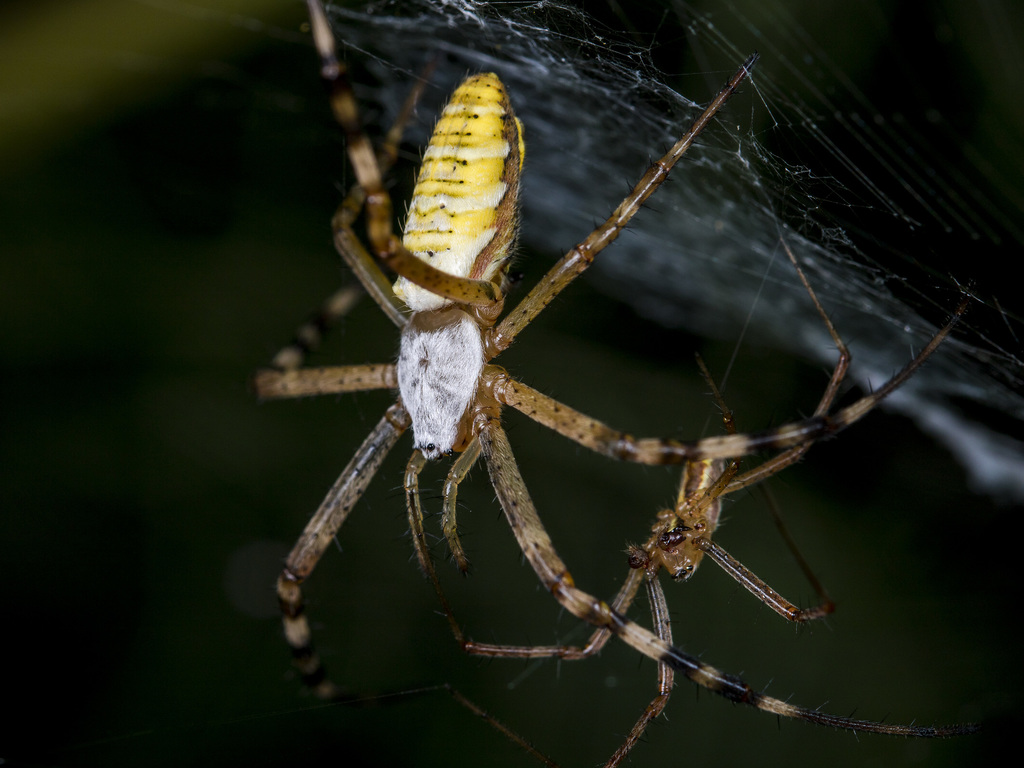
The wasp spider shows strong size differences between sexes; males are about 4.5 mm long while females range from 14 to 20 mm. Males have a special mating adaptation that involves losing a pedipalp, limiting them to two matings.
Source: Wikipedia
How to recognize it
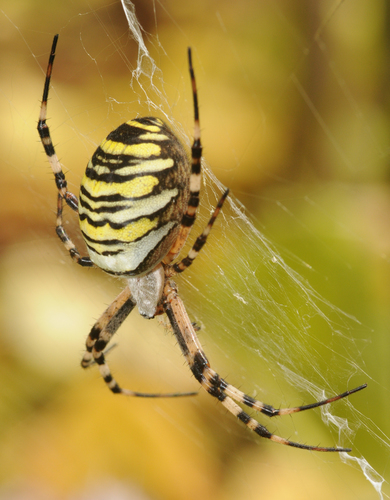
Its abdomen has distinctive yellow, white and black markings.
Source: Wikipedia
Size
Males average about 4.5 mm in length, while females are 14 to 20 mm long. The species shows sexual dimorphism.
Source: Wikipedia
What it eats
When prey is caught, the spider wraps it in silk. It then bites, injecting venom that paralyzes and enzymes that dissolve proteins.
Source: Wikipedia
Life cycle
Some males have evolved a mating plug that ensures the female can only produce offspring with him. Creating the plug involves losing one pedipalp, limiting the male to two matings.
Source: Wikipedia
When you see it
Webs are built at dawn or dusk.
Source: Wikipedia
Where it comes from
Found across Central and Northern Europe, parts of Asia and Africa, and the Azores.
Source: Wikipedia
More photos
Same family (Araneidae)


Sources
- Wikipedia: https://en.wikipedia.org/wiki/Argiope_bruennichi
Look it up elsewhere: GBIF · iNaturalist · BugGuide · ITIS · Wikipedia
Text written 2026-10-22 from the sources above and checked sentence by sentence against them. Data fetched 2026-10-22.