 Bug FAQ
Cloudless Sulphur
Phoebis sennae · Order: Lepidoptera · Family: Pieridae
Also called: Cloudless Giant Sulphur, Cloudless Sulfur
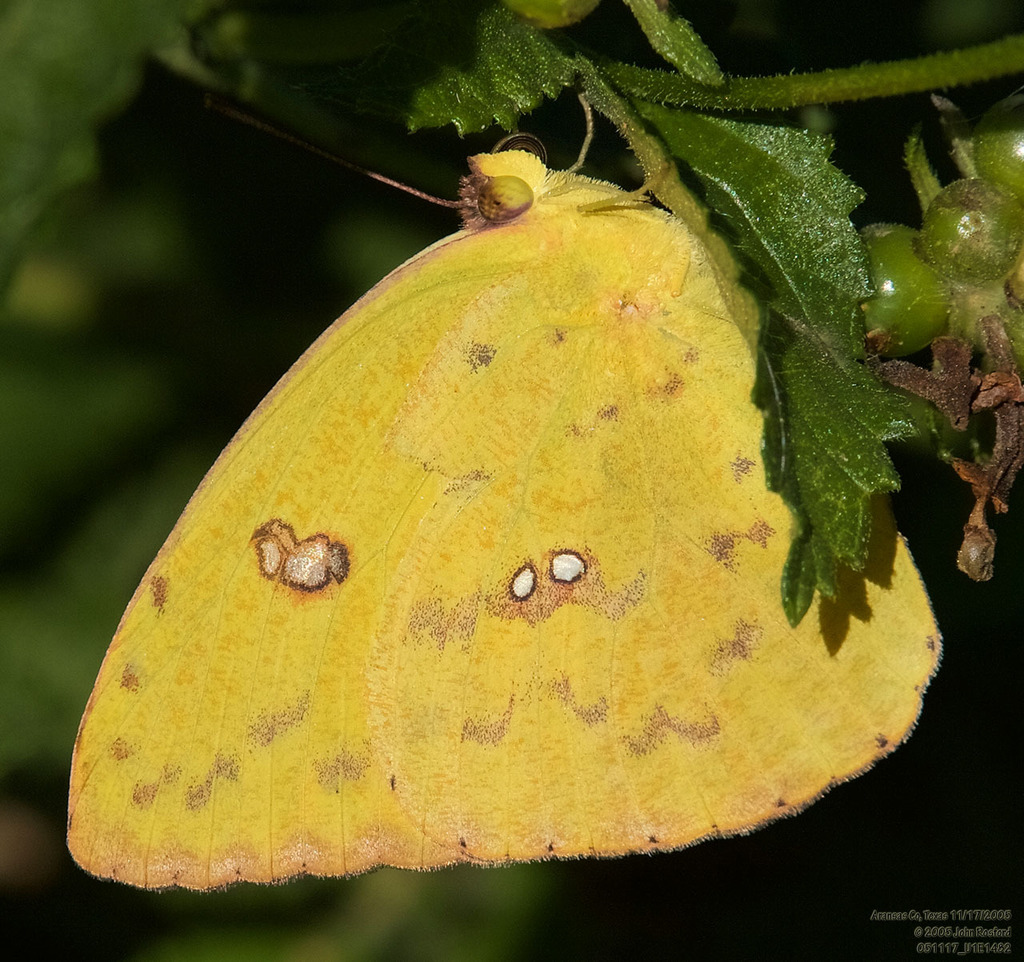
The cloudless sulphur is a medium-sized butterfly with a wingspan of about 5 to 6 cm and elongated wings. Adults feed on nectar from many long-tubed flowers, while larvae eat Senna and partridge pea plants. It lives in open habitats such as gardens and seashores across the Americas from South America up to southern Canada.
Source: Wikipedia
How to recognize it
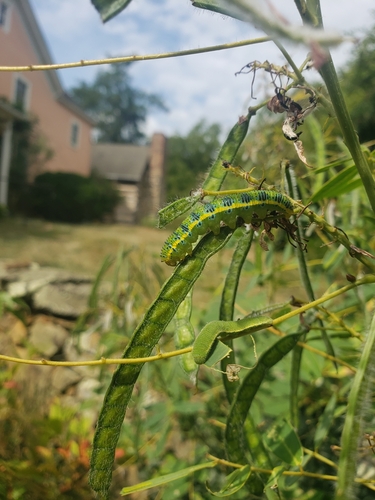
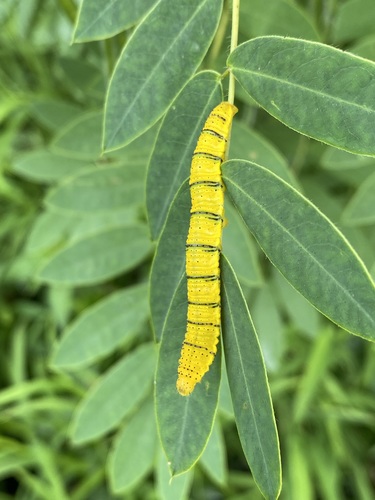
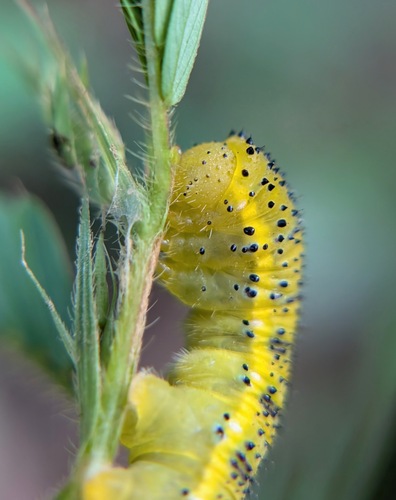
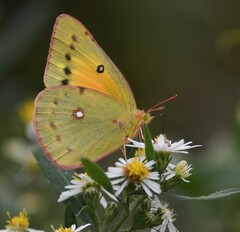
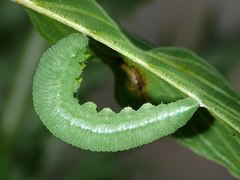
Males are bright yellow on top and yellow to reddish-brown below; females are lemon-yellow to white with black marginal spots and a black square or star on the lower forewing. Caterpillars grow to about 4-4.5 cm long.
Source: Wikipedia
Size
Wingspan ranges from 4.8 to 6.5 cm (about 1.9 to 2.6 in).
Source: Wikipedia
Where it lives
Commonly found in open spaces, gardens, glades, seashores, and near water. The name comes from the Senna plants that the larvae use as hosts.
Source: Wikipedia
What it eats
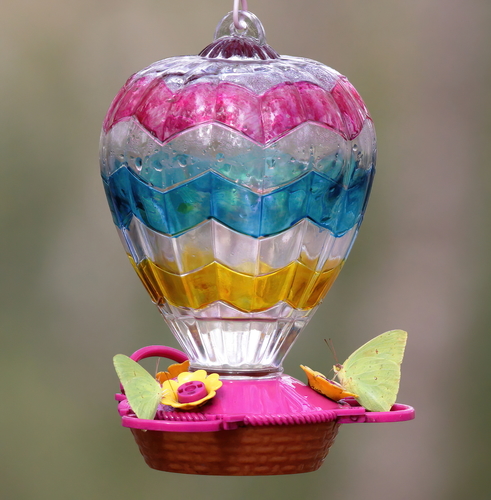
Adults sip nectar from flowers with long tubes such as cordia, bougainvillea, hibiscus, lantana, and wild morning glory. Larvae feed on Senna species and partridge peas.
Source: Wikipedia
Life cycle
Breeding season varies with climate, from midsummer-fall in cooler areas to year-round in warm regions. Eggs develop for about six days before hatching.
Source: Wikipedia
When you see it
The timing of breeding follows the same climate-dependent pattern described for the life cycle.
Source: Wikipedia
Where it comes from
It is a Pieridae butterfly native to the Americas, from South America to southern Canada, especially southwestern Ontario.
Source: Wikipedia
Lookalikes
Similar species include the clouded sulphur, yellow angled-sulphur (which has angled wings), and statira sulphur, all of which are smaller.
Source: Wikipedia
Where it is found in the US
Recorded in 44 of 51 states and DC. Most records: Texas, Florida, South Carolina, Alabama, Georgia, North Carolina, California, Arizona.
Darker = more records. Counts are museum and citizen-science records, not population size.
Source: GBIF
Status: native in North America; native in United States. Source: iNaturalist
Months it is reported in the US
Source: GBIF
More photos
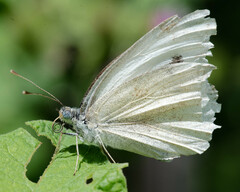
Same family (Pieridae)



Sources
- Wikipedia: https://en.wikipedia.org/wiki/Phoebis_sennae
Look it up elsewhere: GBIF · iNaturalist · BugGuide · ITIS · Wikipedia
Text written 2026-10-22 from the sources above and checked sentence by sentence against them. Data fetched 2026-10-22.