 Bug FAQ
Common Bush Brown
Bicyclus safitza · Order: Lepidoptera · Family: Nymphalidae
Also called: Black-haired Bush Brown, Common Savanna Bush Brown
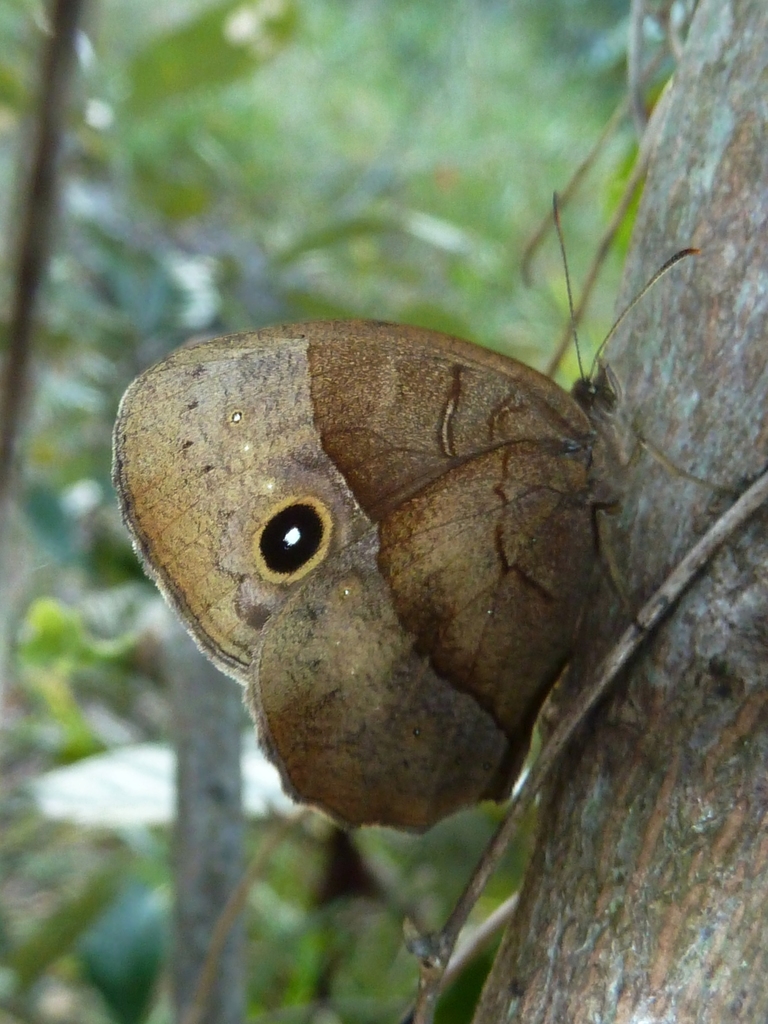
The common bush brown (Bicyclus safitza) is a butterfly in the Nymphalidae family with a wingspan of about 40 to 48 mm, larger in females. It lives throughout sub-Saharan Africa, preferring forested and well-wooded habitats, and adults can be seen flying all year round.
Source: Wikipedia
Size
Males have a wingspan of 40 to 45 mm, while females are slightly larger at 43 to 48 mm.
Source: Wikipedia
Where it lives
It prefers forests and other well-wooded environments.
Source: Wikipedia
What it eats
Caterpillars feed on a variety of grasses, including Ehrharta erecta.
Source: Wikipedia
Life cycle
Adults are active and on the wing throughout the entire year.
Source: Wikipedia
When you see it
They can be observed flying in any season, as they are present year round.
Source: Wikipedia
Where it comes from
The species is found across all of Africa south of the Sahara.
Source: Wikipedia
More photos

Questions people ask
When can I see adult common bush browns?
Adults are on the wing all year, so you may spot them in any month.
Source: Wikipedia
What do the caterpillars eat?
The larvae feed on various grasses such as Ehrharta erecta.
Source: Wikipedia
Where is the common bush brown found?
It occurs throughout sub-Saharan Africa, favoring forested and well-wooded habitats.
Source: Wikipedia
Same family (Nymphalidae)






Sources
- Wikipedia: https://en.wikipedia.org/wiki/Bicyclus_safitza
Look it up elsewhere: GBIF · iNaturalist · BugGuide · Wikipedia
Text written 2026-10-23 from the sources above and checked sentence by sentence against them. Data fetched 2026-10-23.