 Bug FAQ
Common Fivering
Ypthima argus · Order: Lepidoptera · Family: Nymphalidae
Also called: Common Five-ring Butterfly
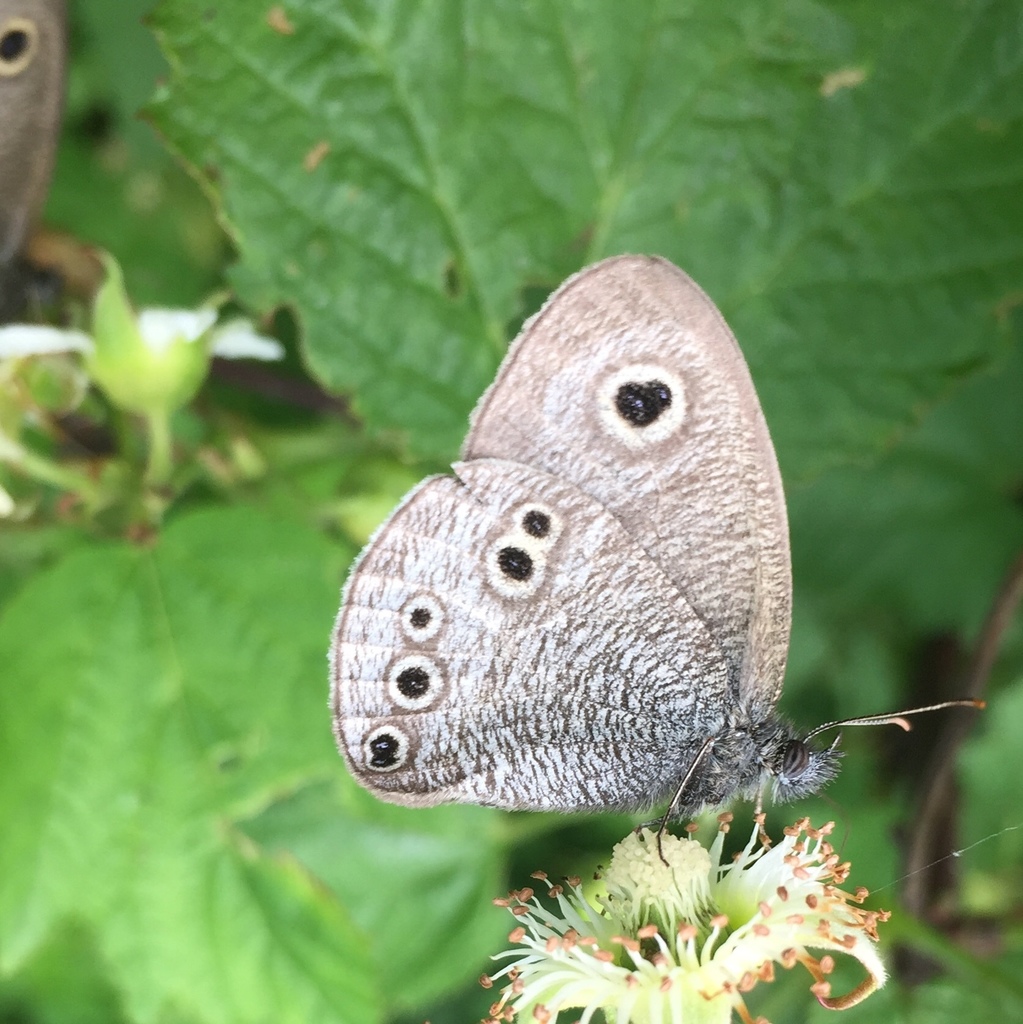
The common five-ring butterfly has a wingspan of about 38 to 46 mm and the male’s upper wings are brown with darker margins and a distinctive yellow-ringed black eye-spot near the tip of the forewing. It lives across much of Asia, including the Indian sub-Himalayan region, Southeast Asian countries, China, Japan, Korea and parts of Indonesia.
Source: Wikipedia
How to recognize it
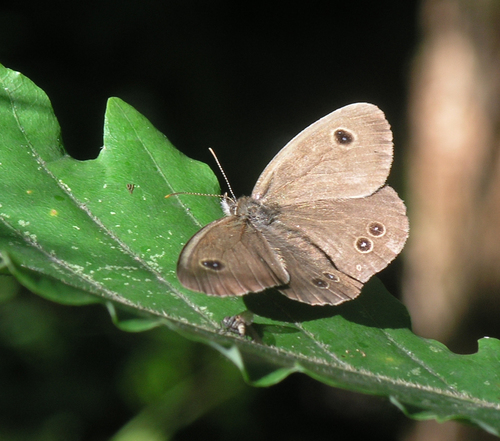
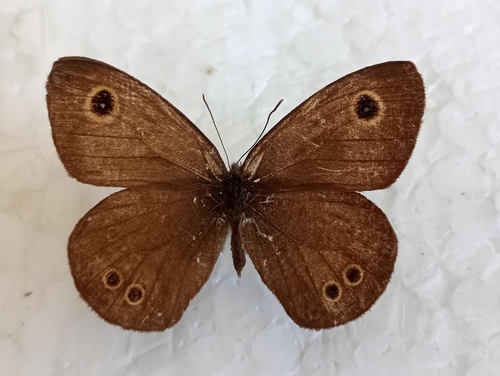
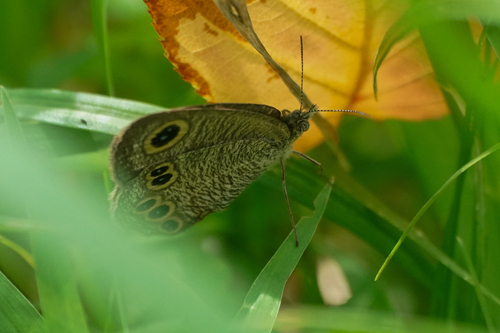
Males show brown upper wings with darker edges, subbasal and discal dark bands, and a large, slightly slanted oval black eye-spot ringed in yellow near the forewing tip.
Source: Wikipedia
Size
The wingspan ranges from 38 to 46 mm.
Source: Wikipedia
Where it lives
It is a Satyrinae butterfly found throughout Asia.
Source: Wikipedia
Where it comes from
Its range includes Bangladesh, Nepal, Bhutan, mainland China and Hong Kong, India (including the Himalayas, central regions and the Western Ghats), Indonesia’s Borneo, Japan, the Korean Peninsula, the Malay Peninsula, Cambodia, Myanmar, Pakistan, the Kuril Islands of Russia, Singapore, Taiwan, Thailand and northern Vietnam.
Source: Wikipedia
Lookalikes
It resembles Y. philomela on the underside but has a paler ochraceous-white ground colour, coarser thin brown striae, and more distinctly arranged hindwing eye-spots in an echelon pattern.
Source: Wikipedia
More photos
Same family (Nymphalidae)






Sources
- Wikipedia: https://en.wikipedia.org/wiki/Ypthima_baldus
Look it up elsewhere: GBIF · iNaturalist · BugGuide · Wikipedia
Text written 2026-10-24 from the sources above and checked sentence by sentence against them. Data fetched 2026-10-22.