 Bug FAQ
Common Jester
Symbrenthia lilaea · Order: Lepidoptera · Family: Nymphalidae
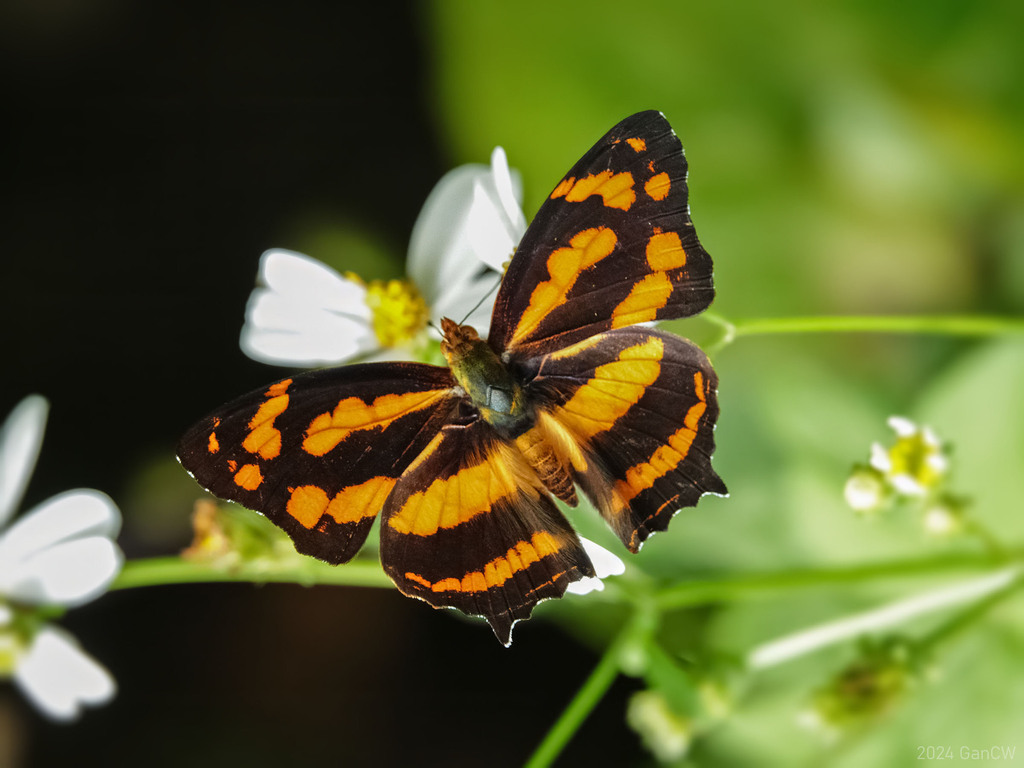
The peninsular jester has black upper wings with orange-yellow markings and distinctive hindwing bands crossed by black spots. It lives across the Himalayas from Pakistan to Sikkim and into the Malayan region of South and Southeast Asia. It is a cylindrical-bodied butterfly whose pupae are pale purplish-ochre.
Source: Wikipedia
How to recognize it
The upper side of the wings is black with orange-yellow markings, and the hindwing shows a broad sub-basal band that narrows near the costal margin and a postdiscal band that becomes a thin line toward the costal edge, sometimes crossed by black spots and a very slender subterminal line.
Source: Wikipedia
Where it lives
It forms a superspecies with Symbrenthia hippoclus and lives in the Himalayas from Pakistan’s Hazara division through Sikkim, Assam, Burma and Tenasserim, extending into the Malayan region.
Source: Wikipedia
Life cycle
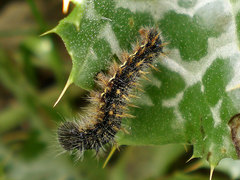
Its body is cylindrical and the pupae are pale, purplish-ochreous.
Source: Wikipedia
Where it comes from
Symbrenthia lilaea, the peninsular jester, is a nymphalid butterfly native to South and Southeast Asia.
Source: Wikipedia
More photos
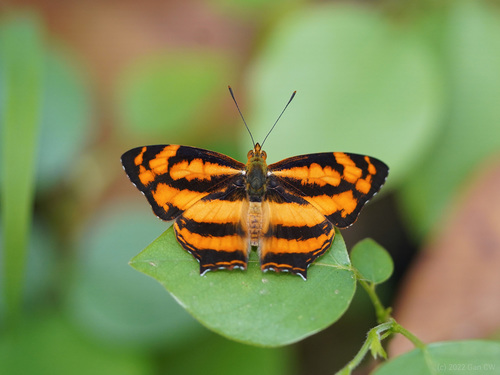
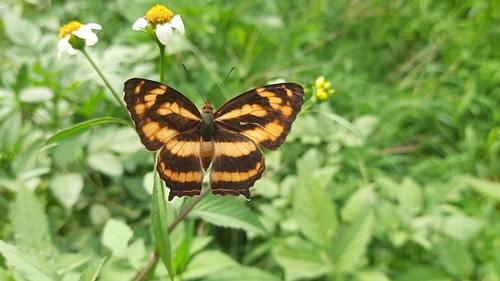
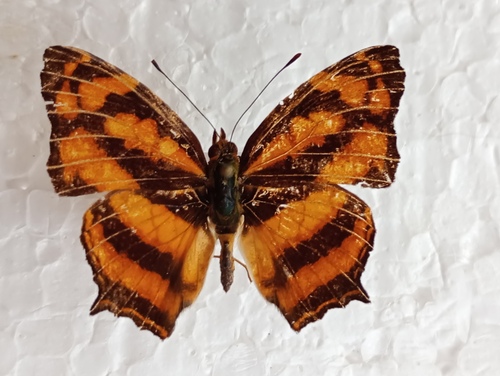

Same family (Nymphalidae)





Sources
- Wikipedia: https://en.wikipedia.org/wiki/Symbrenthia_lilaea
Look it up elsewhere: GBIF · iNaturalist · BugGuide · Wikipedia
Text written 2026-10-24 from the sources above and checked sentence by sentence against them. Data fetched 2026-10-22.