 Bug FAQ
Cowpea Aphid
Aphis craccivora · Order: Hemiptera · Family: Aphididae
Also called: Groundnut Aphid
Source: Wikipedia

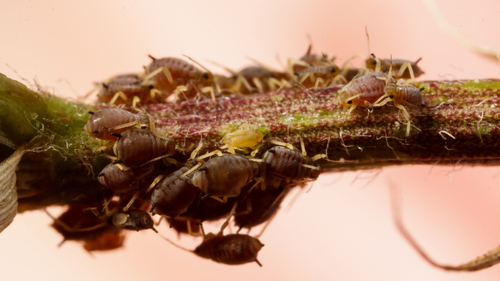
The cowpea aphid is a tiny black aphid that lives on many plants, especially beans, and is found worldwide after originating in the Palearctic region. It reproduces without males, overwinters as eggs, and can cause stunted growth and transmit several plant viruses.
Source: Wikipedia
How to recognize it
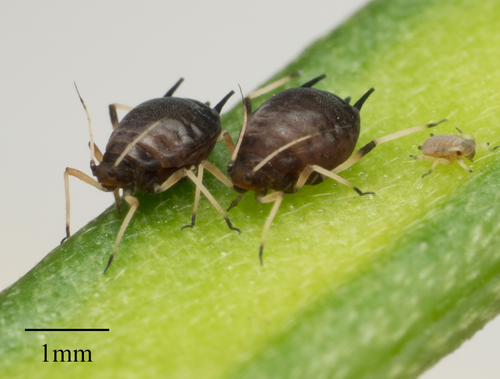
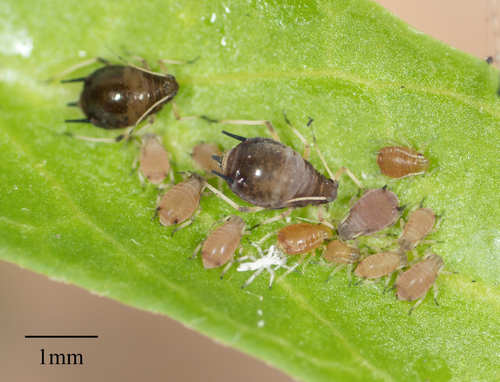
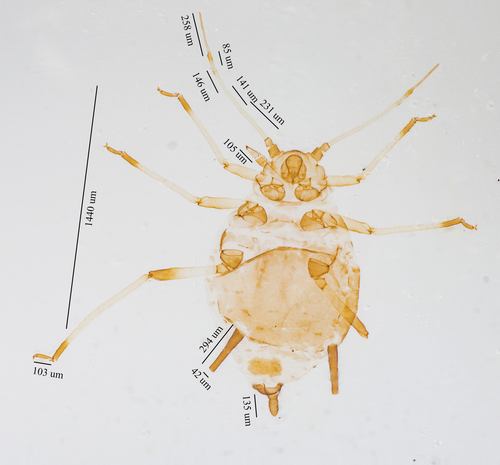
Females have a shiny black or dark brown body with a noticeable tail-like cauda and legs that are brown or yellow. Their six-segmented antennae and limb segments are pale near the body and darker toward the tips, as are the cauda and cornicles.
Source: Wikipedia
Size
Wingless females are slightly smaller than the winged form.
Source: Wikipedia
Is it a pest in the house?
Feeding can stunt and distort plant growth. It also transmits several plant viruses, including groundnut rosette, peanut mottle, and cucumber mosaic.
Source: Wikipedia
How to get rid of it
In warm climates the aphid can reproduce year-round by parthenogenesis.
Source: Wikipedia
Where it lives
It is common in the Mediterranean, subtropical, and many tropical areas.
Source: Wikipedia
What it eats
It feeds on many plants but prefers members of the bean family. Other host families include asters, mustards, carnations, chenopods, cucurbits, mallows, buttercups, roses and nightshades.
Source: Wikipedia
Life cycle
The species reproduces asexually; all individuals are female and give birth to nymphs that molt four times in 8 to 12 days.
Source: Wikipedia
When you see it
Eggs hatch in early spring; the first nymphs (fundatrix) feed on alfalfa. By late April winged females move to other hosts such as Acacia and later cotton, where they cause serious crop damage.
Source: Wikipedia
Where it comes from
Originally from the Palearctic region, it has spread to become nearly cosmopolitan.
Source: Wikipedia
Where it is found in the US
Recorded in 35 of 51 states and DC. Most records: California, Illinois, Iowa, Florida, Michigan, Minnesota, Kentucky, Texas.
Darker = more records. Counts are museum and citizen-science records, not population size.
Source: GBIF
Status: introduced in Canada. Source: iNaturalist
Months it is reported in the US
Source: GBIF
More photos
Questions people ask
What damage does the cowpea aphid cause?
It stunts and distorts plant growth and spreads several plant viruses.
Source: Wikipedia
Which plants are most at risk?
Beans are preferred, but it also attacks a wide range of families such as asters, mustards, cucurbits and nightshades.
Source: Wikipedia
How can I control a cowpea aphid infestation?
Encourage natural predators like parasitic wasps, ladybirds, lacewing and hoverfly larvae.
Source: Wikipedia
When do cowpea aphids appear?
Eggs hatch in early spring, and winged females migrate to new hosts by late April.
Source: Wikipedia
Same family (Aphididae)
 Melon AphidAphis gossypiiDamages trees, gardens or crops
 Oleander AphidAphis neriiDamages trees, gardens or crops
 Witch-hazel Cone Gall AphidHormaphis hamamelidis
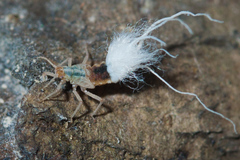 Beech Blight AphidGrylloprociphilus imbricatorDamages trees, gardens or crops
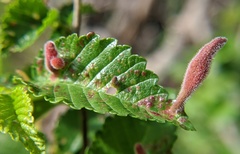 Rice Root AphidTetraneura nigriabdominalis
 Bean AphidAphis fabaeDamages trees, gardens or crops
Sources
- Wikipedia: https://en.wikipedia.org/wiki/Aphis_craccivora
Look it up elsewhere: GBIF · iNaturalist · BugGuide · ITIS · Wikipedia
Text written 2026-10-24 from the sources above and checked sentence by sentence against them. Data fetched 2026-10-24.