 Bug FAQ
Dasymutilla bioculata
Dasymutilla bioculata · Order: Hymenoptera · Family: Mutillidae
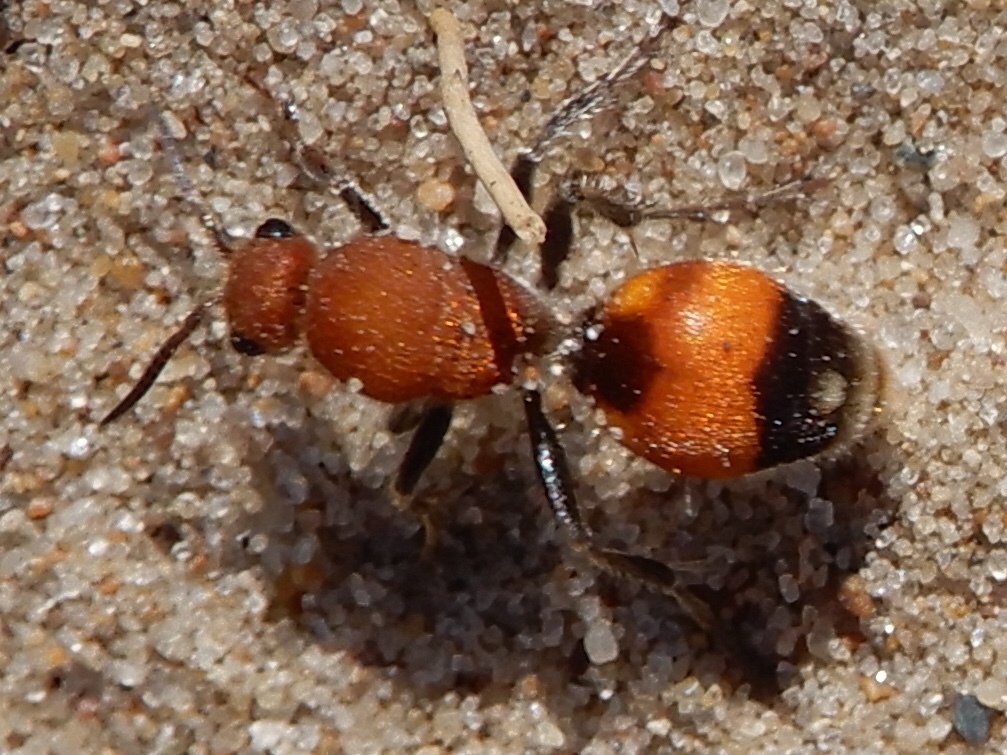
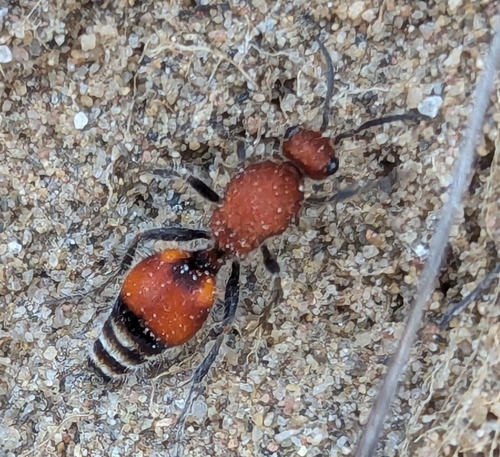
Males have two orange spots on the second abdominal segment, which gave the species its name. It lives in south-central North America, roughly from the southern edge of South Dakota down to the northern border of Zacatecas.
Source: Wikipedia
How to recognize it
The name comes from two orange spots on the second terga of males.
Source: Wikipedia
What it eats
Females are parasitic wasps that deposit eggs in the cocoons of other wasps.
Source: Wikipedia
Where it comes from
Its range covers the same south-central North American area as its habitat.
Source: Wikipedia
Lookalikes
Males look very similar to those of Dasymutilla quadriguttata and Dasymutilla vesta.
Source: Wikipedia
Where it is found in the US
Recorded in 49 of 51 states and DC. Most records: California, Texas, Florida, Arizona, Colorado, New Mexico, Oklahoma, North Carolina.
Darker = more records. Counts are museum and citizen-science records, not population size.
Source: GBIF
Status: native in North America; native in United States. Source: iNaturalist
Months it is reported in the US
Source: GBIF
More photos
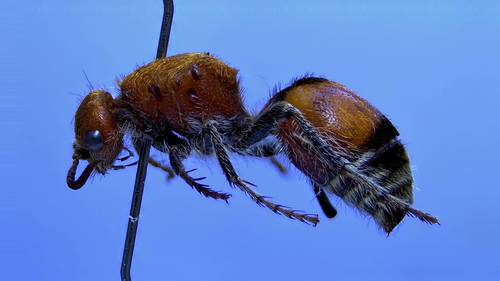
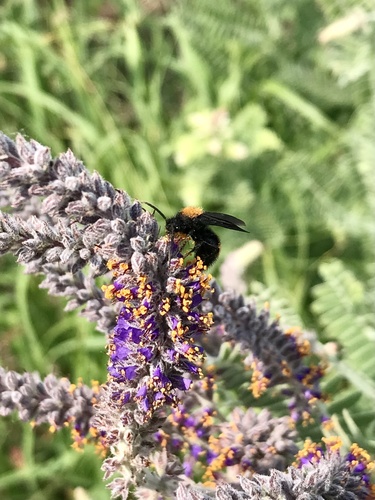
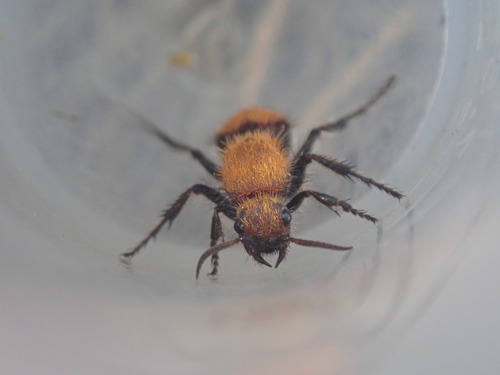
Same family (Mutillidae)


Sources
- Wikipedia: https://en.wikipedia.org/wiki/Dasymutilla_bioculata
Look it up elsewhere: GBIF · iNaturalist · BugGuide · Wikipedia
Text written 2026-10-23 from the sources above and checked sentence by sentence against them. Data fetched 2026-10-22.