 Bug FAQ
Eastern Bloodsucking Conenose
Triatoma sanguisuga · Order: Hemiptera · Family: Reduviidae
Also called: Eastern Blood-sucking Conenose, Big Bed Bug, Mexican Bed Bug
Source: entomology.ca.uky.edu, extension.msstate.edu, Wikipedia
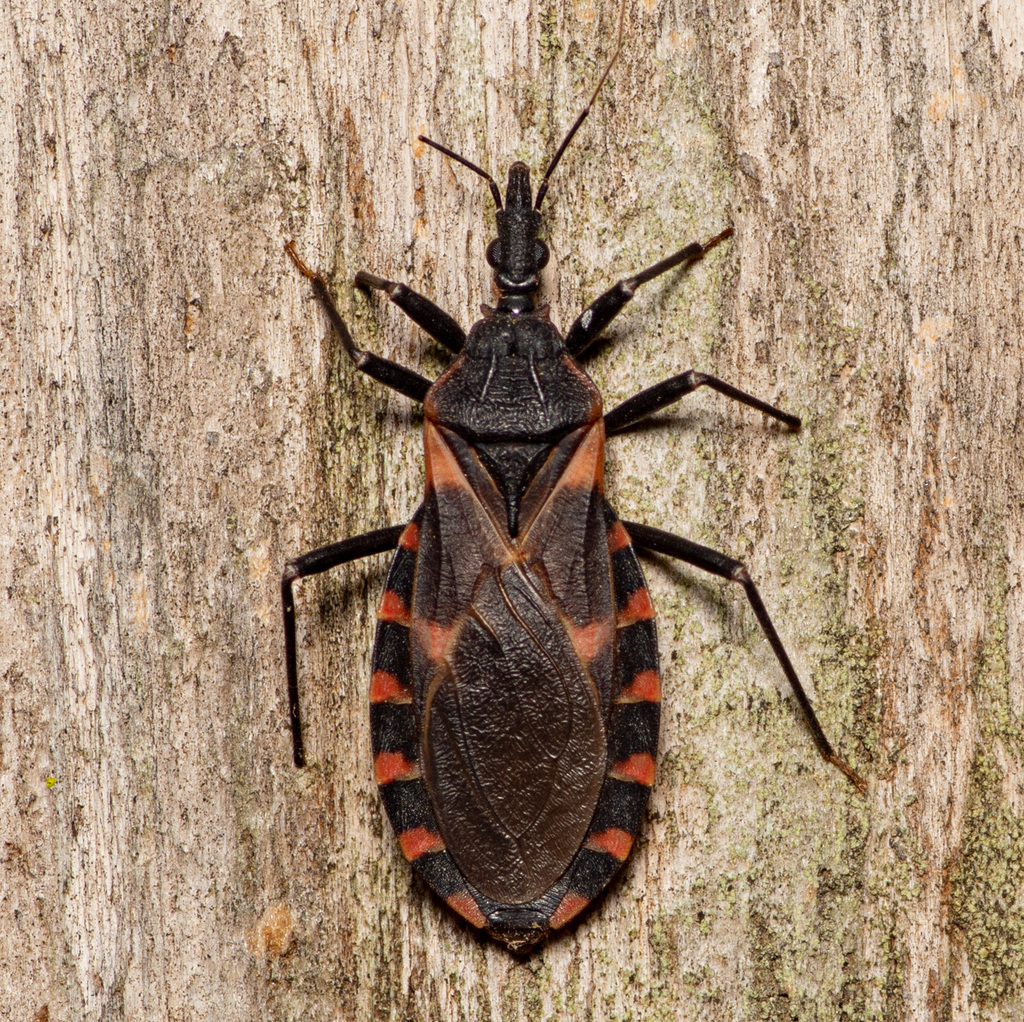
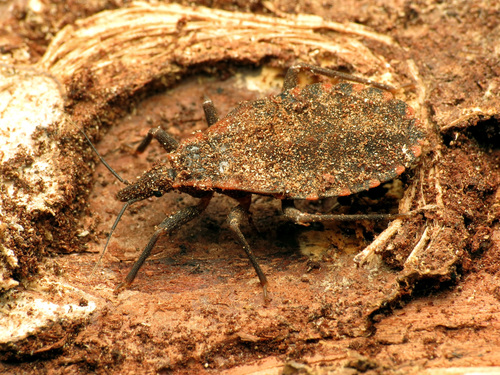
Eastern bloodsucking conenoses are large, dark bugs about three-quarters of an inch long with orange spots along the sides of a wide abdomen. They live in the southeastern United States and other parts of North and Latin America, hide in wall cracks, and feed at night on mammals and sometimes frogs. They can bite humans, usually on the face, with a painless but irritating bite, and they are capable of carrying the pathogen that causes Chagas disease.
Source: Wikipedia, UF/IFAS, entomology.ca.uky.edu, extension.msstate.edu
How to recognize it
Adults are dark brown to black, flattened, with a cone-shaped head and six reddish-orange spots on each side of a wide abdomen.
Source: Wikipedia, UF/IFAS, entomology.ca.uky.edu
Size
They measure roughly 16 to 21 mm (about 0.6 to 0.8 in) in length. Typical adults are about 19 mm (¾ in) long.
Is it a pest in the house?
In homes they hide in dark, secluded spots such as cracks in walls or ceilings and emerge at night to feed. They are often found near animal nests or burrows and may appear around kennels or pet resting areas. Lights attract them, so outdoor lighting can increase their presence near houses.
Source: UF/IFAS, extension.msstate.edu, entomology.ca.uky.edu
Does it bite or sting?
They bite humans around the mouth or eyes, usually painless but irritating. The species can carry the parasite that causes Chagas disease, though it rarely defecates on the host after feeding.
Source: Wikipedia, extension.msstate.edu, entomology.ca.uky.edu
How to get rid of it
Seal cracks and gaps in walls, roofs, windows and doors, and install or repair screens. Vacuum and clean regularly to remove hiding places. Reduce outdoor lighting and keep wood piles or clutter away from the house. If needed, apply pyrethroid dusts to cracks and crevices for serious infestations.
Source: Wikipedia, entomology.ca.uky.edu, extension.msstate.edu
Where it lives
The bug is common in the southeastern United States and is found throughout North and Latin America.
Source: Wikipedia
What it eats
Tree frogs can also provide a significant blood meal.
Source: Wikipedia
Life cycle
Females lay eggs four to six days after taking a blood meal. Nymphs hatch, feed on blood and molt eight times before becoming adults.
Source: Wikipedia
Where it comes from
In the United States it occurs south of Pennsylvania, reaching west to Ohio, Missouri and Arizona. Overall its range includes North America and Latin America, especially the southeastern U.S.
Source: Wikipedia
Lookalikes
They can be confused with wheel bugs, which have a large cog on the thorax that conenoses lack.
Source: entomology.ca.uky.edu
Where it is found in the US
Recorded in 31 of 51 states and DC. Most records: Texas, Florida, Virginia, Oklahoma, Missouri, Kentucky, Louisiana, Alabama.
Darker = more records. Counts are museum and citizen-science records, not population size.
Source: GBIF
Months it is reported in the US
Source: GBIF
More photos
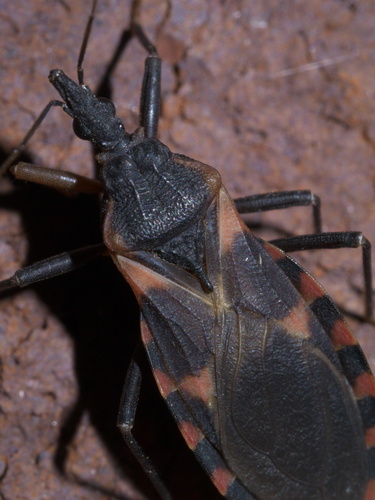
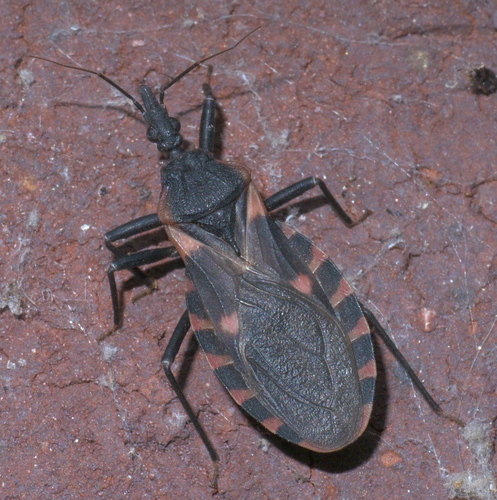
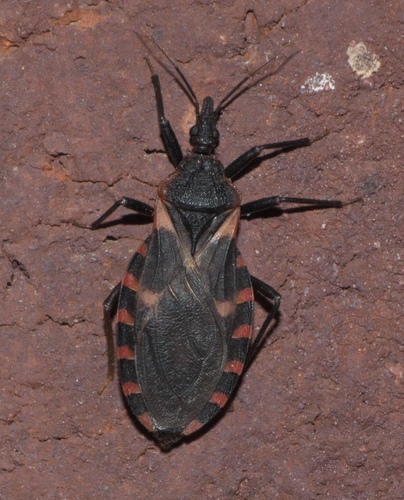
Questions people ask
How can I prevent Eastern bloodsucking conenoses from entering my home?
Seal all cracks, install screens, reduce outdoor lighting and keep clutter away from the house; vacuum and clean to eliminate hiding spots.
Source: Wikipedia, extension.msstate.edu, entomology.ca.uky.edu
Do they bite people?
Yes, they bite around the face, usually painless but irritating.
Source: Wikipedia, extension.msstate.edu
Can they spread disease?
They can carry the parasite that causes Chagas disease, though transmission to humans is rare.
Source: entomology.ca.uky.edu
What do they look like?
They are dark, about three-quarters of an inch long, with a wide abdomen bearing six orange spots on each side.
Source: Wikipedia, UF/IFAS, entomology.ca.uky.edu
Same family (Reduviidae)


Sources
- entomology.ca.uky.edu: https://entomology.ca.uky.edu/ef655
- extension.msstate.edu: https://extension.msstate.edu/newsletters/bugs-eye-view/2021/eastern-bloodsucking-conenose-vol-7-no-23
- Wikipedia: https://en.wikipedia.org/wiki/Triatoma_sanguisuga
- UF/IFAS: https://edis.ifas.ufl.edu/publication/IN1018
Look it up elsewhere: GBIF · iNaturalist · BugGuide · ITIS · Wikipedia
Text written 2026-10-23 from the sources above and checked sentence by sentence against them. Data fetched 2026-10-23.