 Bug FAQ
Masked Hunter
Reduvius personatus · Order: Hemiptera · Family: Reduviidae
Also called: Masked Bed-bug Hunter
Source: Wikipedia, University of Minnesota Extension, hort.extension.wisc.edu
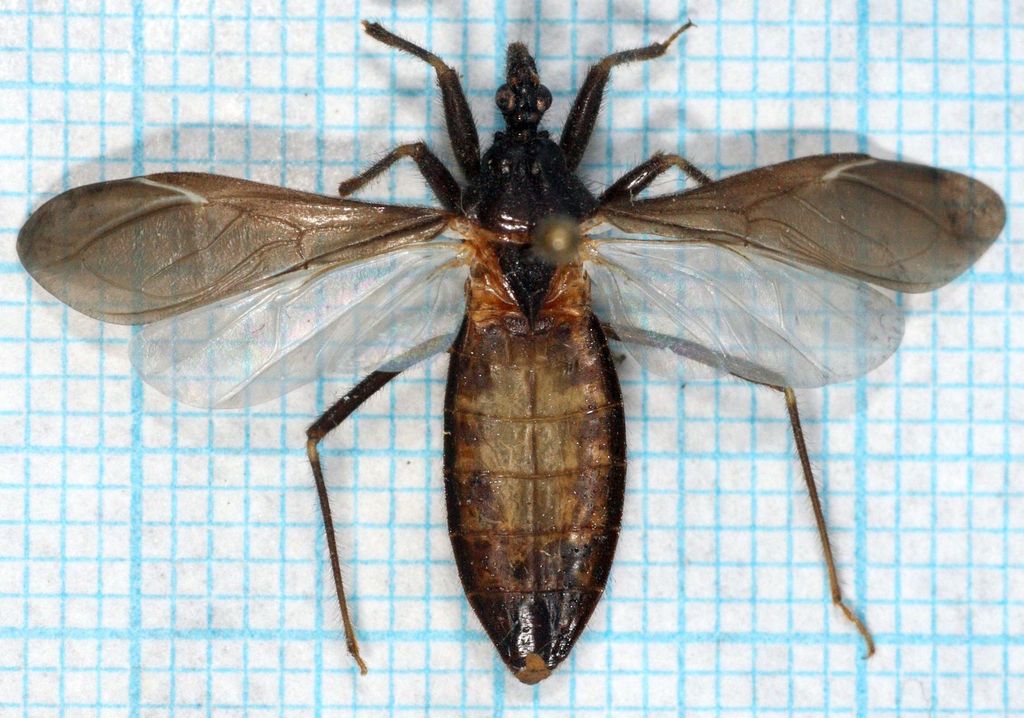
Adult masked hunters are dark brown to black, elongate-oval bugs about 17 to 22 mm (¾ inch) long. They live in dry habitats, are usually found indoors in small numbers, and are most common in midsummer but can appear in winter.
Source: Wikipedia, University of Minnesota Extension, hort.extension.wisc.edu
How to recognize it
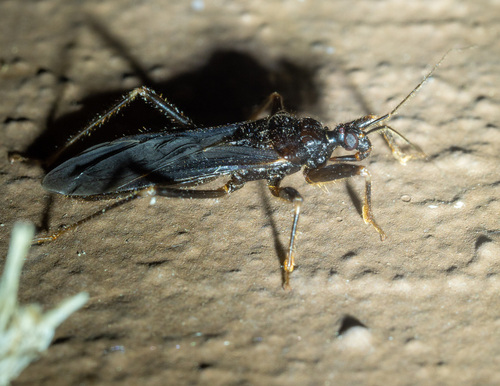
Adults are uniformly dark brown to black and have an elongate-oval shape.
Source: University of Minnesota Extension, hort.extension.wisc.edu
Size
Adults measure 17 to 22 mm (about three-quarters of an inch) in length.
Source: Wikipedia, University of Minnesota Extension, hort.extension.wisc.edu
Is it a pest in the house?
They are a nuisance when found indoors, do not reproduce inside buildings, and are often seen where bed-bug infestations occur.
Source: University of Minnesota Extension, hort.extension.wisc.edu
How to get rid of it
The best control is to eliminate other indoor insects; you can also physically remove the bugs by capturing or trapping them and releasing them outdoors.
Source: Wikipedia, University of Minnesota Extension, hort.extension.wisc.edu
Where it lives
They prefer dry habitats and are usually found indoors in small numbers.
Source: Wikipedia
What it eats
Both nymphs and adults are predators that pierce and suck the bodies of small arthropods such as woodlice, lacewings, earwigs, bed bugs and termites.
Source: Wikipedia
Life cycle
Masked hunters undergo incomplete metamorphosis and typically have one generation per year.
Source: Wikipedia
When you see it
Adults are most common in midsummer but can also be found during winter.
Source: Wikipedia
Where it comes from
The species is native to Europe and western Asia and was likely introduced to North America in the late 1800s-early 1900s.
Source: Wikipedia
Lookalikes
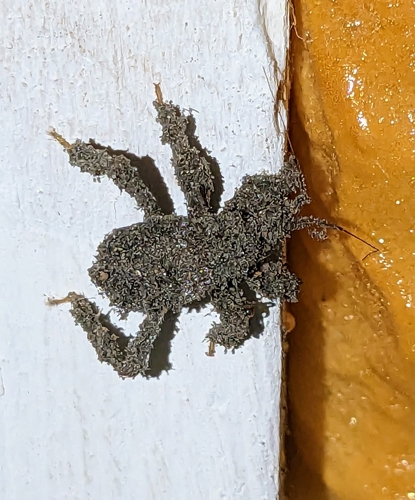
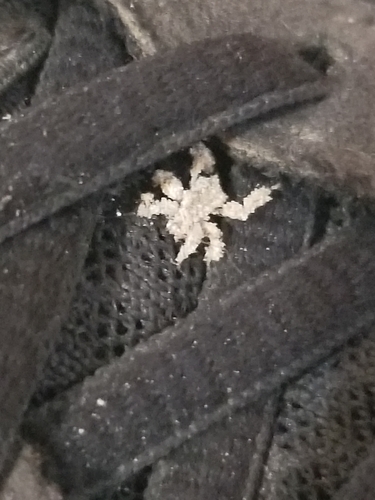
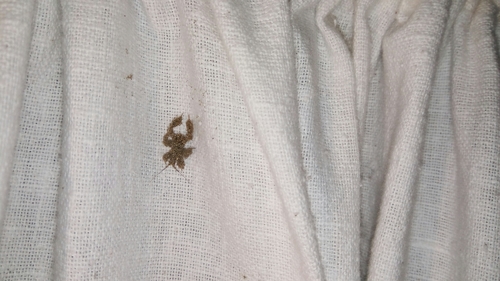
Nymphs resemble adults but often appear gray or light-colored because they are covered with a layer of dust and lint, making them look like walking piles of fluff.
Where it is found in the US
Recorded in 44 of 51 states and DC. Most records: Colorado, Michigan, New York, Illinois, Wisconsin, Pennsylvania, Washington, Utah.
Darker = more records. Counts are museum and citizen-science records, not population size.
Source: GBIF
Status: introduced in North America; introduced in United States. Source: iNaturalist
Months it is reported in the US
Source: GBIF
More photos
Questions people ask
Do masked hunters bite people?
Yes, if handled carelessly. It feels like a bee sting, followed by numbness and swelling that can last about a week.
How can I get rid of masked hunters?
Remove other indoor insects and physically capture or trap the bugs for release outdoors; insecticides are usually unnecessary.
Source: Wikipedia, University of Minnesota Extension, hort.extension.wisc.edu
Where are masked hunters originally from?
They are native to Europe and western Asia and were probably introduced to North America in the late 1800s-early 1900s.
Source: Wikipedia
What do masked hunters eat?
Both nymphs and adults prey on small arthropods such as woodlice, lacewings, earwigs, bed bugs and termites.
Source: Wikipedia
Same family (Reduviidae)
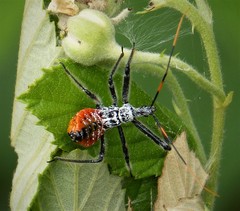 North American Wheel BugArilus cristatusCan bite
 Leafhopper Assassin BugZelus renardiiCan bite
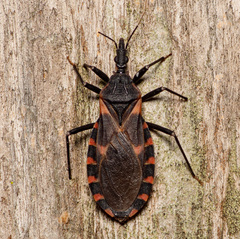 Eastern Bloodsucking ConenoseTriatoma sanguisugaCan spread germs or disease
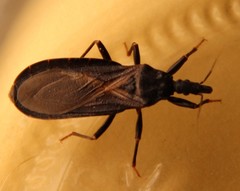 Western Bloodsucking ConenoseTriatoma protractaCan spread germs or disease
 Pale Green Assassin BugZelus luridusCan bite
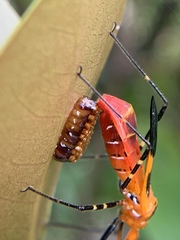 Milkweed Assassin BugZelus longipes
Sources
- Wikipedia: https://en.wikipedia.org/wiki/Reduvius_personatus
- University of Minnesota Extension: https://extension.umn.edu/household-insects/masked-hunters
- hort.extension.wisc.edu: https://hort.extension.wisc.edu/articles/masked-hunter-bug/
Look it up elsewhere: GBIF · iNaturalist · BugGuide · ITIS · Wikipedia
Text written 2026-10-23 from the sources above and checked sentence by sentence against them. Data fetched 2026-10-23.