 Bug FAQ
Eastern Lubber Grasshopper
Romalea microptera · Order: Orthoptera · Family: Romaleidae
Also called: Devil's Horse, Florida Lubber
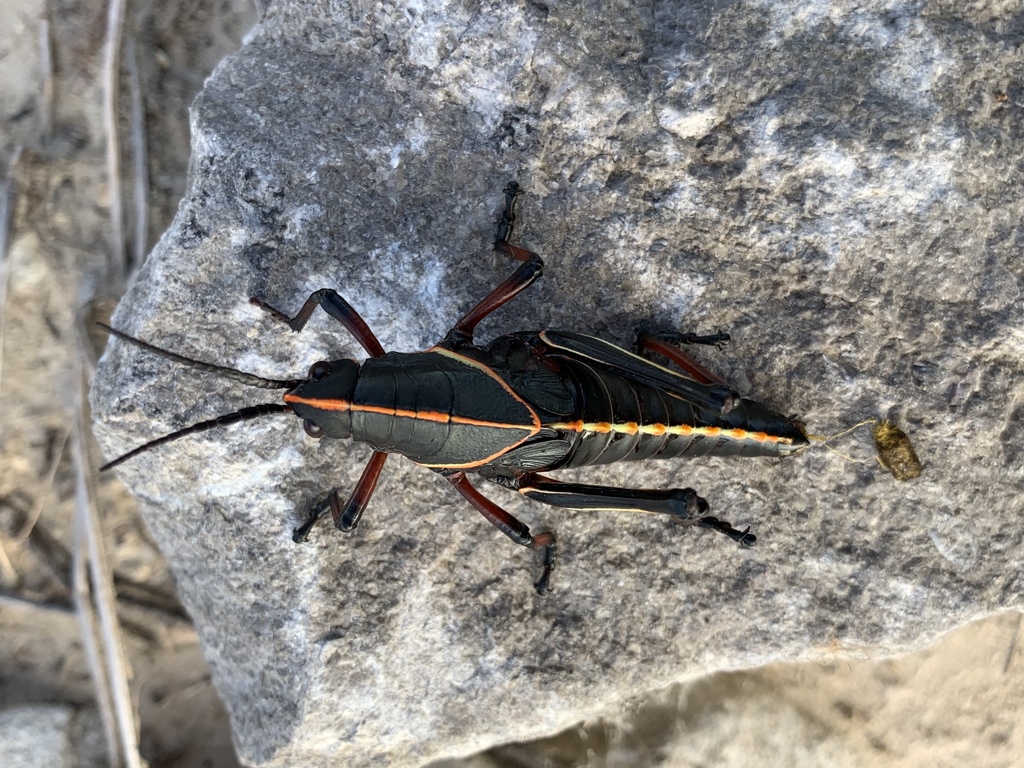
Adult eastern lubber grasshoppers are 4 to 7 cm long, with females larger than males, and can occasionally reach 9 cm. They live in open pinewoods, weedy fields and other areas with abundant vegetation.
Source: Wikipedia
How to recognize it
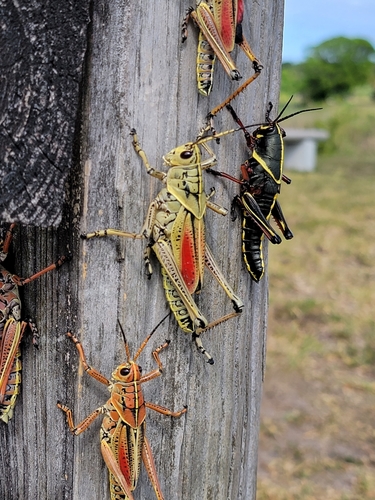
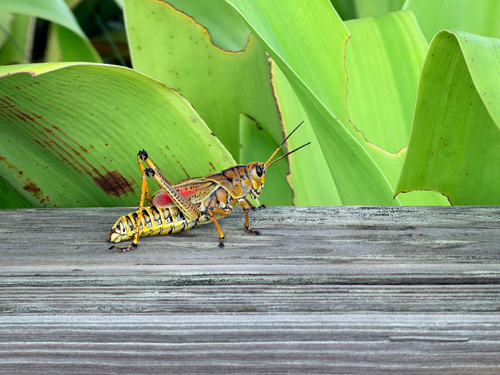
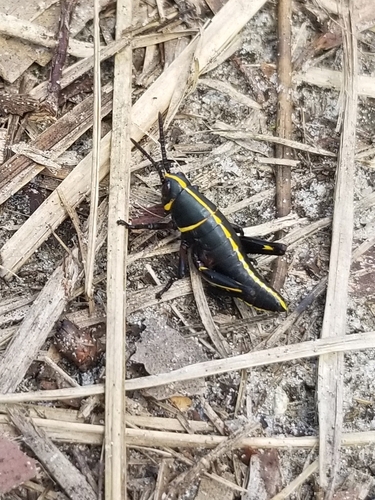
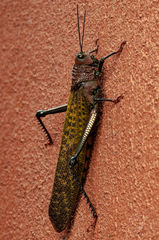
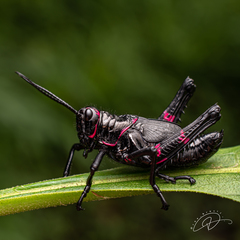
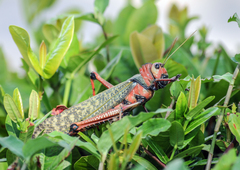
Adults have wings about half their body length and may be dull yellow with black spots, bright orange with black markings, or completely black with yellow or red striping.
Source: Wikipedia
Size
Males are typically 4.3 to 5.5 cm long; females 5 to 7 cm, but some individuals can grow up to 9 cm.
Source: Wikipedia
Life cycle
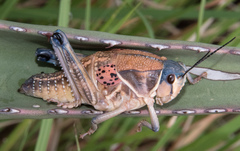
Like all insects, they develop through several stages, including a wingless nymph stage.
Source: Wikipedia
Where it is found in the US
Recorded in 25 of 51 states and DC. Most records: Florida, Louisiana, Texas, Alabama, Mississippi, Georgia, South Carolina, Arkansas.
Darker = more records. Counts are museum and citizen-science records, not population size.
Source: GBIF
Status: endemic in United States; native in North America. Source: iNaturalist
Months it is reported in the US
Source: GBIF
More photos
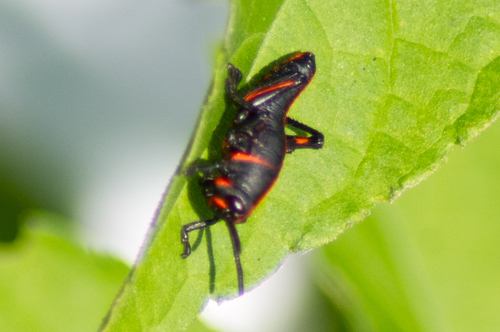
Same family (Romaleidae)
Sources
- Wikipedia: https://en.wikipedia.org/wiki/Romalea
Look it up elsewhere: GBIF · iNaturalist · BugGuide · ITIS · Wikipedia
Text written 2026-10-22 from the sources above and checked sentence by sentence against them. Data fetched 2026-10-22.