 Bug FAQ
Plains Lubber Grasshopper
Brachystola magna · Order: Orthoptera · Family: Romaleidae
Also called: lubber grasshopper
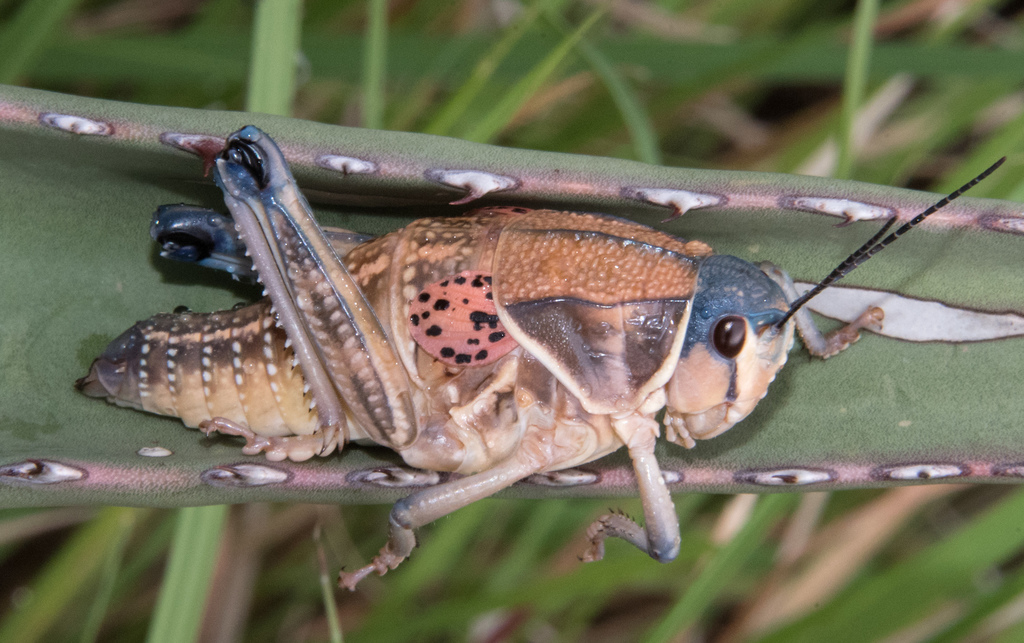
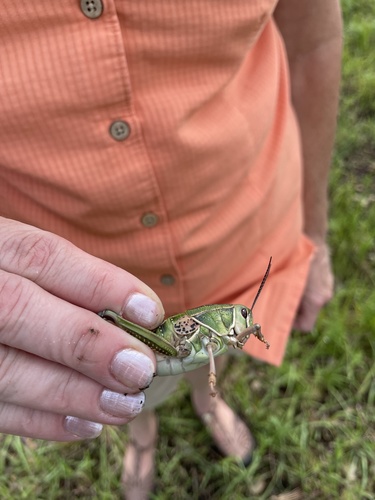
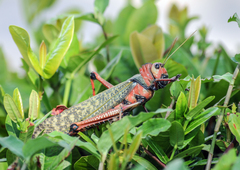
Adults are 4 to 6 cm long, with females larger than males. They are reddish-brown with black dots on the wings, bluish-brown antennae, reddish legs near the body and purple tarsi, and a ridge on the abdomen. In Wyoming they live on gravelly ground in the southwest part of the state.
Source: Wikipedia
How to recognize it
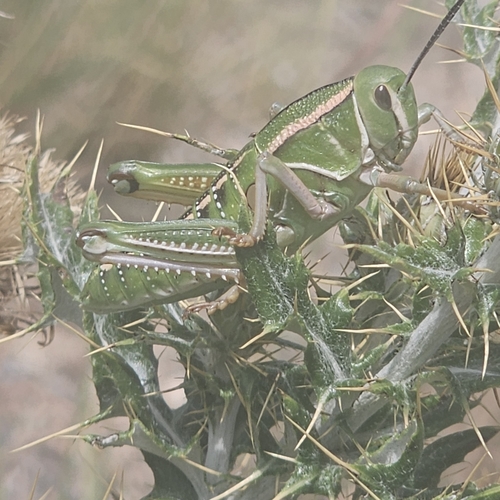
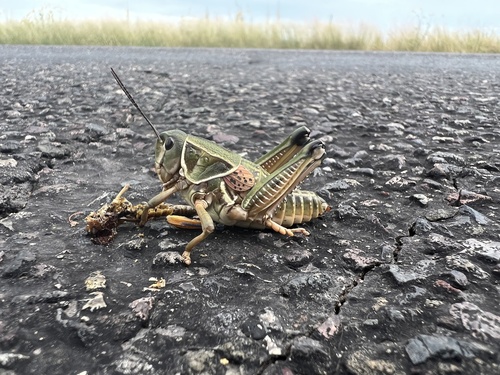
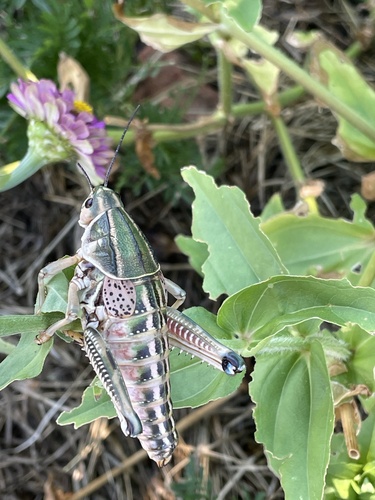
Color is reddish brown with black wing dots; northern bugs are greener, southern ones more brownish-buff.
Source: Wikipedia
What it eats
It prefers coarse broad-leaved plants and does not cause noticeable damage to crops.
Source: Wikipedia
Life cycle
It overwinters as an egg; eggs hatch in spring and the insects reach adulthood by August.
Source: Wikipedia
When you see it
Adults appear in August after overwintering eggs hatch in spring.
Source: Wikipedia
Lookalikes
It differs from Brachystola virescens by having longer antennae and a different coloration.
Source: Wikipedia
Where it is found in the US
Recorded in 14 of 51 states and DC. Most records: Texas, Arizona, New Mexico, Colorado, Oklahoma, Nebraska, Kansas, South Dakota.
Darker = more records. Counts are museum and citizen-science records, not population size.
Source: GBIF
Status: introduced in Canada; native in North America; native in United States. Source: iNaturalist
Months it is reported in the US
Source: GBIF
More photos
Questions people ask
How can I tell a Plains Lubber Grasshopper apart from similar species?
Look for its longer antennae and the reddish-brown color with black wing dots; northern individuals may be greener, southern ones more brownish-buff.
Source: Wikipedia
When will I see adult Plains Lubber Grasshoppers?
Adults emerge in August after the eggs hatch in spring.
Source: Wikipedia
Same family (Romaleidae)
Sources
- Wikipedia: https://en.wikipedia.org/wiki/Brachystola_magna
Look it up elsewhere: GBIF · iNaturalist · BugGuide · ITIS · Wikipedia
Text written 2026-10-22 from the sources above and checked sentence by sentence against them. Data fetched 2026-10-22.