 Bug FAQ
Emperor Gum Moth
Opodiphthera eucalypti · Order: Lepidoptera · Family: Saturniidae
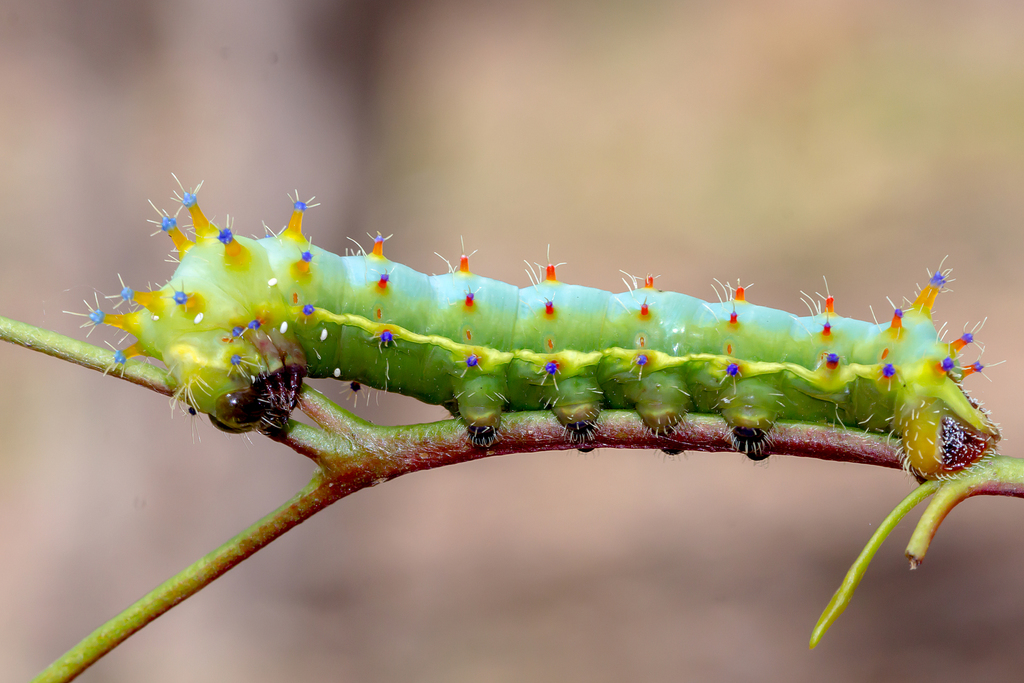
Its caterpillars live on young eucalyptus leaves from October to March and the adult emerges the following spring, feeding only on stored energy.
Source: Wikipedia
How to recognize it
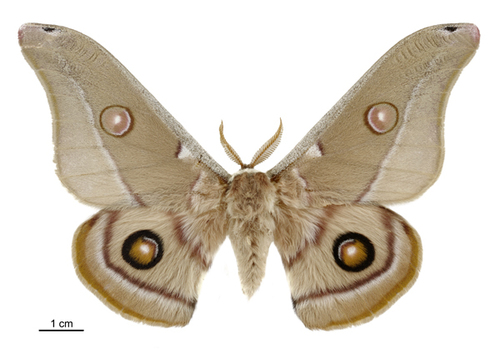
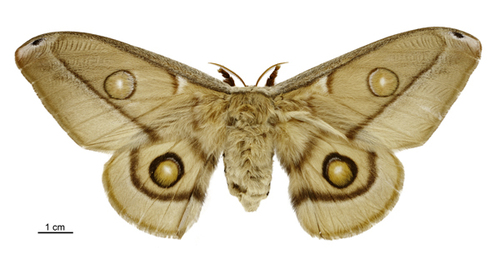
The moth’s wings and body are furry, pale reddish-brown and display four prominent eye-like spots in a symmetrical pattern.
Source: Wikipedia
Size
Wingspan ranges from 120 to 150 mm.
Source: Wikipedia
Does it bite or sting?
Its hairs are not poisonous and it does not sting.
Source: Wikipedia
Where it lives
Caterpillars are found on the youngest leaves of their host trees, usually high in the canopy.
Source: Wikipedia
What it eats
Caterpillars feed on young eucalyptus leaves; adults do not feed at all.
Source: Wikipedia
Life cycle
The larval stage can last many weeks depending on temperature, after which the moth breaks out of its cocoon by softening it with a regurgitated fluid and cutting a hole with wing hooks.
Source: Wikipedia
When you see it
Caterpillars are present from October to March, and adults emerge the next spring or early summer.
Source: Wikipedia
Where it comes from
It is native to Australia.
Source: Wikipedia
More photos
Questions people ask
When can I expect to see emperor gum moth caterpillars?
They are usually found on young leaves between October and March.
Source: Wikipedia
Do the hairs of the emperor gum moth sting or cause irritation?
The hairs are not poisonous and do not sting.
Source: Wikipedia
What do adult emperor gum moths eat?
Adults do not feed; they rely on energy stored from their caterpillar stage.
Source: Wikipedia
Same family (Saturniidae)


Sources
- Wikipedia: https://en.wikipedia.org/wiki/Opodiphthera_eucalypti
Look it up elsewhere: GBIF · iNaturalist · BugGuide · Wikipedia
Text written 2026-10-23 from the sources above and checked sentence by sentence against them. Data fetched 2026-10-23.