 Bug FAQ
Empress Leilia
Asterocampa leilia · Order: Lepidoptera · Family: Nymphalidae
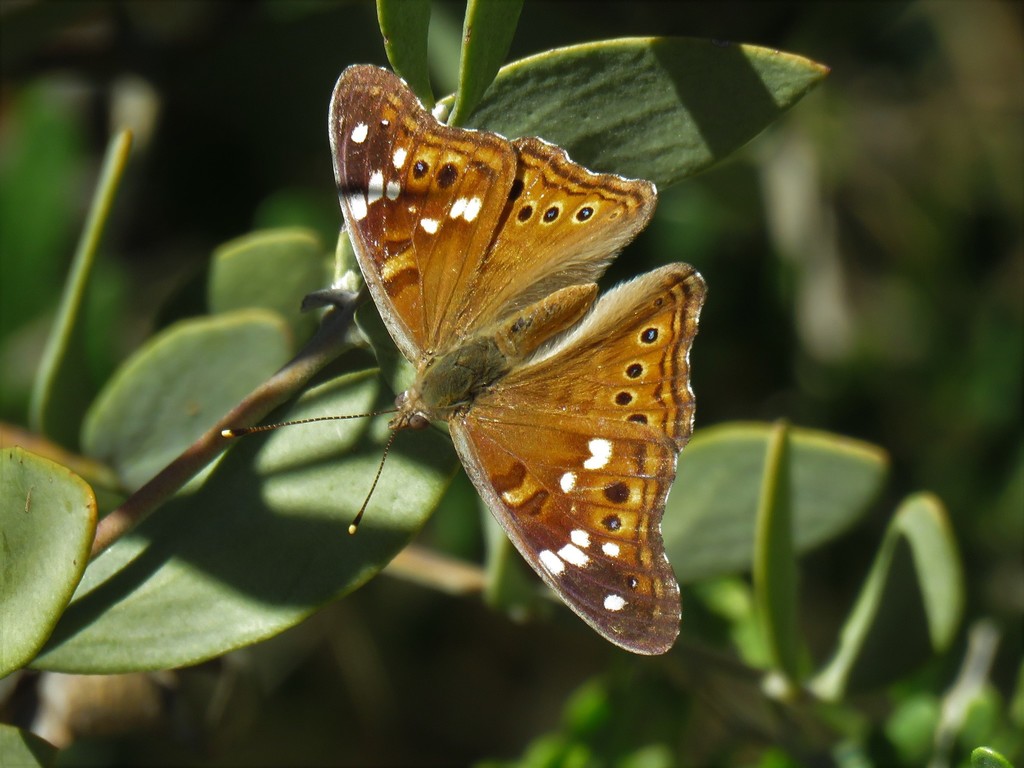
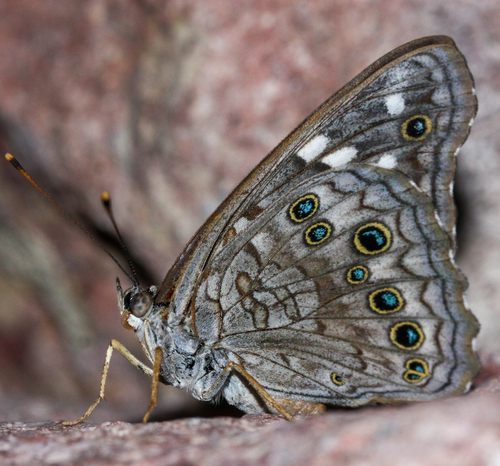
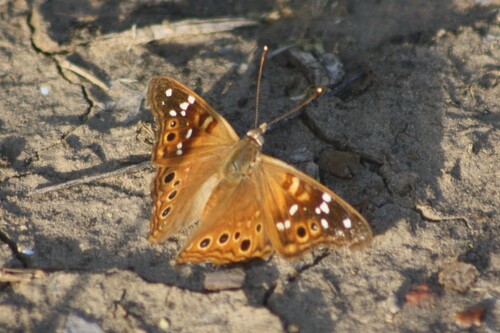
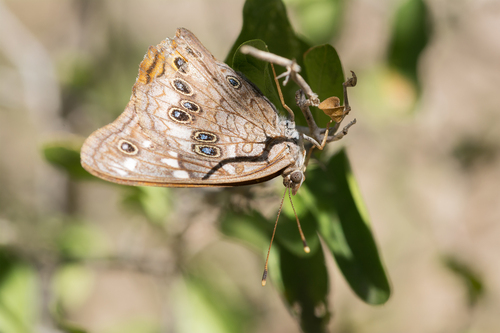
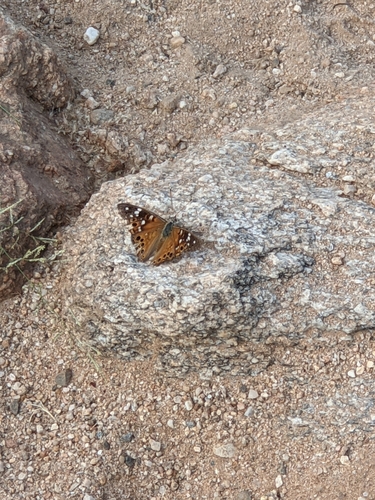
Adult Empress Leilia butterflies have brown-orange wings marked with white and black spots underneath and a wingspan of about 1.5 to 2 inches (38 to 51 mm). They live near canyons, streams, thorn scrub and washes in the southwestern United States and Mexico, where adults feed on dung, sap, rotten fruit and occasionally nectar, while the larvae eat hackberry leaves.
Source: Wikipedia
Where it lives
They are found in canyons, along streams, in thorn scrub and in washes.
Source: Wikipedia
What it eats
Larvae feed on hackberry leaves.
Source: Wikipedia
Life cycle
Males wait near food plants for females to appear.
Source: Wikipedia
Where it comes from
The species occurs in the southwestern United States, including Arizona and Texas, and also in Mexico.
Source: Wikipedia
Where it is found in the US
Recorded in 10 of 51 states and DC. Most records: Arizona, Texas, New Mexico, Oklahoma, Colorado, Nebraska, Utah, Georgia.
Darker = more records. Counts are museum and citizen-science records, not population size.
Source: GBIF
Months it is reported in the US
Source: GBIF
More photos
Questions people ask
What do adult Empress Leilia butterflies eat?
Adults feed on dung, sap, rotten fruit, and only very rarely on nectar.
Source: Wikipedia
What do the caterpillars of Empress Leilia eat?
The larvae feed on hackberry leaves.
Source: Wikipedia
Where can I find Empress Leilia butterflies?
They live in the southwestern United States, especially Arizona and Texas, and in Mexico, favoring canyons, streamsides, thorn scrub, and washes.
Source: Wikipedia
How large are Empress Leilia butterflies?
Their wings are about 1.5 to 2 inches (38 to 51 mm) long.
Source: Wikipedia
Same family (Nymphalidae)






Sources
- Wikipedia: https://en.wikipedia.org/wiki/Asterocampa_leilia
Look it up elsewhere: GBIF · iNaturalist · BugGuide · ITIS · Wikipedia
Text written 2026-10-23 from the sources above and checked sentence by sentence against them. Data fetched 2026-10-23.