 Bug FAQ
European Field Cricket
Gryllus campestris · Order: Orthoptera · Family: Gryllidae
Also called: Field Cricket

The European field cricket is a relatively large, flightless insect, with males about 19-23 mm long and females 17-22 mm. It lives in dry, sunny spots with short vegetation, especially dry grasslands, heathlands and nutrient-poor grasslands at the northern edge of its range. It is a univoltine species that breeds from May to July; nymphs appear in June-mid-July and later hibernate as older instars.
Source: Wikipedia
How to recognize it
These crickets are dark-colored and cannot fly.
Source: Wikipedia
Size
Males measure 19-23 mm and females 17-22 mm in length.
Source: Wikipedia
Where it lives
They prefer dry, sunny locations with short vegetation such as dry grasslands. At the northern edge of their range they are limited to heathlands and oligotrophic grasslands.
Source: Wikipedia
Life cycle
The species has one generation per year, with the reproductive period from May to July. Nymphs hatch between June and mid-July and later hibernate during their tenth or eleventh instar.
Source: Wikipedia
When you see it
Adults chirp during the day and early night when temperatures are above about 13 °C (55 °F).
Source: Wikipedia
Where it comes from
Historically they were common across most of Western Europe.
Source: Wikipedia
More photos

Same family (Gryllidae)
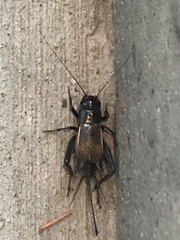 Fall Field CricketGryllus pennsylvanicusCan damage your home
 Tropical House CricketGryllodes sigillatusNuisance, not dangerous
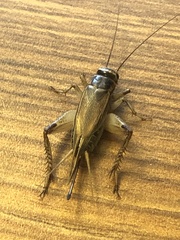 House CricketAcheta domesticusCan damage your home
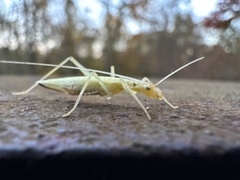 Narrow-winged Tree CricketOecanthus niveus
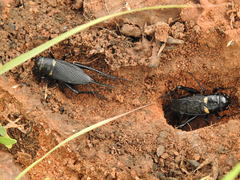 Southern Field CricketGryllus bimaculatus
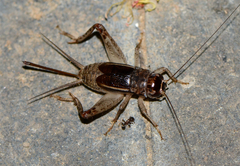 Japanese Burrowing CricketVelarifictorus micado
Sources
- Wikipedia: https://en.wikipedia.org/wiki/Gryllus_campestris
Look it up elsewhere: GBIF · iNaturalist · BugGuide · Wikipedia
Text written 2026-10-22 from the sources above and checked sentence by sentence against them. Data fetched 2026-10-22.