 Bug FAQ
Fall Field Cricket
Gryllus pennsylvanicus · Order: Orthoptera · Family: Gryllidae
Also called: Pennsylvania Field Cricket
Source: hgic.clemson.edu, extension.umd.edu
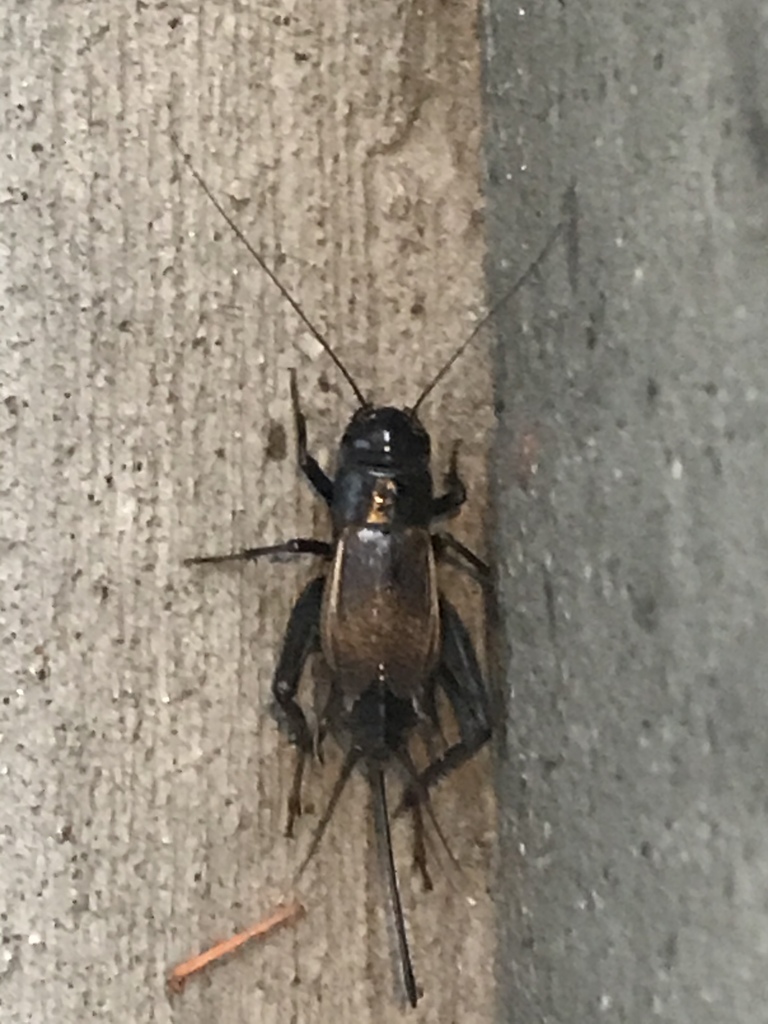
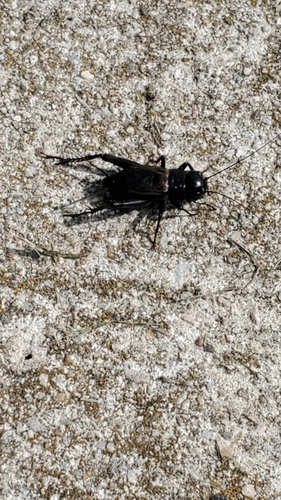
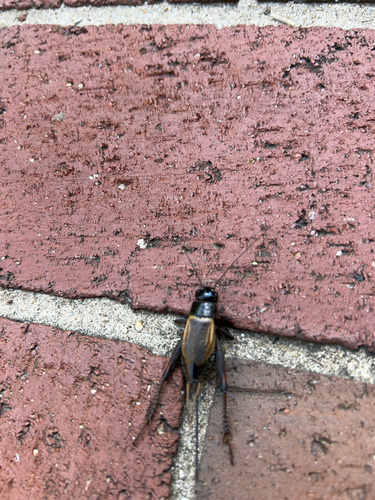
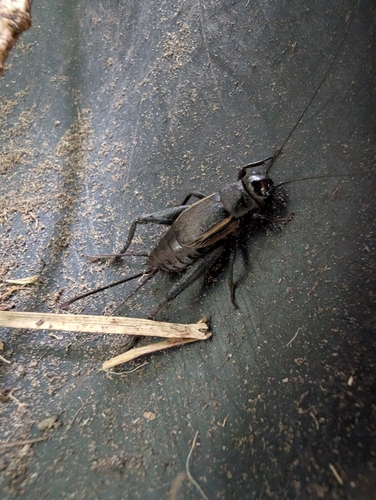
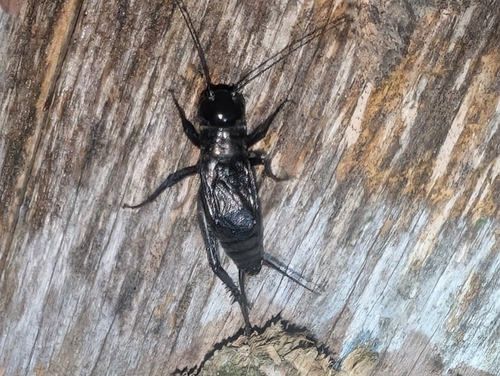
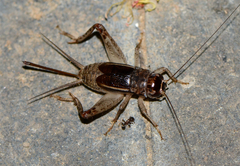
Adult fall field crickets are 15 to 25 mm long, dark black to brown, with long black antennae that exceed their body length. They live in grassy, disturbed areas, fields and forest edges across much of North America and may wander indoors in winter. They are omnivorous, eating seeds, invertebrates and a variety of plants such as crabgrass, lamb's quarters and ragweed.
Source: Wikipedia, hgic.clemson.edu, extension.umd.edu
How to recognize it
Color ranges from dark black to dark brown, sometimes with a reddish tint, and the antennae are longer than the body. They have a yellowish-brown hue with three dark stripes on the head.
Source: Wikipedia, hgic.clemson.edu
Size
Adults measure 15 to 25 mm (about 0.6 to 1.0 in). Overall length varies from about half an inch to over an inch.
Source: Wikipedia, hgic.clemson.edu
Is it a pest in the house?
They are attracted to light and can enter homes. Indoors they chew fabrics like cotton, silk, wool, nylon, rayon and linen, leaving roughened areas.
Source: extension.umd.edu, hgic.clemson.edu
Does it bite or sting?
Male crickets produce sound by rubbing their wings together to attract females or as an alarm.
Source: hgic.clemson.edu
How to get rid of it
The best control step is to remove or reduce habitats that let crickets survive. Use chemicals indoors only for large infestations and combine with structural repairs and sanitation. Non-chemical methods can also control indoor crickets.
Source: hgic.clemson.edu, extension.umd.edu
Where it lives
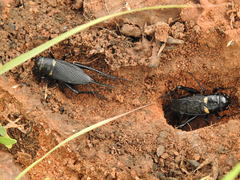
They burrow in soil of fields and forest edges within their range. They are common in grassy, disturbed sites and near human habitation.
Source: Wikipedia
What it eats
They are omnivores, preying on seeds, other invertebrates and a variety of plants.
Source: Wikipedia
Life cycle
One generation is produced each year. Eggs are laid in late summer and fall, overwinter, and hatch in spring.
Source: Wikipedia
When you see it
Adults are active at night, when males chirp to attract females. In winter some adults enter houses to try to overwinter.
Source: Wikipedia
Where it comes from
Their range covers most of North America from southern Ontario to northern Mexico.
Source: Wikipedia
Lookalikes
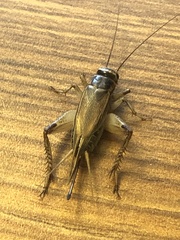
House and field crickets are the two common cricket species that invade homes and both sing. Adults and nymphs look alike, but nymphs are smaller and wingless.
Source: hgic.clemson.edu, extension.umd.edu
Where it is found in the US
Recorded in 43 of 51 states and DC. Most records: New York, Massachusetts, Vermont, Maine, Illinois, Pennsylvania, Ohio, Iowa.
Darker = more records. Counts are museum and citizen-science records, not population size.
Source: GBIF
Status: native in North America; native in Canada. Source: iNaturalist
Months it is reported in the US
Source: GBIF
More photos
Questions people ask
How do I prevent field crickets from entering my house?
Eliminate grassy, disturbed areas near the home and seal cracks to reduce habitats that attract them.
Source: hgic.clemson.edu, Wikipedia
What damage can field crickets cause inside my home?
They chew and roughen fabrics such as wool, silk, cotton, linen and synthetic textiles.
Source: hgic.clemson.edu, extension.umd.edu
Do male field crickets make noise?
Yes, males chirp by rubbing their wings together to attract females or signal disturbance.
Source: hgic.clemson.edu
When are field crickets most active?
Adults are most active at night, especially during the breeding season when males sing.
Source: Wikipedia
Same family (Gryllidae)


Sources
- hgic.clemson.edu: https://hgic.clemson.edu/factsheet/house-and-field-crickets/
- extension.umd.edu: https://extension.umd.edu/resource/crickets
- Wikipedia: https://en.wikipedia.org/wiki/Gryllus_pennsylvanicus
Look it up elsewhere: GBIF · iNaturalist · BugGuide · ITIS · Wikipedia
Text written 2026-10-23 from the sources above and checked sentence by sentence against them. Data fetched 2026-10-23.