 Bug FAQ
Forest Darner
Austroaeschna pulchra · Order: Odonata · Family: Aeshnidae

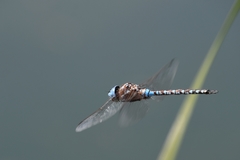
The Forest Darner is a large dragonfly found in streams and rivers of eastern Australia from Brisbane to Victoria. Males are dark brown to black with yellow, green or blue markings, while females are brown with yellow markings. It looks similar to the Carnarvon darner and can be confused with that species.
Source: Wikipedia
How to recognize it
Males are dark brown to black with yellow, green or blue markings; females are brown with yellow markings.
Source: Wikipedia
Size
The Forest Darner is a large dragonfly belonging to the family Aeshnidae.
Source: Wikipedia
Where it lives
It lives along streams and rivers in eastern Australia.
Source: Wikipedia
Where it comes from
Its range extends from around Brisbane down to Victoria in eastern Australia.
Source: Wikipedia
Lookalikes
It can be mistaken for the Carnarvon darner, Austroaeschna muelleri.
Source: Wikipedia
More photos


Questions people ask
What does the Forest Darner look like?
Males are dark brown to black with yellow, green or blue markings, and females are brown with yellow markings.
Source: Wikipedia
Where can I find a Forest Darner?
They are found along streams and rivers in eastern Australia, from Brisbane to Victoria.
Source: Wikipedia
What other dragonfly might I confuse with a Forest Darner?
It looks similar to the Carnarvon darner, Austroaeschna muelleri.
Source: Wikipedia
Same family (Aeshnidae)


Sources
- Wikipedia: https://en.wikipedia.org/wiki/Austroaeschna_pulchra
Look it up elsewhere: GBIF · iNaturalist · BugGuide · Wikipedia
Text written 2026-10-23 from the sources above and checked sentence by sentence against them. Data fetched 2026-10-23.