 Bug FAQ
Giant Canyon Woodlouse
Porcellio dilatatus · Order: Isopoda · Family: Porcellionidae
Source: Wikipedia

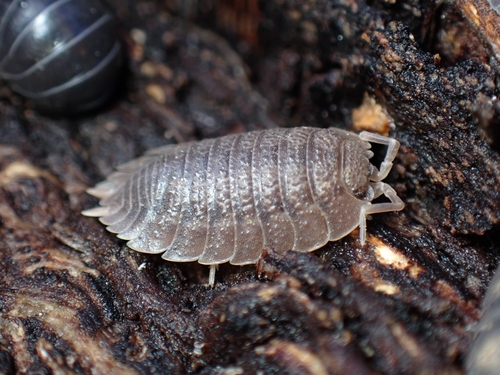
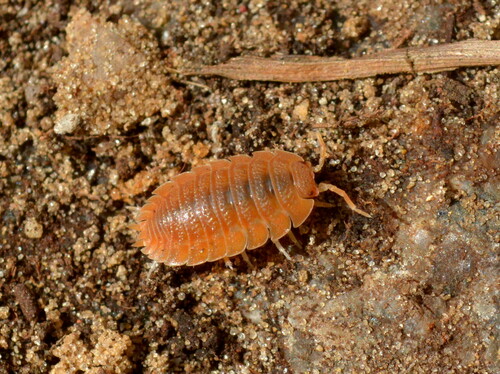
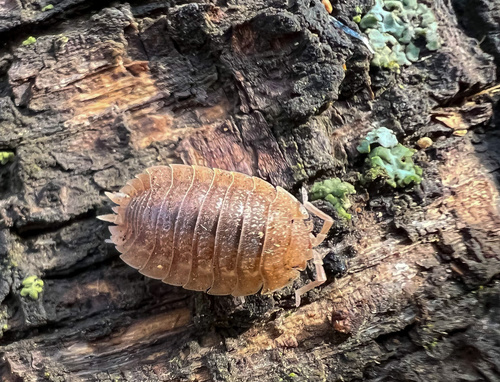
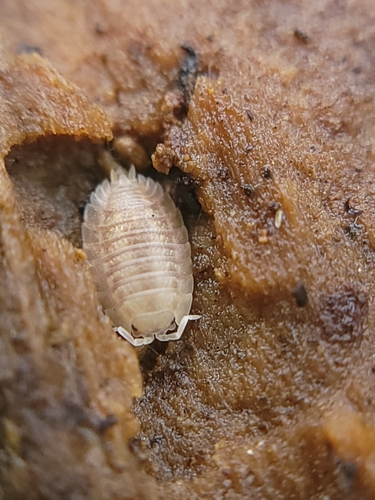
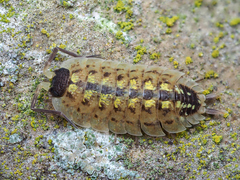
The giant canyon woodlouse is about 15 mm long and brown with stripes. It lives in greenhouses, seed boxes and flower pots and is considered a house pest.
Source: Wikipedia
How to recognize it
They are brown and have striped markings.
Source: Wikipedia
Size
Adults reach about 15 mm (0.59 in) in length.
Source: Wikipedia
Is it a pest in the house?
They are regarded as house pests.
Source: Wikipedia
What it eats
They feed on decaying plant material.
Source: Wikipedia
Where it is found in the US
Recorded in 5 of 51 states and DC. Most records: California, Arizona, Oregon, New Mexico, Washington.
Darker = more records. Counts are museum and citizen-science records, not population size.
Source: GBIF
Status: introduced in North America; introduced in United States. Source: iNaturalist
Months it is reported in the US
Source: GBIF
More photos
Questions people ask
What does the giant canyon woodlouse look like?
It is brown with striped markings and about 15 mm long.
Source: Wikipedia
Same family (Porcellionidae)

Sources
- Wikipedia: https://en.wikipedia.org/wiki/Porcellio_dilatatus
Look it up elsewhere: GBIF · iNaturalist · BugGuide · ITIS · Wikipedia
Text written 2026-10-23 from the sources above and checked sentence by sentence against them. Data fetched 2026-10-23.