 Bug FAQ
Gisborne Cockroach
Drymaplaneta semivitta · Order: Blattodea · Family: Blattidae
Source: Wikipedia
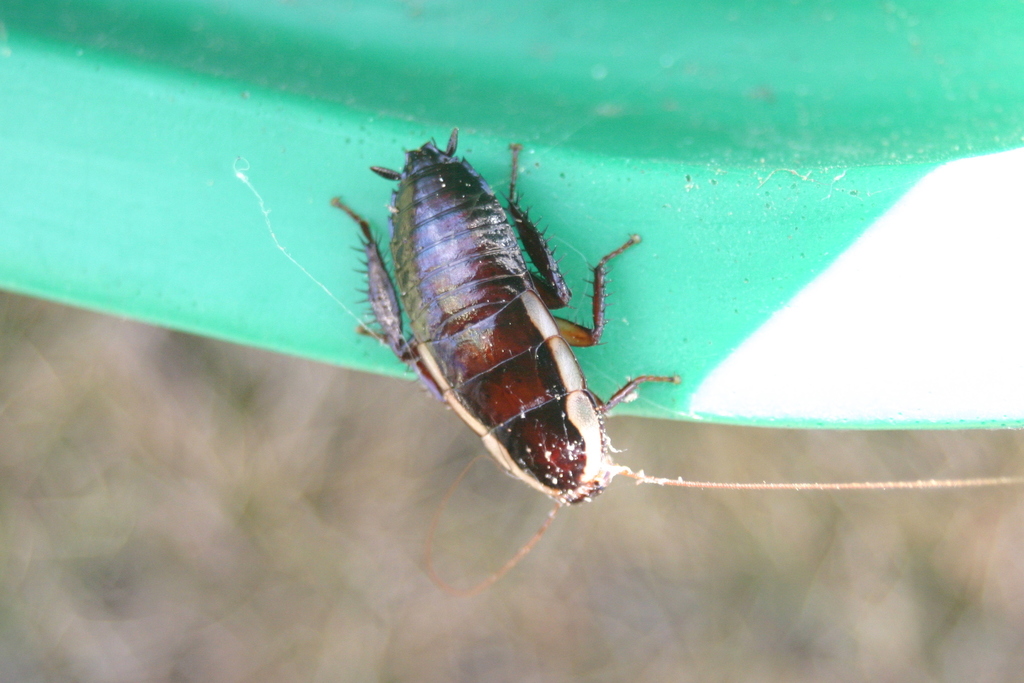
The Gisborne cockroach is a large, glossy dark-brown roach about 2 to 4.5 cm long with pale translucent stripes on each side of its head. It lives in wood, timber, bark chips and can move into roof cavities or wall voids when it gets cold. Native to Australia and now in New Zealand, it feeds on organic material but does not infest food and is considered harmless.
Source: Wikipedia
How to recognize it
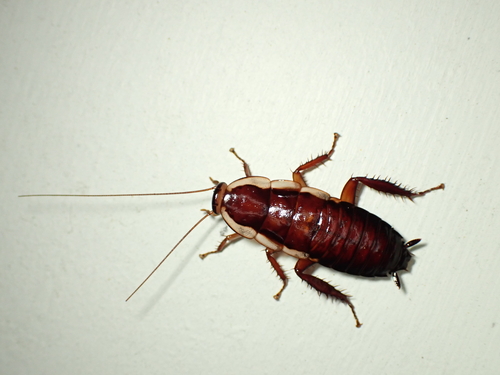
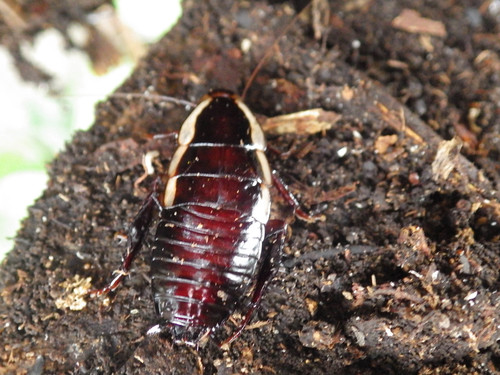
It is glossy dark brown with pale translucent stripes along each side of the head. It has no vestigial wings.
Source: Wikipedia
Size
Adults measure about 20 to 45 mm in length and 12 to 15 mm in width.
Source: Wikipedia
Is it a pest in the house?
It is generally regarded as harmless in homes.
Source: Wikipedia
Does it bite or sting?
It is generally regarded as harmless and does not bite or sting people.
Source: Wikipedia
Where it lives
In cold weather it may be seen in roof cavities and wall voids.
Source: Wikipedia
What it eats
It consumes organic matter but does not normally infest stored food.
Source: Wikipedia
Where it comes from
Originally from Australia, it has been introduced to New Zealand.
Source: Wikipedia
Lookalikes
Its defensive secretions contain hex-2-enal, a chemical also found in some other Drymaplaneta species.
Source: Wikipedia
Where it is found in the US
Recorded in 1 of 51 states and DC. Most records: California.
Darker = more records. Counts are museum and citizen-science records, not population size.
Source: GBIF
Status: introduced in United States. Source: iNaturalist
More photos
Questions people ask
Where might I find them in my house?
They like wood, timber or bark chips and can move into roof cavities or wall spaces when it gets cold.
Source: Wikipedia
Are they a food pest?
They feed on organic material but do not normally infest stored food.
Source: Wikipedia
Are they native to New Zealand?
They are native to Australia and have been introduced to New Zealand.
Source: Wikipedia
Same family (Blattidae)
 American CockroachPeriplaneta americanaCan spread germs or disease
 Oriental CockroachBlatta orientalisCan spread germs or disease
 Smokybrown CockroachPeriplaneta fuliginosaNuisance, not dangerous
 Australian CockroachPeriplaneta australasiaeNuisance, not dangerous
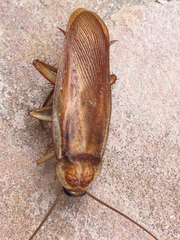 Turkestan CockroachPeriplaneta lateralis
 Florida Woods CockroachEurycotis floridana
Sources
- Wikipedia: https://en.wikipedia.org/wiki/Drymaplaneta_semivitta
Look it up elsewhere: GBIF · iNaturalist · BugGuide · Wikipedia
Text written 2026-10-23 from the sources above and checked sentence by sentence against them. Data fetched 2026-10-22.