 Bug FAQ
Gray Wall Jumping Spider
Menemerus bivittatus · Order: Araneae · Family: Salticidae
Also called: Grey Wall Jumping Spider, jumping spider
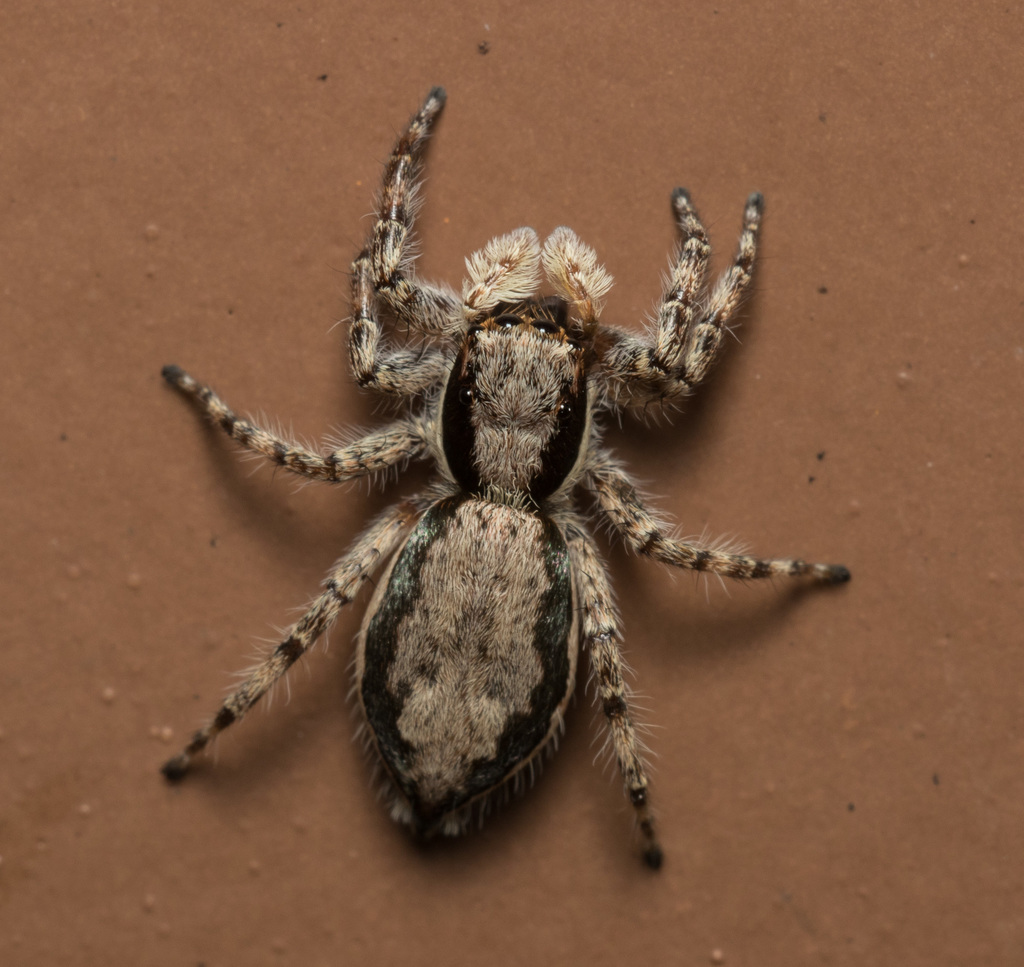
Gray wall jumping spiders are about nine millimetres long, with females slightly larger than males. They live on building walls and tree trunks in pantropical regions, especially on outer walls in India. Females lay 25-40 eggs in a silken sac and guard them until they hatch after about three weeks.
Source: Wikipedia
How to recognize it
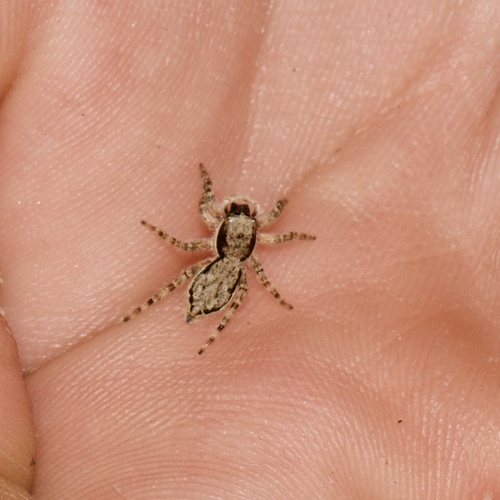
The spider’s body is flattened and covered with short, dense, gray-white hairs. Males have a dark stripe along the back with a lighter stripe on each side of the abdomen.
Source: Wikipedia
Size
Adults measure about nine millimetres, females being a bit larger than males.
Source: Wikipedia
Where it lives
It is a pantropical species found on building walls and tree trunks where it hunts.
Source: Wikipedia
What it eats
Both juveniles and adults mainly eat small flies that land on walls. They can also capture larger insects like crane flies that are up to twice their size.
Source: Wikipedia
Life cycle
The female builds a purse-like silk egg sac in a crack or hidden spot and lays 25-40 eggs. She guards the sac until the eggs hatch after roughly three weeks, after which the spiderlings disperse.
Source: Wikipedia
Where it comes from
The species originates from sub-Saharan Africa, including countries such as Nigeria, Kenya, DR Congo, South Africa and Senegal.
Source: Wikipedia
Where it is found in the US
Recorded in 17 of 51 states and DC. Most records: Florida, California, Texas, Louisiana, Hawaii, Georgia, Alabama, Mississippi.
Darker = more records. Counts are museum and citizen-science records, not population size.
Source: GBIF
Status: introduced in United States. Source: iNaturalist
Months it is reported in the US
Source: GBIF
More photos
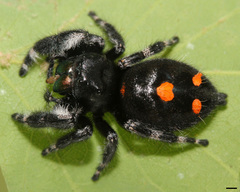
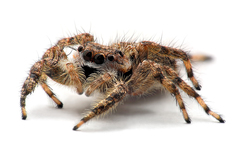
Same family (Salticidae)



Sources
- Wikipedia: https://en.wikipedia.org/wiki/Menemerus_bivittatus
Look it up elsewhere: GBIF · iNaturalist · BugGuide · ITIS · Wikipedia
Text written 2026-10-22 from the sources above and checked sentence by sentence against them. Data fetched 2026-10-22.