 Bug FAQ
Grey Count
Tanaecia lepidea · Order: Lepidoptera · Family: Nymphalidae

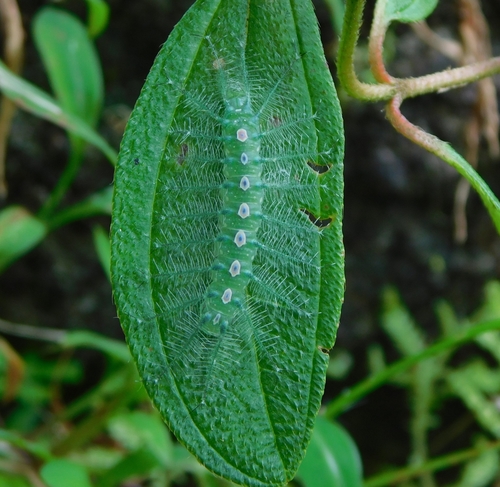
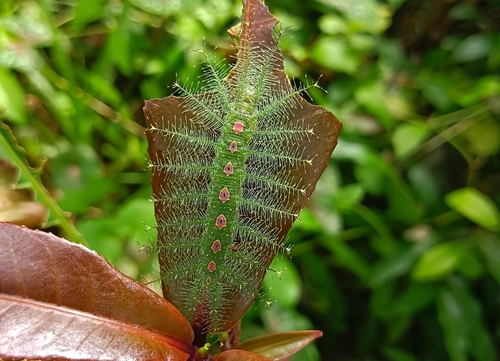
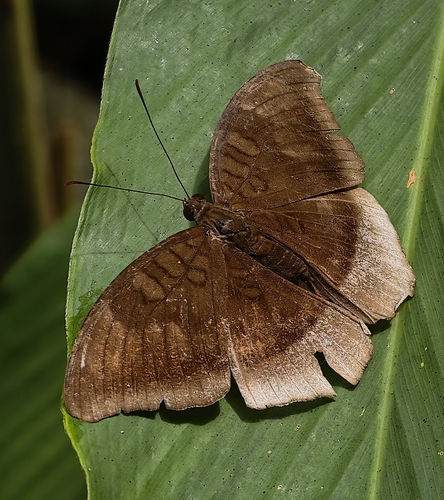
The grey count butterfly has dark brown upper wings with faint black transverse lines and a distinct ash-grey band along the wing edges. It lives in forested areas of the lower Himalayas through the Western Ghats, central India, Bengal, Assam and the Malay Peninsula. Its caterpillars feed on plants such as Melastoma malabathricum and Planchonia careya.
Source: Wikipedia
How to recognize it
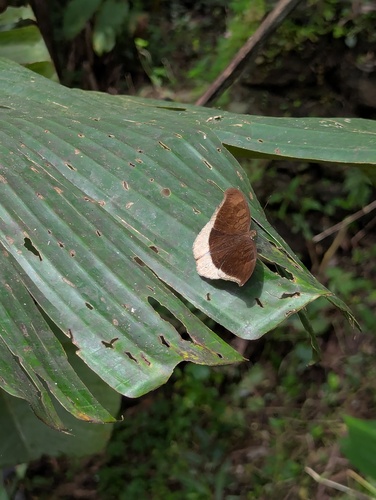
Upper wings are dark brown with faint black transverse lines across the cells and an oblique discal band on the forewing. A continuous ash-grey band runs along the outer edge of both forewings and hindwings, widening toward the tornus.
Source: Wikipedia
What it eats
Caterpillars feed on Melastoma malabathricum and Planchonia careya.
Source: Wikipedia
Where it comes from
The grey count is a nymphalid butterfly native to South and Southeast Asia.
Source: Wikipedia
More photos
Questions people ask
What does the grey count look like?
It has dark brown upper wings with faint black transverse lines and an ash-grey band along the wing edges.
Source: Wikipedia
Where is the grey count found?
It lives in forested regions from the lower Himalayas through the Western Ghats, central India, Bengal, Assam and the Malay Peninsula.
Source: Wikipedia
What plants do grey count caterpillars eat?
They feed on Melastoma malabathricum and Planchonia careya.
Source: Wikipedia
Same family (Nymphalidae)






Sources
- Wikipedia: https://en.wikipedia.org/wiki/Tanaecia_lepidea
Look it up elsewhere: GBIF · iNaturalist · BugGuide · Wikipedia
Text written 2026-10-24 from the sources above and checked sentence by sentence against them. Data fetched 2026-10-22.