 Bug FAQ
Large Black Tip Wilter
Anoplocnemis curvipes · Order: Hemiptera · Family: Coreidae
Source: Wikipedia
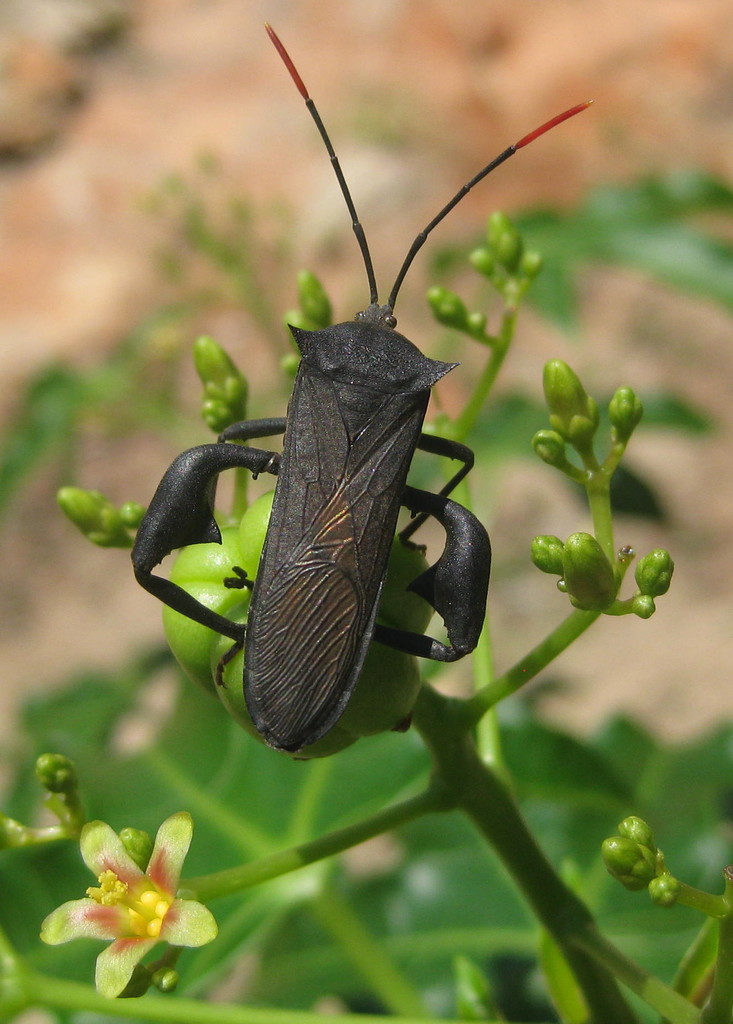
The large black-tip wilter is native to sub-Saharan Africa. It feeds by sucking sap and is considered a major pest of many trees, shrubs and legume crops.
Source: Wikipedia
Is it a pest in the house?
It is a major pest of many trees, shrubs and legumes.
Source: Wikipedia
Where it lives
It lives in sub-Saharan Africa where it attacks agricultural plants.
Source: Wikipedia
What it eats
It is a sap-sucking insect.
Source: Wikipedia
Where it comes from
It is native to sub-Saharan Africa.
Source: Wikipedia
More photos
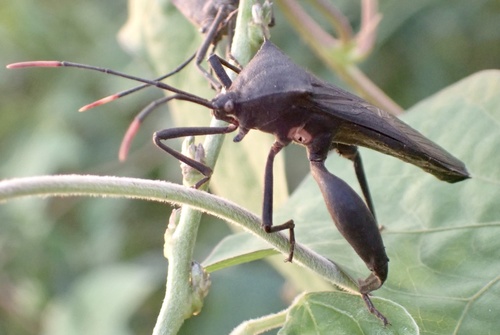
Questions people ask
How does it damage plants?
By sucking sap, it harms trees, shrubs and legume crops, making it a major agricultural pest.
Source: Wikipedia
Same family (Coreidae)
 Western Conifer Seed BugLeptoglossus occidentalisDamages trees, gardens or crops
 Squash BugAnasa tristisDamages trees, gardens or crops
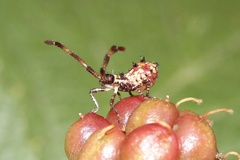 Dock BugCoreus marginatus
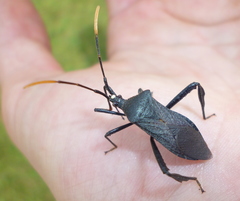 Acanthocephala terminalisAcanthocephala terminalisHarmless
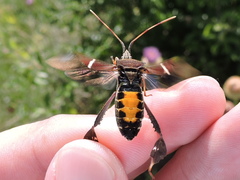 Eastern Leaf-footed BugLeptoglossus phyllopusDamages trees, gardens or crops
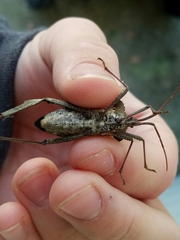 Giant leaf-footed bugAcanthocephala declivis
Sources
- Wikipedia: https://en.wikipedia.org/wiki/Anoplocnemis_curvipes
Look it up elsewhere: GBIF · iNaturalist · BugGuide · ITIS · Wikipedia
Text written 2026-10-24 from the sources above and checked sentence by sentence against them. Data fetched 2026-10-23.