 Bug FAQ
Leafy Spurge Hawkmoth
Hyles euphorbiae · Order: Lepidoptera · Family: Sphingidae
Also called: Spurge Hawkmoth, Hawk moths, Leafy Spurge Hawk Moth, Spurge Hawk-moth
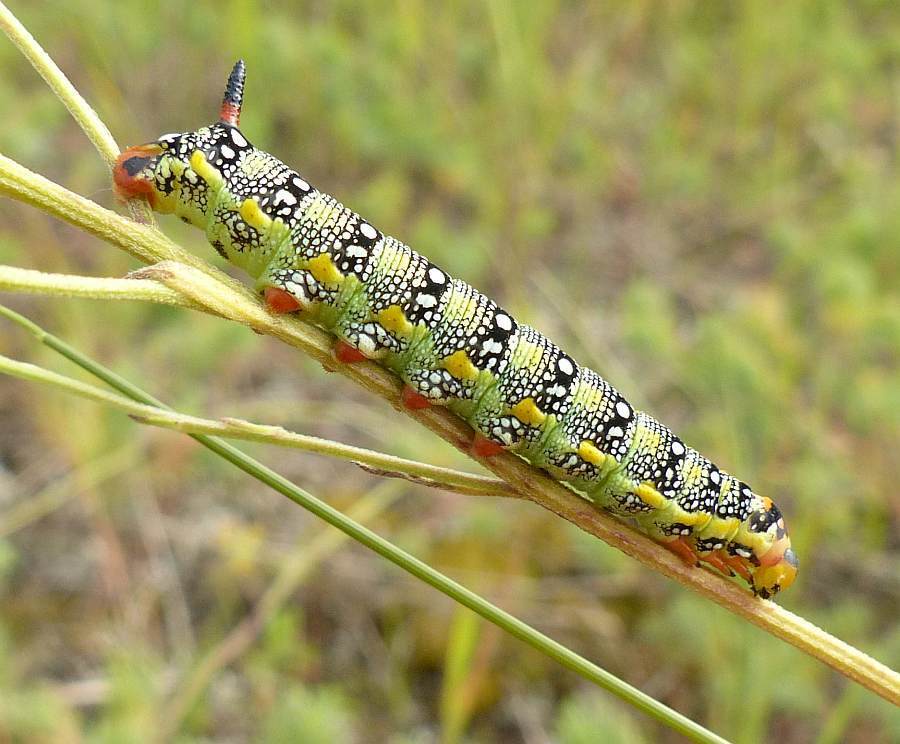
The adult moth has grey forewings with distinctive olive-brown blotches and pink hindwings with black and white markings. Its larvae feed on sea-spurge and other spurge plants, consuming leaves and bracts. It is native to Europe and is sometimes released to help control the invasive weed leafy spurge.
Source: Wikipedia
How to recognize it
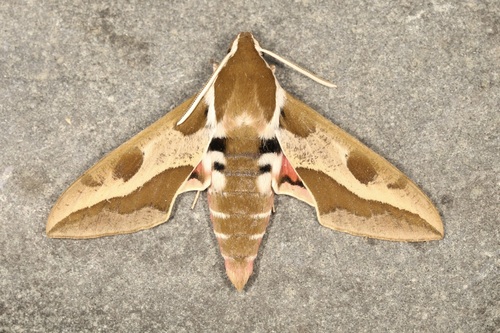
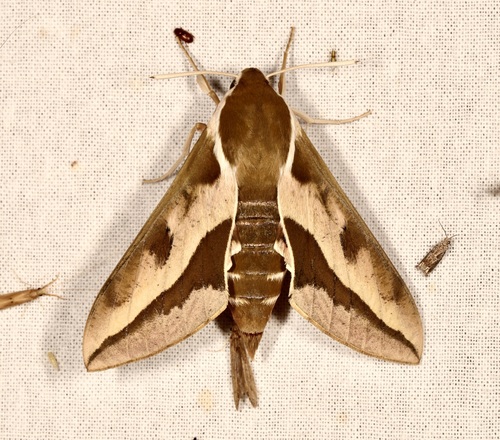
Forewings are grey with square olive-brown blotches and a long oblique band; hindwings are pink with black and white spots; the body is olive-brown with white lines and black and white spots.
Source: Wikipedia
How to get rid of it
The species is used as a biological control agent against the weed leafy spurge, usually together with other agents.
Source: Wikipedia
Where it lives
The moth feeds on sea-spurge.
Source: Wikipedia
What it eats
Larvae eat the leaves and bracts of spurge plants. Adults also feed on sea-spurge.
Source: Wikipedia
Life cycle
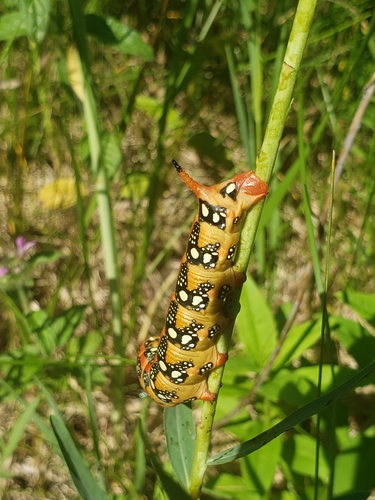
Eggs hatch in about two weeks into black caterpillars that develop white and red spots as they grow, becoming conspicuous before being preyed on by gulls and terns.
Source: Wikipedia
Where it comes from
It is a European species belonging to the hawk-moth family Sphingidae.
Source: Wikipedia
Where it is found in the US
Recorded in 20 of 51 states and DC. Most records: Montana, Michigan, North Dakota, Colorado, Minnesota, Wyoming, South Dakota, Wisconsin.
Darker = more records. Counts are museum and citizen-science records, not population size.
Source: GBIF
Status: introduced in Canada; introduced in United States. Source: iNaturalist
Months it is reported in the US
Source: GBIF
More photos

Questions people ask
Are they a problem for gardens or crops?
They feed on spurge plants, which are considered weeds, and are used to help control those weeds.
Source: Wikipedia
Same family (Sphingidae)
 White-lined SphinxHyles lineataDamages trees, gardens or crops
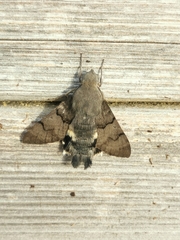 Eurasian Hummingbird HawkmothMacroglossum stellatarum
 Snowberry ClearwingHemaris diffinis
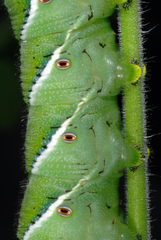 Carolina SphinxManduca sextaDamages trees, gardens or crops
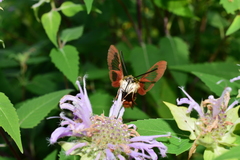 Hummingbird ClearwingHemaris thysbeDamages trees, gardens or crops
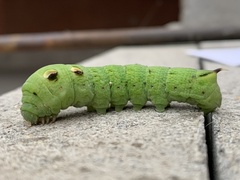 Elephant HawkmothDeilephila elpenor
Sources
- Wikipedia: https://en.wikipedia.org/wiki/Hyles_euphorbiae
Look it up elsewhere: GBIF · iNaturalist · BugGuide · ITIS · Wikipedia
Text written 2026-10-22 from the sources above and checked sentence by sentence against them. Data fetched 2026-10-22.